Top 5 AI Skin Analysis Tools in 2026
AI skin analysis tools have become a staple in aesthetic clinics, offering precise diagnostics and tailored treatment recommendations. Here's a quick overview of the top 5 tools in 2026:
- Perfect Corp: Analyses over 150 biomarkers, predicts ageing patterns, and integrates seamlessly with clinical systems via SaaS.
- Haut.ai: Delivers 98% diagnostic accuracy using multi-angle Face180 technology and offers personalised skincare recommendations.
- Skinive: CE-marked software capable of detecting 55+ skin conditions, including cancer risks, with 3D mole-mapping features.
- CureSkin: A digital dermatology platform combining AI and dermatologist reviews for skin and hair concerns.
- GlamAR: Real-time facial scanning with numeric scoring and product try-on features, improving client engagement and product sales.
These tools are reshaping consultations by providing data-driven insights, improving trust, and enabling clinics to personalise care effectively.
1. Perfect Corp
AI Accuracy and Diagnostic Capabilities
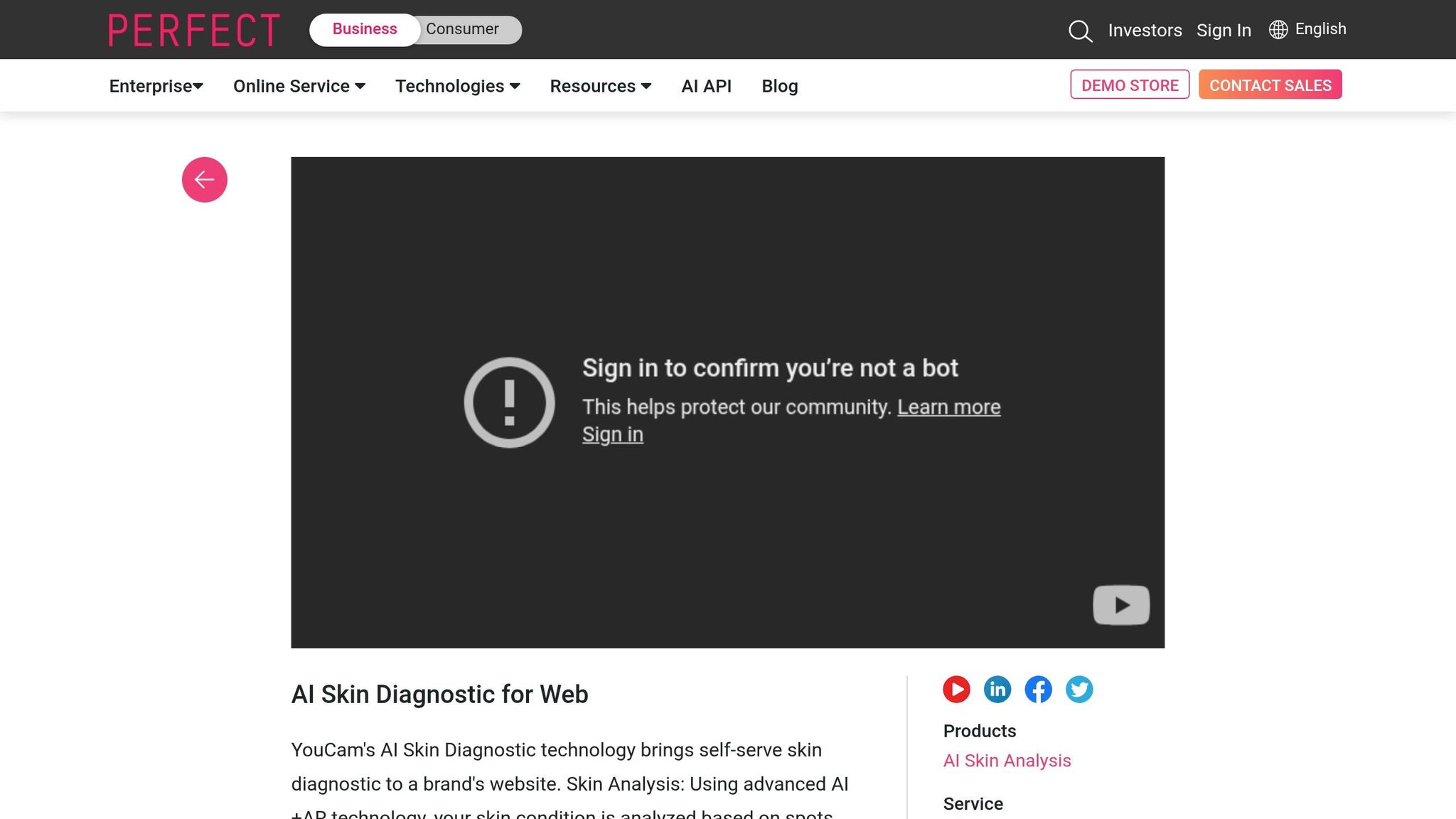
Perfect Corp's platform stands out for its precision, analysing over 150 distinct facial biomarkers. By combining deep learning with multispectral imaging techniques (including RGB, UV, and PL), it uncovers hidden concerns such as UV damage and skin sensitivity that might otherwise go unnoticed.
What’s more, its predictive analytics provide a glimpse into future ageing patterns, helping clinics shift their focus from reactive treatments to preventative care. This feature is particularly useful for aesthetic professionals at clinics like Clinetix who need to design long-term care strategies for their clients.
In addition to its diagnostic strengths, Perfect Corp integrates smoothly with existing clinical systems, making it a practical choice for modern practices.
Integration Suitability for Clinics
The platform operates on a plug-and-play SaaS model, allowing clinics to quickly embed it into their websites or apps without hassle. Built for large-scale use, it integrates with Microsoft Azure and is available on Microsoft AppSource.
This robust setup ensures that clinics across the UK, such as IVMEDISPA, can adopt the technology without the need for major system overhauls. The platform is also customisable, enabling practices to align the interface with their branding while retaining its advanced diagnostic features.
sbb-itb-349970b
AI Skin Analysis: Medical Study Validates Perfect Corp Technology
2. Haut.ai
Haut.ai follows in the footsteps of Perfect Corp by elevating skin diagnostics with its advanced multi-angle technology.
AI Accuracy and Diagnostic Capabilities
Haut.ai's Face Analysis 3.0, introduced in November 2025, provides clinical-grade skin insights through more than 29 dermatologically approved parameters, with plans to exceed 40 in the near future. The platform boasts an impressive 98% diagnostic accuracy, validated against professional dermatological standards. This accuracy stems from AI algorithms trained on a diverse dataset of over 3 million facial images, representing a wide range of demographics and skin tones.
One standout feature is the Face180 technology, which captures three angles of the face in a single shot. This approach eliminates blind spots from head tilt and improves measurement stability by 30% compared to single-angle methods. The system also excels at identifying specific pigmentation types - like freckles, sun spots, and moles - using pixel-level masks to pinpoint and highlight concerns.
"Until now, clinical-level skin analysis required specialised equipment and lab conditions. With Face Analysis 3.0 and our LIQA technology for capturing standardised selfies, we've made it as simple as taking a picture on your phone." - Anastasia Georgievskaya, CEO & Co-Founder, Haut.ai
The LIQA (Smart Camera) module ensures selfies meet clinical standards by providing real-time feedback on face positioning, lighting, and angle before analysis. This precision feeds directly into Haut.ai's personalised skincare recommendations.
Personalisation Features for Clients
Haut.ai's DEEP C.A.R.E. Recommendation System creates tailored skincare routines based on individual profiles. Users can interact with Skin.Chat, an AI assistant capable of processing requests like "shorter routines" or "no retinol", offering flexibility in adjusting care plans. For an added layer of personalisation, SkinGPT generates realistic visual simulations, showing users how products might affect their skin before they commit to treatments.
Integration Suitability for Clinics
Haut.ai's no-code SaaS platform integrates seamlessly with Microsoft Azure and AppSource, making it highly compatible with UK clinical workflows. Results are translated into standardised clinical scores - using either 1–5 severity grades or 0–100 numeric scales - ensuring consistent and reproducible findings across professional grading systems. Clinics adopting Haut.ai technology have reported an average 64% increase in consumer conversion and a 34% boost in shopping cart value when clients receive AI-driven personalised recommendations.
Cost-Effectiveness for Businesses
Haut.ai offers a flexible, usage-based pricing model that adapts to the size of the business. Small and medium-sized enterprises can choose from predefined tiers, while global enterprises can opt for fully customised partnership models. To ensure data security, the platform employs Skin Atlas technology, which uses patented anonymisation methods to safeguard user information while maintaining diagnostic accuracy.
3. Skinive
Skinive is a CE‐Marked medical software, ensuring it complies with European standards for health, safety, and environmental protection. This makes it a reliable choice for UK clinics that require regulated diagnostic tools. As of 30 March 2026, Skinive has conducted 5,945,193 skin checks, gained over 1 million users globally, and boasts an impressive 4.8/5 average rating.
AI Accuracy and Diagnostic Capabilities
Skinive’s AI is powered by computer vision and deep learning, trained on a vast database of clinical cases. It can identify over 55 skin conditions, such as acne, eczema, herpes, and various types of skin cancer. Notably, it has flagged risks in 15.01% of checks, detecting 89,845 HPV cases, 164,451 cancer risks, and 662,259 instances of acne or rosacea.
One standout feature is the 3D full‐body mole‐mapping tool (Skin‐map), which improves diagnostic precision and simplifies medical documentation. The system also includes an AI-guided real‐time camera that helps users capture high-quality images for more accurate analysis. Skinive’s Accuracy Report 2026, released on 27 March 2026, highlights advancements in detecting viral diseases, benign growths, and precancerous conditions compared to 2021 performance benchmarks.
These capabilities enable clinics to deliver highly tailored care to their clients.
Personalisation Features for Clients
Skinive takes its diagnostics a step further by offering longitudinal monitoring, allowing clinics and patients to track skin health over time with regular screenings. For at-home users, the platform provides pre-diagnosis tools and skincare recommendations. Its condition-specific analysis spans over 55 skin concerns, delivering tailored insights to meet individual needs.
Integration Suitability for Clinics
Skinive’s tiered product range caters to different users: the Skinive App for individuals, Skinive MD for healthcare professionals, and Skinive.Cloud for developers looking to integrate AI dermatology into their platforms. This setup helps clinics save on the cost and time needed to build custom solutions. The 3D mole-mapping feature also streamlines documentation, boosting efficiency in medical workflows.
4. CureSkin
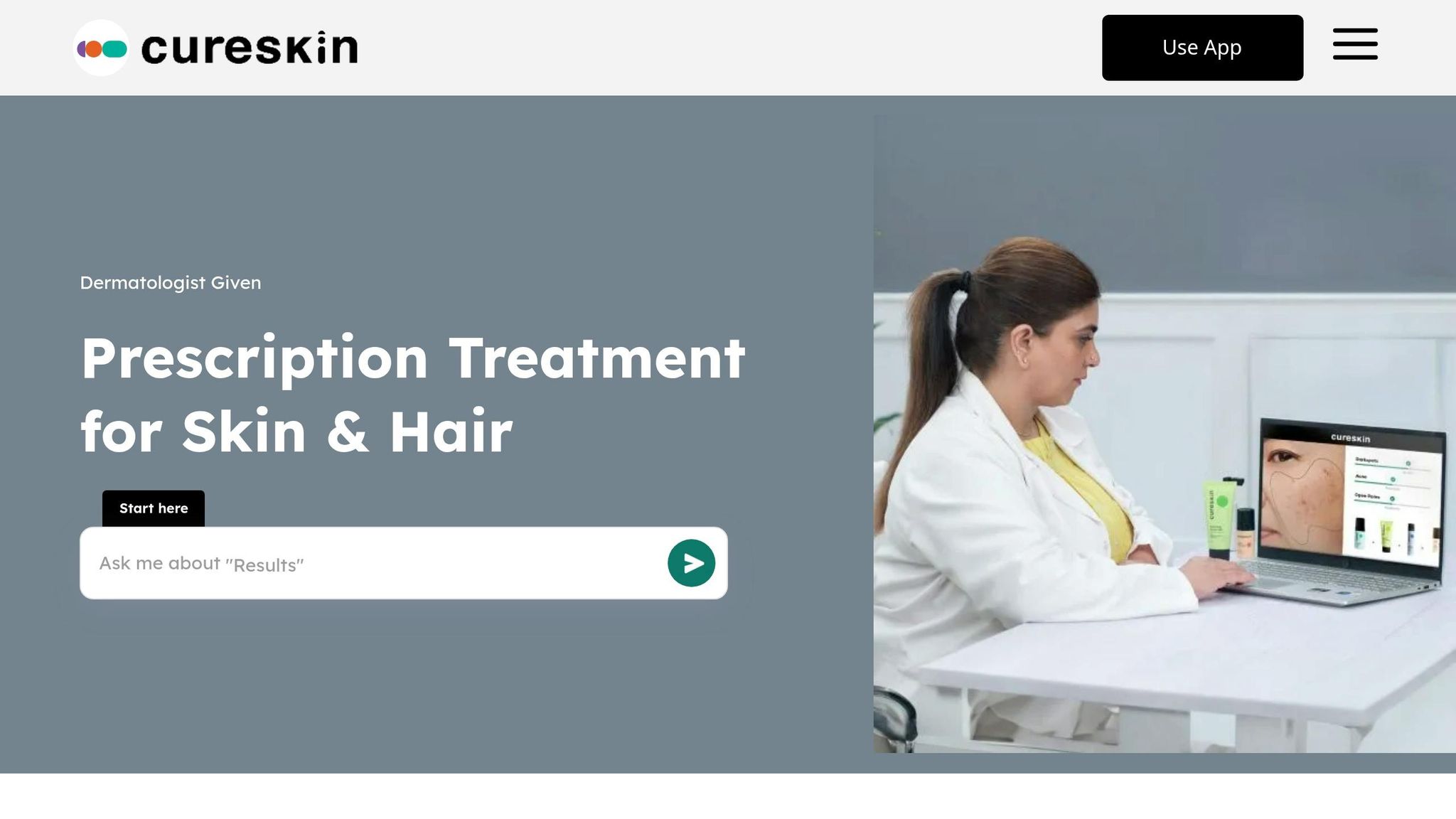
CureSkin operates as a dermatology clinic that’s entirely digital, blending AI-powered photo diagnosis with the expertise of dermatologists. This system can identify over 20 skin and hair conditions - like acne, pigmentation issues, and hair loss - within seconds. To ensure accuracy, every AI-generated analysis is reviewed by a qualified dermatologist.
AI Accuracy and Diagnostic Capabilities
With a rating of 4.7 out of 5, CureSkin uses visual analysis alongside health data to pinpoint the root causes of skin and hair concerns. It factors in elements like lifestyle, diet, and environmental influences. This comprehensive approach has led to 98% of users seeing noticeable improvements within 14 weeks. So far, over 1.7 million people in India have used the platform, which boasts a 4.5-star average from 83,800 reviews.
This mix of advanced technology and professional input forms the basis of CureSkin’s highly personalised treatment plans.
Personalisation Features for Clients
CureSkin creates customised regimens by considering the severity of the issue, skin sensitivity, and individual concerns. Monthly photo-based check-ups with a dermatologist allow for real-time adjustments to treatments. The service doesn’t stop at skincare products; it also includes nutritional advice and lifestyle recommendations to tackle underlying factors like hormonal imbalances and stress.
"Every regimen at Cureskin is tailored based on severity, sensitivity and individual concern"
Cost-Effectiveness for Businesses
CureSkin offers a free initial consultation through its mobile app, making it an affordable alternative to visiting a skin care clinic in Edinburgh or other local specialists. Monthly subscriptions are reasonably priced, providing ongoing care without the need for physical appointments. It’s designed as a direct-to-consumer platform, rather than something clinics can integrate into their own systems.
5. GlamAR
GlamAR takes precision diagnostics and personalised skincare to the next level. Using real-time facial scanning, it evaluates over 150 multi-dimensional facial biomarkers in each scan. Powered by a dataset of more than 3 million dermatologist-labelled entries and 94 specialised algorithms, GlamAR can identify over 14 specific skin concerns, including acne, pigmentation, wrinkles, dark circles, redness, oiliness, and enlarged pores. Instead of vague descriptions, the platform provides numeric scores and visual overlays, offering clear, clinically-informed results.
AI Accuracy and Diagnostic Capabilities
GlamAR’s advanced diagnostic abilities stem from its capability to analyse six distinct skin tones - fair, light, medium, olive, tan, and deep - using deep learning and computer vision. Each analysis generates standardised numeric scores, enabling users to track treatment progress with precision. This approach offers a more objective, data-driven alternative to traditional narrative assessments.
Personalisation Features for Clients
The platform delivers in-depth skin reports, including melanin-based tone analysis, paired with customised product recommendations from a brand’s catalogue. Users can also visualise potential skin improvements based on suggested treatments. A standout feature is the multi-product try-on tool, which allows clients to layer multiple cosmetics and see their combined effects. These interactive elements have led to a 45% boost in conversion rates and a 40% reduction in product returns for beauty brands utilising GlamAR.
Integration Suitability for Clinics
GlamAR offers seamless integration across platforms with SDKs for iOS, Android, and Web, as well as APIs and plug-ins for Shopify, Magento, and WooCommerce. The setup process is straightforward, requiring just a simple 2–3 line code snippet.
"Everything about the integration was smooth - from initial setup to go-live. GlamAR's team was proactive, understood our priorities, and resolved every request promptly." - Pushpal Maheshwari, CEO of devx commerce
The system also meets stringent data protection standards, including GDPR, SOC 2, and ISO 27001 compliance, ensuring enterprise-level security.
Cost-Effectiveness for Businesses
Costs for GlamAR typically include licensing, onboarding, staff training, and ongoing support, with pricing adjusted based on clinic size and the level of integration required. Despite the investment, the platform offers significant returns. Beauty brands have reported up to a fourfold increase in conversion and customer retention rates. By providing science-backed recommendations, GlamAR helps build consumer trust, reduces product returns, and delivers actionable insights for optimising marketing and product development strategies.
These features position GlamAR as a strong contender among leading AI skin analysis tools, with more comparisons to follow in the next section.
Feature Comparison
@figure 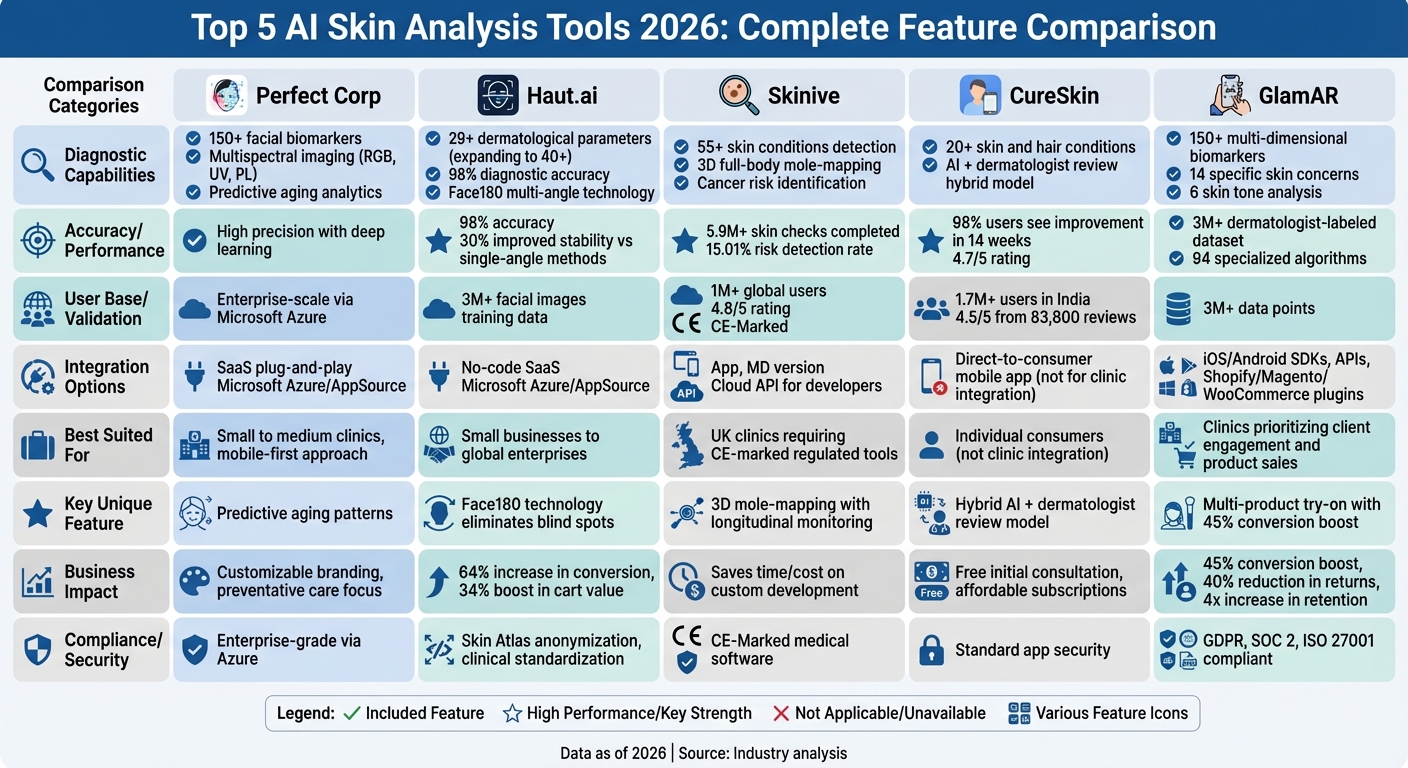 {Top 5 AI Skin Analysis Tools 2026: Feature Comparison Chart}
Selecting the ideal AI skin analysis tool depends on factors like clinic size, budget, and the need for customisation. Each platform brings its own strengths, particularly in terms of data accuracy and how easily it integrates into existing workflows. Here's a closer look at what sets these tools apart.
Perfect Corp offers excellent mobile accessibility with a user-friendly smartphone interface, making it a go-to choice for clinics prioritising on-the-go solutions. Haut.ai, on the other hand, leverages its Skin Atlas technology, which anonymises photos by removing personal identifiers directly on the device, ensuring full GDPR compliance. Its diagnostic accuracy is impressive too - 98% across over 20 skin health metrics, built on a database of more than 3 million data points.
For smaller clinics, plug-and-play SaaS solutions allow for quick setup without the need for significant infrastructure investment. Larger medical spas can benefit from enterprise-grade platforms with scalable, usage-based pricing that adjusts based on patient volume. These AI tools also reduce reliance on traditional equipment like cutometry devices, offering a more efficient and scalable approach to routine aesthetic practices.
| Tool | Key Diagnostic Features | Clinic Suitability | Accuracy Level | Integration Options |
|---|---|---|---|---|
| Perfect Corp | Deep learning for wrinkles, redness, and dullness detection | Small to medium clinics; mobile-first | High precision | Mobile apps, web platforms |
| Haut.ai | Skin Atlas technology covering 20+ skin metrics | Small businesses to global enterprises | 98% across 20+ metrics | SaaS, custom enterprise solutions, Azure |
These tools empower clinics to align their choices with their operational needs and patient expectations. The rise of data-driven precision enables clinics to measure treatment outcomes using objective scores, moving away from subjective visual assessments. With 67% of consumers expressing more trust in AI-powered skin checks compared to traditional manual methods, clinics can also see a boost in product sales ranging from 20% to 40%. This shift highlights the growing role of AI in transforming skin analysis through accurate, data-backed insights.
Conclusion
AI skin analysis tools have reshaped consultations in 2026, moving from subjective evaluations to precise, data-driven insights. This shift has uncovered hidden skin concerns and built immediate trust, with 67% of skincare consumers now favouring AI-powered skin checks over traditional methods. These tools allow practitioners to track progress with measurable data every 3–6 months, fine-tuning treatments based on real-time results.
As the Skin Care Institute explains:
"AI removes the guesswork and subjectivity, offering objective insight, consistency in tracking, and better product matching." – Skin Care Institute
Clinics embracing these technologies show their commitment to evidence-based diagnostics, which enhances their professional standing. High-resolution multi-spectral imaging provides visual proof during consultations, making the process transparent and collaborative. Clients can clearly understand why specific treatments, such as laser resurfacing or customised skincare products, are recommended, boosting their confidence in the clinic's expertise.
For clients seeking clinics equipped with these advanced tools, Scotland Aestheticians (https://scotlandaestheticians.co.uk) offers a reliable directory. The platform connects clients with verified aesthetic professionals across Scotland, ensuring access to personalised, science-backed skincare solutions.
As AI continues to integrate predictive analytics and treatment monitoring, clinics are moving beyond reactive care to set new standards in precision and transparency. Those adopting these innovations are leading the way in modern aesthetics, where measurable outcomes define the client experience.
FAQs
AI-driven skin analysis has shown high levels of accuracy in identifying specific conditions, like skin cancer. However, to ensure the best results, it should always complement professional medical advice. This combination provides a more comprehensive and safer approach to making clinical decisions.
AI skin analysis tools meet GDPR requirements by following stringent data protection protocols. They prioritise transparency, safeguard personal data during processing, and implement strong governance practices to protect patient photos and other sensitive information. Such compliance is a legal necessity for any AI system managing personal data in the UK and EU.
The best AI skin analysis tool for your clinic will depend on your specific needs and budget. For example, the Cetaphil AI Skin Analysis Tool is a budget-friendly and easy-to-use option that works well for clinics of any size. It provides personalised skin assessments simply by analysing selfies.
When it comes to costs, AI tools generally range between £0 and £200 per month per user, making it possible for both small and large clinics to find a solution that fits their financial plans.