Ultimate Guide to Skin Types

Understanding your skin type is the first step to creating an effective skincare routine. Here’s what you need to know:
- Why it matters: Using the wrong products can disrupt your skin’s balance, leading to dryness, oiliness, or irritation.
- The 5 skin types: Normal, oily, dry, combination, and sensitive. Genetics, age, and external factors like weather can influence your skin type over time.
- How to identify your skin type: Use the Bare-Faced Method, Blotting Sheet Test, or observe your skin’s behaviour throughout the day.
- Tailored routines: Each skin type requires specific care:
- Normal skin: Simple routine with lightweight products.
- Oily skin: Focus on oil control with non-comedogenic products.
- Dry skin: Hydrate with rich creams and humectants.
- Combination skin: Treat oily and dry areas separately.
- Sensitive skin: Use gentle, fragrance-free products.
Knowing your skin type helps you choose the right products and maintain a healthy, balanced complexion. Start by testing your skin at home or consulting a professional for clarity. Clinics like Skin Luxe offer expert consultations to help you understand your unique skin profile.
@figure 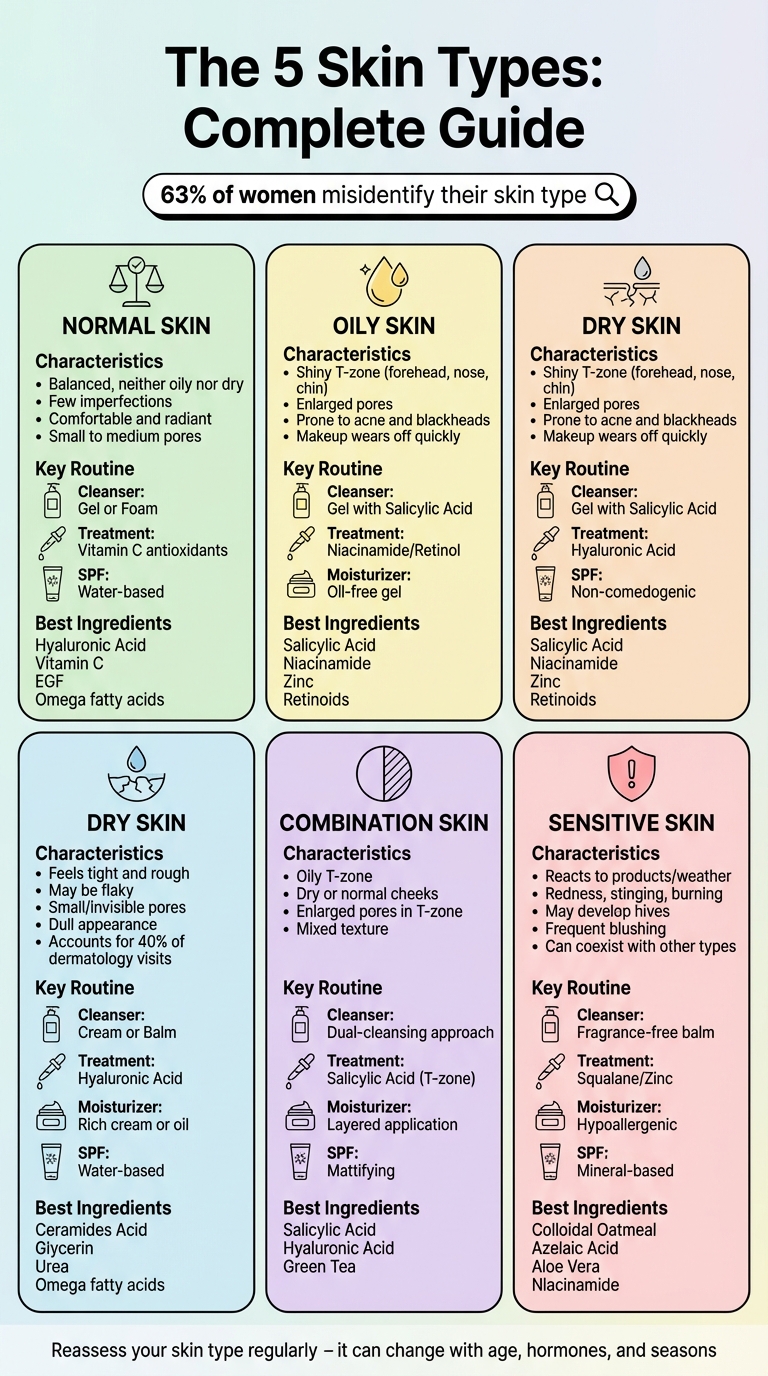 {5 Skin Types Comparison Chart: Characteristics, Routines & Product Recommendations}
How to test your skin type at home: Dermatologist guide
sbb-itb-349970b
How to Identify Your Skin Type
You don’t need fancy gadgets or a professional skin consultation to figure out your skin type. With a few simple steps, you can determine it right at home. For those seeking professional analysis, you can find a verified clinic across Scotland.
The Bare-Faced Method
Start by washing your face with a gentle cleanser, then pat it dry. Leave your skin bare - don’t apply any moisturisers or products - and wait for 30–60 minutes. After this time, check how your skin feels:
- Normal skin feels balanced, neither too oily nor too dry.
- Oily skin tends to shine, especially along the T-zone (forehead, nose, and chin).
- Dry skin may feel tight, rough, or even flaky.
- Combination skin usually shows an oily T-zone but drier areas on the cheeks.
- Sensitive skin might appear red or feel irritated.
For the most accurate results, repeat this test over three days to account for any daily changes in your skin’s condition.
The Blotting Sheet Test
This method is just as easy and adds a little extra precision. After cleansing and waiting for the same 30–60 minutes, press a blotting sheet gently onto different parts of your face - like your forehead, nose, chin, and cheeks. Then, hold the sheet up to the light to assess the oil levels:
- A fully saturated sheet suggests oily skin.
- Minimal oil indicates dry skin.
- Oil concentrated in the T-zone but not on the cheeks points to combination skin.
- Little to no oil, along with redness or irritation, could signal sensitive skin.
This quick test helps confirm whether your skin leans towards oily, dry, combination, or sensitive.
Observing Your Skin Throughout the Day
Another way to understand your skin type is to monitor its behaviour over the course of a day. For example:
- By midday, oily skin often looks shiny and feels greasy, particularly in the T-zone, and makeup may start to smudge.
- Dry skin might feel tight or even begin to flake as the day progresses.
- Combination skin usually shows oiliness in the T-zone while the cheeks stay dry.
- Sensitive skin may react to external factors like temperature changes, wind, or pollution, leading to redness, stinging, or burning.
For the best results, try this on a day when you’re not using active ingredients like retinoids or acids, as these can affect your skin’s natural state.
Characteristics of Each Skin Type
Understanding what sets each skin type apart is essential once you've identified yours. It allows you to choose products that work for your skin and avoid unnecessary issues.
Normal Skin
Normal skin strikes a balance - neither overly oily nor excessively dry. Dr Tom Mammone, Vice President of Skin Physiology and Pharmacology at Clinique, describes it as:
"Normal skin is not too oily or dry, has few imperfections, no severe sensitivity and is generally comfortable and radiant".
After cleansing, this skin type feels comfortably hydrated. It’s the least prone to breakouts or sensitivity but still requires a simple routine of cleansing, moisturising, and daily SPF to keep its healthy glow.
Oily Skin
Oily skin produces more sebum than necessary, leaving the face looking shiny or feeling greasy, especially across the forehead, nose, and chin. Enlarged pores are common, often leading to clogged pores, acne, and blackheads. Lauren Zamborsky, Dermatology Specialist at Cleveland Clinic, explains:
"Typically, if you have oily skin, you may have more problems with oil becoming clogged in your pores, which can lead to acne".
Makeup tends to wear off quickly on oily skin. Recognising these traits helps in choosing products that control shine without over-drying.
Dry Skin
Dry skin doesn’t produce enough natural oils, making it feel tight, rough, or flaky. With small or nearly invisible pores, this skin type often looks dull. Dr Ophelia Veraitch, Consultant Dermatologist at Cranley Clinic, clarifies:
"It's a common misconception that you've only got dry skin if it's flaky and peeling. Even if your skin just feels tight, that's usually an indicator that you're suffering from dryness".
Dryness accounts for 40% of dermatology visits. As the day goes on, tightness or visible flaking may worsen, highlighting the need for hydrating and barrier-repairing products.
Combination Skin
Combination skin is a mix - an oily T-zone (forehead, nose, and chin) with enlarged pores, while the cheeks are normal or dry. By midday, the T-zone may appear shiny, but the cheeks can still feel tight or comfortable. Understanding this dual nature is key to finding products that cater to both areas.
Sensitive Skin
Sensitive skin reacts easily to products, weather, or environmental changes, often showing redness, stinging, burning, or itching. Dr Tom Mammone explains:
"Skin sensitivity can be caused by several factors, including pre-existing skin conditions such as rosacea, the post-operative effects of procedures such as chemical peels or laser treatments, or by an allergy and/or reaction to a specific ingredient that acts as an irritant".
This skin type may blush frequently and develop flaky patches or hives when trying new products. Sensitivity can coexist with oily or dry skin, making it especially important to identify and manage carefully.
Next, explore how to create skincare routines tailored to your skin type.
Skincare Routines for Each Skin Type
To get the best results, it's important to tailor your skincare routine to your specific skin type. By understanding your skin's unique needs, you can avoid common mistakes and maintain a healthy balance. Below, you'll find routines designed for different skin types, setting the foundation for product recommendations later.
Normal Skin Routine
If your skin feels balanced and hydrated, stick to a simple yet effective routine. Use a gentle cleanser twice a day, followed by a lightweight, water-based moisturiser, and apply SPF daily (about 1.5 teaspoons for your face). Adding a topical antioxidant like Vitamin C in the morning can boost skin health - just wait around 10 minutes after applying it before layering on SPF. Products like The Ordinary Squalane Cleanser (£14.90) or Kiehl's Ultra Facial Cleanser (£15) are great for maintaining this skin type.
Oily Skin Routine
Oily skin often deals with excess sebum, so focus on controlling oil without over-drying. Start with a salicylic acid gel cleanser to clear pores and follow up with a lightweight, oil-free moisturiser to keep your skin barrier intact. Opt for a non-comedogenic SPF to avoid adding shine. For instance, CeraVe SA Smoothing Cleanser (£14.50) helps cleanse effectively, and Paula's Choice Resist Youth-Extending Daily Hydrating Fluid SPF50 (£39) offers mattifying sun protection. Remember to use lukewarm water (around 37°C) when cleansing, as hot water can trigger more oil production.
Dry Skin Routine
Dry skin thrives on hydration, so choose creamy or oil-based cleansers that won't strip away natural oils. After cleansing, apply a hyaluronic acid serum to damp skin to lock in moisture, followed by a rich moisturiser containing ceramides or lipids. During colder months, thicker, oil-based formulations can combat the drying effects of central heating and harsh winds. Finish with a hydrating SPF, ideally applied to damp skin to minimise moisture loss.
Combination Skin Routine
Combination skin needs a more tailored approach, as it often has an oily T-zone and drier areas elsewhere. Use a foaming cleanser for the oilier zones and a cream cleanser for drier parts. Avoid treating the entire face the same way - target oil control for the T-zone while hydrating the drier areas. Chilled products can help reduce inflammation and balance oil production. During summer, lighter gel-based products can manage the extra oil that comes with higher humidity.
Sensitive Skin Routine
Sensitive skin requires gentle, soothing products. Look for fragrance-free and hypoallergenic options - be cautious of labels that say "unscented", as they may still contain hidden irritants. A mild balm or water-based cleanser works well, followed by calming ingredients like squalane or zinc. Mineral-based SPF, often containing zinc, is less likely to irritate than chemical sunscreens. Always patch-test new products before full use. If introducing retinol, start with a low-strength version, applying a pea-sized amount two to three times a week, and gradually increase usage to minimise irritation.
Here's a quick-reference table to summarise these routines:
| Skin Type | Cleanser Type | Key Treatment | Moisturiser Texture | SPF Type |
|---|---|---|---|---|
| Normal | Gel or Foam | Antioxidants/Vitamin C | Lightweight Cream | Water-based |
| Oily | Gel (Salicylic Acid) | Niacinamide/Retinol | Oil-free Gel | Non-comedogenic |
| Dry | Cream or Balm | Hyaluronic Acid | Rich Cream or Oil | Hydrating |
| Combination | Dual-Cleansing | Salicylic Acid (T-zone) | Layered Application | Mattifying |
| Sensitive | Fragrance-free Balm | Squalane/Zinc | Hypoallergenic | Mineral-based |
Product Recommendations for Each Skin Type
Choosing the right ingredients can make all the difference in how your skin looks and feels. By understanding which active ingredients suit your skin type, you can create a routine that works effectively. Here's a quick guide to the best ingredients and product types for different skin types:
| Skin Type | Key Ingredients | Recommended Product Types |
|---|---|---|
| Normal | Hyaluronic Acid, Vitamin C, EGF, Omega fatty acids | Lightweight serums, broad-spectrum SPF |
| Oily | Salicylic Acid, Niacinamide, Zinc, Retinoids | Foaming/gel cleansers, oil-free lotions |
| Dry | Ceramides, Glycerin, Urea, Squalane, PHAs | Cream cleansers, rich/occlusive creams |
| Combination | Salicylic Acid, Hyaluronic Acid, Green Tea | Balanced cleansers, targeted spot treatments |
| Sensitive | Colloidal Oatmeal, Azelaic Acid, Aloe Vera | Fragrance-free, mineral-based SPF |
Best Ingredients for Normal Skin
If you have normal skin, the focus is on maintenance rather than solving specific issues. Hyaluronic Acid is a great choice for hydration, while Vitamin C helps brighten and supports collagen. For extra care, EGF (Epidermal Growth Factor) and omega fatty acids work to keep your skin barrier healthy.
For a budget-friendly option, try The INKEY List Hyaluronic Acid Serum (£9). If you're looking to splurge, Medik8 C-Tetra Advanced (£69) offers concentrated antioxidant benefits. To get the most out of Vitamin C, apply it in the morning after cleansing and before your SPF - it helps protect against daily environmental stressors.
Best Ingredients for Oily Skin
Oily skin thrives on ingredients that manage sebum without stripping your skin. Salicylic Acid (a BHA) is excellent because it penetrates oily areas to unclog pores and regulate oil production over time. Niacinamide can help reduce the appearance of pores, and retinoids are another great option to control oil and improve skin texture.
Daniel Issacs, Director of Research at Medik8, explains:
"In terms of reducing the signs of premature ageing, no ingredient comes close to retinol. Not only does it work to stimulate skin cell turnover... it also unclogs pores, enhances collagen production and blocks pigment formation".
For starters, check out The INKEY List Salicylic Acid Cleanser (£12), and pair it with The INKEY List Niacinamide Serum (£10). Always look for non-comedogenic products to avoid adding extra shine.
Best Ingredients for Dry Skin
Dry skin needs both hydration and moisture retention. Humectants like Hyaluronic Acid and glycerin draw water into the skin, while ceramides strengthen the lipid barrier to prevent water loss. Urea is particularly helpful for very dry skin, while squalane and vitamin E provide nourishing benefits. PHAs, like lactobionic acid, offer gentle exfoliation while keeping the skin hydrated, making them ideal for dry and sensitive types.
Best Ingredients for Combination Skin
Combination skin can be tricky, as it requires a mix of oil control and hydration. Salicylic Acid is perfect for tackling the oily T-zone by clearing out pores, while hyaluronic acid hydrates the drier areas without making them greasy. Green tea extract adds antioxidant benefits and helps balance oil production across different zones.
To manage combination skin effectively, focus on treating different areas separately. Use oil-controlling products on the T-zone and richer creams for the cheeks. For an added bonus, store your products in the fridge - this can help soothe redness and reduce inflammation when applied.
Best Ingredients for Sensitive Skin
Sensitive skin needs gentle, soothing ingredients that protect the skin barrier. Colloidal oatmeal is great for calming inflammation, while niacinamide helps restore the barrier. Azelaic acid provides mild exfoliation without causing irritation, and aloe vera offers instant relief for redness or discomfort. When it comes to sunscreen, mineral-based options like zinc oxide and titanium dioxide are less likely to irritate sensitive skin.
Before trying new products, always do a patch test on your inner elbow or behind your ear for 24–48 hours to ensure they’re safe for your skin.
Conclusion
Key Takeaways
Understanding your skin type is the foundation of an effective skincare routine. Surprisingly, 63% of women misidentify their skin type, with 19% mistaking oily skin for "balanced" and 18% confusing it with "dry" skin. Misidentifying your skin type often results in using products that may do more harm than good.
Here's something important: your skin type isn’t fixed. It can shift over time due to factors like ageing, hormonal changes, stress, or even your diet. That’s why reassessing your skin regularly - especially with seasonal changes or new concerns - is crucial. A basic routine built around four essentials - cleanser, antioxidant serum, moisturiser, and SPF - can work wonders when customised to your needs.
Don’t skip SPF. Over 90% of visible skin damage is linked to sun exposure, and UVA rays can still reach you through clouds and windows. If you’re unsure about your skin type after trying at-home methods like the Bare-Faced Method or Blotting Sheet Test, a consultation with a dermatologist or aesthetician can provide clarity, especially for more complicated issues like sensitivity or acne.
For expert advice, Scotland Aestheticians can guide you to better skincare solutions.
How Scotland Aestheticians Can Help

Identifying and treating your skin type isn’t always straightforward, which is where professional help becomes invaluable. If you’re feeling uncertain or need tailored product recommendations, Scotland Aestheticians connects you with verified skincare experts and clinics across Scotland. These professionals offer personalised consultations and treatments designed to meet your specific needs.
This guidance is especially crucial when dealing with conditions like rosacea or a damaged skin barrier, which can easily be mistaken for dryness or oiliness during at-home testing. Visit Scotland Aestheticians to find a verified expert near you and take the guesswork out of your skincare routine.
FAQs
Yes, your skin type can shift over time due to a variety of factors. Hormonal changes, ageing, and external conditions can all play a role. These influences can affect how much sebum your skin produces, its hydration levels, and even its sensitivity, ultimately altering how your skin looks and feels.
It's a good idea to check your skin type every 6 to 12 months - or even sooner if you spot noticeable changes in how your skin looks or feels. Shifts in seasons, ageing, or lifestyle changes can all affect your skin. Regularly reassessing helps you stay on top of these changes and ensures you're using the right products and routines for your skin's current needs.
If you're dealing with ongoing skin problems, struggling to understand your skin's needs, or noticing adverse reactions to products, it might be time to consult a professional. Changes in factors like your environment, hormones, or daily habits can make it tricky to assess your skin on your own. A dermatologist or aesthetician can pinpoint your skin type and suggest treatments specifically suited to you. This expert guidance can help you adjust your skincare routine and tackle issues such as breakouts, irritation, or dryness more effectively.