Medical Spa vs Beauty Salon: Understanding the Difference
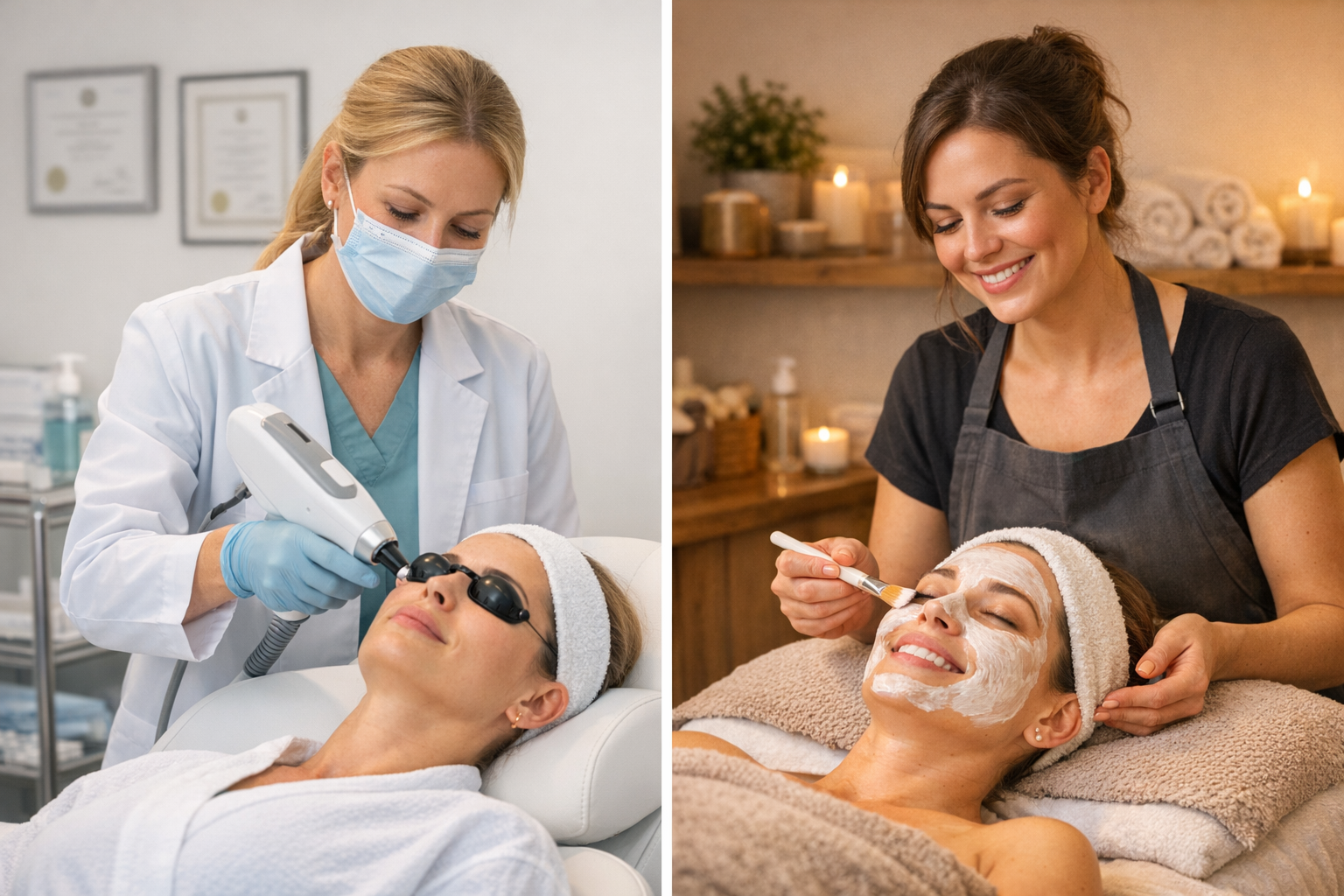
When deciding between a medical spa and a beauty salon, the key is understanding what each offers and how they differ. Medical spas focus on treatments that require medical expertise, such as Botox, dermal fillers, and laser resurfacing, while beauty salons provide grooming and relaxation services like facials, waxing, and massages. Here's a quick breakdown:
- Medical Spas: Run by licensed medical professionals, they offer advanced treatments targeting deeper skin layers, often using prescription-only products or devices. These include injectables, chemical peels, and laser therapies. Safety protocols and medical oversight are critical.
- Beauty Salons: Focus on surface-level treatments for grooming and stress relief. Services include facials, nail care, and hair removal. They do not offer procedures requiring medical supervision.
Quick Comparison
| Feature | Medical Spa | Beauty Salon |
|---|---|---|
| Staff | Doctors, nurses, or medical professionals | Beauty therapists or estheticians |
| Treatments | Botox, fillers, laser resurfacing, chemical peels | Facials, waxing, manicures, massages |
| Focus | Corrective, long-lasting results | Relaxation, routine grooming |
| Regulation | Strict medical standards, licensed professionals | Basic hygiene protocols, no medical oversight |
| Environment | Clinical, sterile | Relaxing, stylish |
If you’re looking for results-driven treatments for skin concerns or anti-ageing, a medical spa is the right choice. For regular upkeep or pampering, a beauty salon is better suited. Always check qualifications and safety standards before booking.
@figure 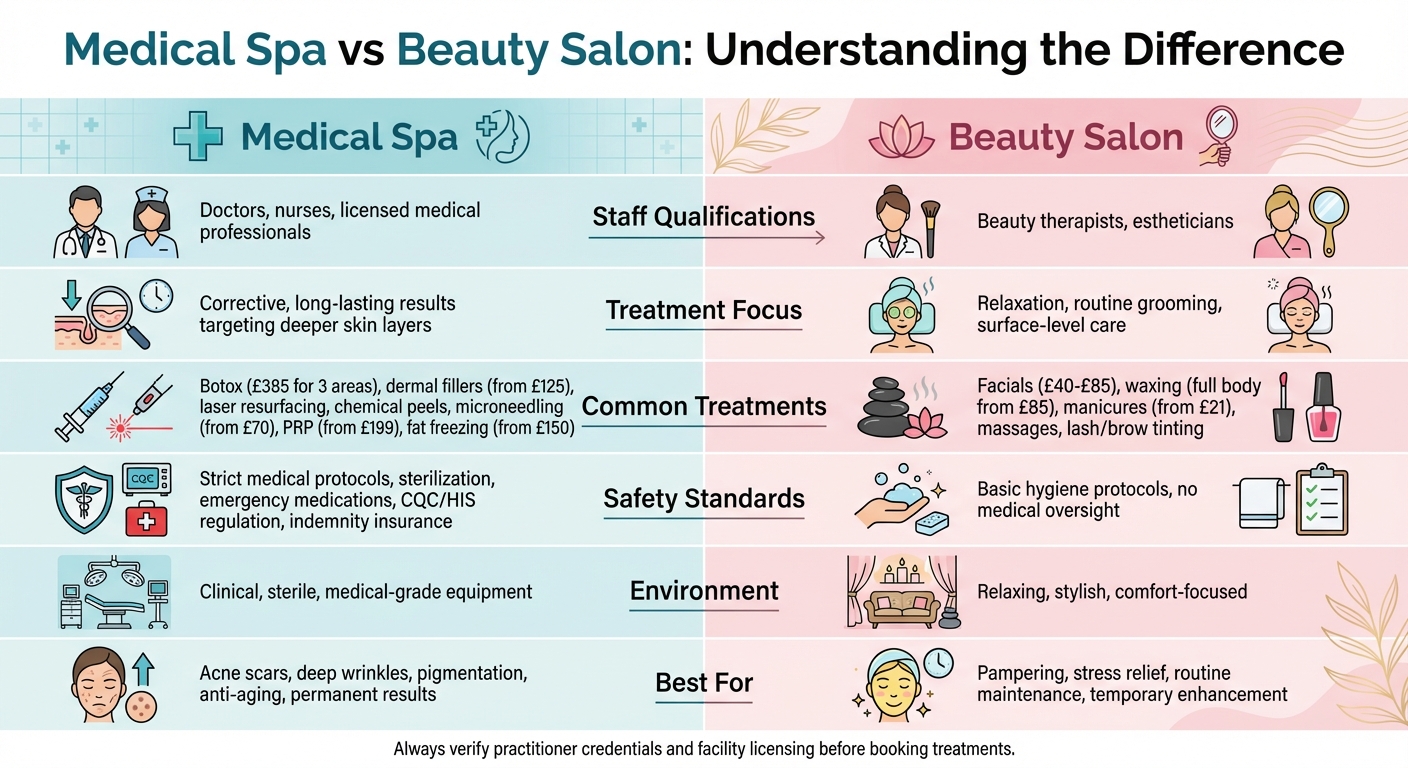 {Medical Spa vs Beauty Salon: Key Differences in Treatments, Staff, and Safety Standards}
Spa vs. med spa: Understanding the difference
Main Purpose and Setting
The design of a facility plays a key role in shaping both treatment outcomes and the overall experience. Medical spas focus on delivering corrective treatments backed by medical expertise and advanced technology, while beauty salons emphasise grooming, pampering, and regular maintenance.
These fundamental distinctions set the tone for the differing treatment environments.
Medical Spas: Clinical Treatments with Medical Supervision
Medical spas operate as healthcare facilities, offering treatments that address deeper layers of the skin. Their clinical setting ensures strict infection control measures, supported by professional waste removal services for added safety.
"Aesthetics clinic provides a clean, safe environment, the design of which facilitates good infection prevention and control practices and has the quality and design of finishes and fittings that enable thorough access, cleaning and maintenance to take place."
Treatments at medical spas go beyond the skin’s surface, stimulating collagen and elastin to tackle issues like acne scars, deep wrinkles, and volume loss. This environment is essential for safely administering advanced procedures involving needles, lasers, or prescription-only medications that affect living tissue.
Beauty Salons: Relaxation and Beauty Maintenance
Beauty salons, on the other hand, focus on creating a relaxing and stylish atmosphere. Their treatment rooms are designed for comfort and practicality rather than clinical precision.
The services offered in beauty salons are surface-level and aim to provide temporary enhancements. These include facials, waxing, manicures, pedicures, and massages, all of which prioritise stress relief and ongoing beauty upkeep rather than medical-grade correction. Unlike medical spas, beauty salons are not subject to the same rigorous infection control protocols or regulatory requirements.
Staff Training and Medical Supervision
The expertise and qualifications of staff play a critical role in ensuring the safety and success of treatments. The type of training staff receive directly affects the range of treatments they can perform safely and how they manage any complications that arise. While medical spas employ licensed healthcare professionals with prescribing rights, beauty salons depend on beauty therapists trained in non-invasive cosmetic services.
Medical Spas: Medical Professionals and Trained Staff
Medical spas operate under the guidance of licensed physicians, particularly when treatments involve prescription-only medicines or invasive devices. Their clinical teams often include doctors, dermatologists, dentists, and nurses, all of whom have advanced medical qualifications.
In addition to their formal medical education, these professionals undergo specialised training in areas such as facial anatomy, pharmacology, injection techniques, and managing complications. This advanced training equips them to handle emergencies like infections, nerve damage, or allergic reactions - scenarios that require immediate medical intervention and prescribing authority.
"The government considers that there are certain non-surgical cosmetic procedures that are of sufficient complexity and invasiveness that they should only be performed by qualified healthcare professionals."
- Department of Health & Social Care
Before any treatment, a mandatory clinical consultation determines whether the patient is a suitable candidate. Skipping this step is a serious red flag.
In contrast, beauty salons follow a different training model focused on less invasive procedures.
Beauty Salons: Licensed Beauty Therapists
Beauty salons are staffed by estheticians, beauticians, or beauty therapists who are certified according to National Occupational Standards (NOS) and qualifications like NVQs. While licensed by cosmetology boards, these professionals are not recognised as medical practitioners and are not authorised to perform invasive procedures.
Their training is centred on treatments that only affect the outermost layer of the skin, such as facials, waxing, and massages. These services are considered low-risk and do not require medical oversight since they do not penetrate living tissue. Beauty therapists are trained in basic first aid but lack the clinical expertise to handle medical complications.
Available Services and Treatments
Medical spas and beauty salons cater to different needs when it comes to skincare and beauty treatments. While medical spas focus on corrective, deeper treatments using advanced technology and medical-grade products, beauty salons offer quick, surface-level care aimed at relaxation and routine upkeep. Let’s break down the differences by looking at the treatments they provide.
Treatments at Medical Spas
Medical spas specialise in procedures that require medical oversight and work at a deeper, cellular level. A key part of their offerings includes injectables like anti-wrinkle injections (commonly referred to as Botox), which cost around £385 for three areas, and dermal fillers starting at £125. These treatments are prescription-only and must be administered by GMC-registered professionals in clinical environments.
Skin rejuvenation options are another highlight. Medical-grade chemical peels, such as Obagi, microneedling (starting at £70), and HydraFacial treatments (around £250) are commonly available. Advanced therapies like PRP, which begins at £199, use the body’s natural healing processes to boost collagen production. Laser treatments, including laser resurfacing, IPL, and laser hair removal, address deeper concerns like pigmentation, scarring, and permanent hair reduction.
"Medical Facials will cover the full spectrum starting from skin regeneration and rejuvenation, tackling the underlying condition, and prompting collagen and elastin production."
- Dr John Quinn, Quinn Clinics
Body contouring is also a significant service offered by medical spas. Popular options include fat freezing (CoolShaping) starting at £150, fat-dissolving injections, and non-surgical alternatives like radiofrequency (Exilis Elite), HIFU, and thread lifts. For instance, the Hydradermie Age Logic facial has been shown to reduce wrinkle depth by 49.5%.
Services at Beauty Salons
On the other hand, beauty salons focus on everyday pampering and relaxation. Their treatments are non-invasive and designed for immediate results. Standard facials, priced between £40 and £85, use techniques like steam, massage, and beauty products to refresh the skin. While effective for relaxation, these treatments don’t target deeper skin concerns or stimulate tissue repair.
"A spa facial is typically just a surface level cleansing of the skin with the goal to relax... A medical facial on the other hand, treats your skin beyond just the top layer."
Beauty salons also offer grooming services such as waxing, threading, and plucking, with full body waxing starting at £85. Nail care (manicures from £21), lash and brow treatments (tinting and shaping), and massages are also common. Some salons provide mild exfoliation methods like microdermabrasion and basic LED light therapy.
Side-by-Side Comparison: Medical Spas vs Beauty Salons
Here’s a quick look at how the services differ:
| Treatment Category | Medical Spa | Beauty Salon |
|---|---|---|
| Injectables | Botox, dermal fillers, PRP, Polynucleotides, vitamin B12 shots | Not offered |
| Skin Rejuvenation | Medical-grade peels (Obagi), microneedling, laser resurfacing, HIFU | Relaxing facials, superficial peels, microdermabrasion |
| Technology | IPL, radiofrequency (Exilis Elite), laser hair removal, ultrasound | LED light therapy, steam, manual massage |
| Body Treatments | Fat freezing, fat dissolving, thread lifts, sclerotherapy | Body wraps, Swedish/deep tissue massage, cellulite massage |
| Grooming | Limited | Waxing, threading, manicures, pedicures, lash/brow tinting |
Medical spa treatments often involve some recovery time. For instance, procedures like "The Perfect Peel Superblend" may require 3–7 days of downtime. In contrast, beauty salon treatments typically allow clients to continue their day immediately. For safety, advanced treatments like laser hair removal or high-strength peels require patch testing at least 24 hours beforehand.
Safety Standards and Treatment Intensity
When comparing medical spas and beauty salons, one key difference lies in their safety standards, which are closely tied to the intensity of treatments they offer and the risks involved.
Medical spas handle treatments that penetrate deeper skin layers, requiring more rigorous safety measures. Beauty salons, on the other hand, focus on surface-level care, which carries minimal risk and demands less stringent protocols.
Safety Measures at Medical Spas
Medical spas operate under clinical safety standards similar to those in hospitals or GP practices. They follow strict sterilisation and infection control procedures, such as using single-use instruments and conducting thorough decontamination processes. Practitioners, including doctors, registered nurses, and physician assistants, are trained to manage serious medical emergencies like burns, nerve damage, vascular complications, and severe allergic reactions.
"The risks, the ability to mitigate those risks, and the proficiency to manage the adverse events and complications when they arise, are such that these procedures should only be performed by appropriately trained specialist (plastics) surgeons and fully qualified General Medical Council registered medical doctors."
Medical spas are also equipped with emergency medications, such as hyaluronidase to address dermal filler complications and lidocaine for anaesthesia. They carry indemnity insurance and conduct psychological wellbeing assessments to ensure client safety. In Scotland, procedures categorised as Group 2 and 3, like Botox and fillers, must be overseen by healthcare professionals in facilities regulated by Healthcare Improvement Scotland (HIS). This oversight ensures that treatments such as laser therapies or injectables include immediate access to medical intervention if complications arise.
Safety Practices at Beauty Salons
Beauty salons, in contrast, follow hygiene protocols tailored to their non-invasive treatments. Their focus is on maintaining cleanliness and ensuring client comfort. Equipment is disinfected between clients, and therapists practise basic hygiene, such as frequent hand washing and using fresh towels. Since procedures like facials, waxing, or manicures do not break the skin barrier, risks are generally limited to minor skin irritation or mild allergic reactions.
However, beauty salons are not equipped to handle emergencies stemming from invasive procedures. They do not stock prescription medications or have the resources to manage severe complications. As a result, high-risk treatments, such as injectables or deep chemical peels, are reserved for medical facilities. From August 2025, procedures like non-surgical Brazilian Butt Lifts will only be allowed in CQC-registered premises and must be performed by qualified healthcare professionals.
How to Choose Between a Medical Spa and Beauty Salon
Deciding between a medical spa and a beauty salon depends on your goals. Medical spas are ideal for treatments that address specific skin conditions or require clinical expertise. Beauty salons, on the other hand, are perfect for relaxation and routine grooming. Here's a breakdown to help you make the right choice.
When a Medical Spa Is the Right Choice
If you're looking for corrective or anti-ageing treatments, a medical spa is your best bet. These facilities specialise in procedures like addressing rosacea, treating cystic acne, administering Botox or dermal fillers, and performing laser hair removal. The key difference lies in the expertise and equipment - medical spas are staffed by licensed professionals and use advanced, medical-grade technology.
"At our clinic, for instance, we use FDA-approved Alexandrite laser devices. These machines are significantly more effective - and several times more costly - than the devices typically found in beauty salons."
- Dr. Meltem Şentürk, dermatologist.
Before committing to a treatment, schedule a consultation to discuss your concerns, medical history, and any potential risks. Always verify that the facility and practitioners hold the necessary licences. Be cautious of providers who rely solely on social media advertising or operate from private homes, as these could indicate a lack of professionalism or safety standards.
When a Beauty Salon Is the Right Choice
For everyday grooming and relaxation, a beauty salon is the way to go. These spaces are designed to provide comfort and offer treatments like manicures, pedicures, waxing, and basic facials that focus on hydration and surface-level cleansing. These non-invasive services are low-risk and ideal for maintaining your routine, though they typically require regular upkeep for lasting results.
Beauty salons are also great for budget-friendly pampering and stress relief. However, if you have specific skin concerns or need treatments that require medical supervision, a beauty salon won't have the necessary equipment or qualified staff to meet those needs.
Conclusion
The choice between a medical spa and a beauty salon ultimately depends on your goals and the level of expertise required. Medical spas specialise in treatments like Botox, laser resurfacing, and deep chemical peels - procedures that require clinical oversight and are performed under strict safety protocols by licensed medical professionals trained to handle potential complications. Beauty salons, on the other hand, focus on relaxation and maintenance, offering services like facials, waxing, and grooming that enhance your appearance without penetrating the skin barrier.
If you’re dealing with specific concerns such as acne scars or pigmentation, or you’re after more dramatic, longer-lasting results, a medical spa may be the better option. For routine upkeep and pampering, beauty salons provide a welcoming and accessible space for surface-level care.
Safety should always be your top priority. The UK’s new 3-tier licensing system - Green for low-risk, Amber for medium-risk, and Red for high-risk procedures - ensures that treatments are carried out by qualified professionals in appropriate settings. This system helps distinguish which treatments require medical expertise and which can be safely performed in a salon.
"The purpose of the licensing scheme is to ensure that consumers who choose to undergo a non-surgical cosmetic procedure can be confident that the treatment they receive is safe and of a high standard."
- Department of Health & Social Care
Take the time to review your options, check the practitioner’s credentials, and ensure the premises are authorised. By doing so, you can confidently select the right setting to achieve your skincare goals safely and effectively.
FAQs
To ensure you're in safe hands, confirm the practitioner's qualifications and professional registration with recognised regulatory bodies such as the GMC (General Medical Council), NMC (Nursing and Midwifery Council), or GDC (General Dental Council), depending on their field.
When you meet with them, don’t hesitate to ask about their training, experience, and any memberships they hold in professional organisations that maintain high standards. Additionally, using reliable clinic or practitioner search tools can help you find a professional who is both qualified and trustworthy.
Med spa treatments, while popular, come with potential risks such as infections, scarring, allergic reactions, and uneven results. These complications often occur when procedures are not performed correctly or are handled by untrained or unqualified individuals. To reduce these risks, it's important to choose professionals who are properly trained and hold the necessary qualifications. Always verify credentials before undergoing any treatment.
Yes, treatments like chemical peels, laser procedures, or microneedling often come with a recovery period. The length of downtime varies depending on the treatment and how your skin reacts. To get the best results and speed up healing, it's crucial to follow the aftercare instructions provided by your practitioner.