Essential Checklist for Your First Skin Clinic Visit
Your first visit to a skin clinic can feel overwhelming, but preparation makes all the difference. Here's a quick guide to help you navigate the process confidently:
- Research the clinic and practitioner: Verify qualifications (e.g., GMC for doctors, NMC for nurses) and look for accreditations like Save Face or JCCP. In Scotland, clinics must register with Healthcare Improvement Scotland (HIS).
- Prepare your medical history: List medications, allergies, skincare products, and lifestyle habits (e.g., smoking or alcohol use).
- Ask the right questions: Discuss treatment options, risks, costs, and aftercare during your consultation. Avoid clinics that pressure you to commit immediately.
- Adjust your skincare: Stop using retinoids, acids, and strong actives 5–7 days before your visit. Avoid sun exposure, tanning, and blood-thinning medications.
- Plan for the day: Arrive with a clean face, avoid caffeine, and bring necessary documents. Prepare for potential redness or swelling post-treatment.
@figure 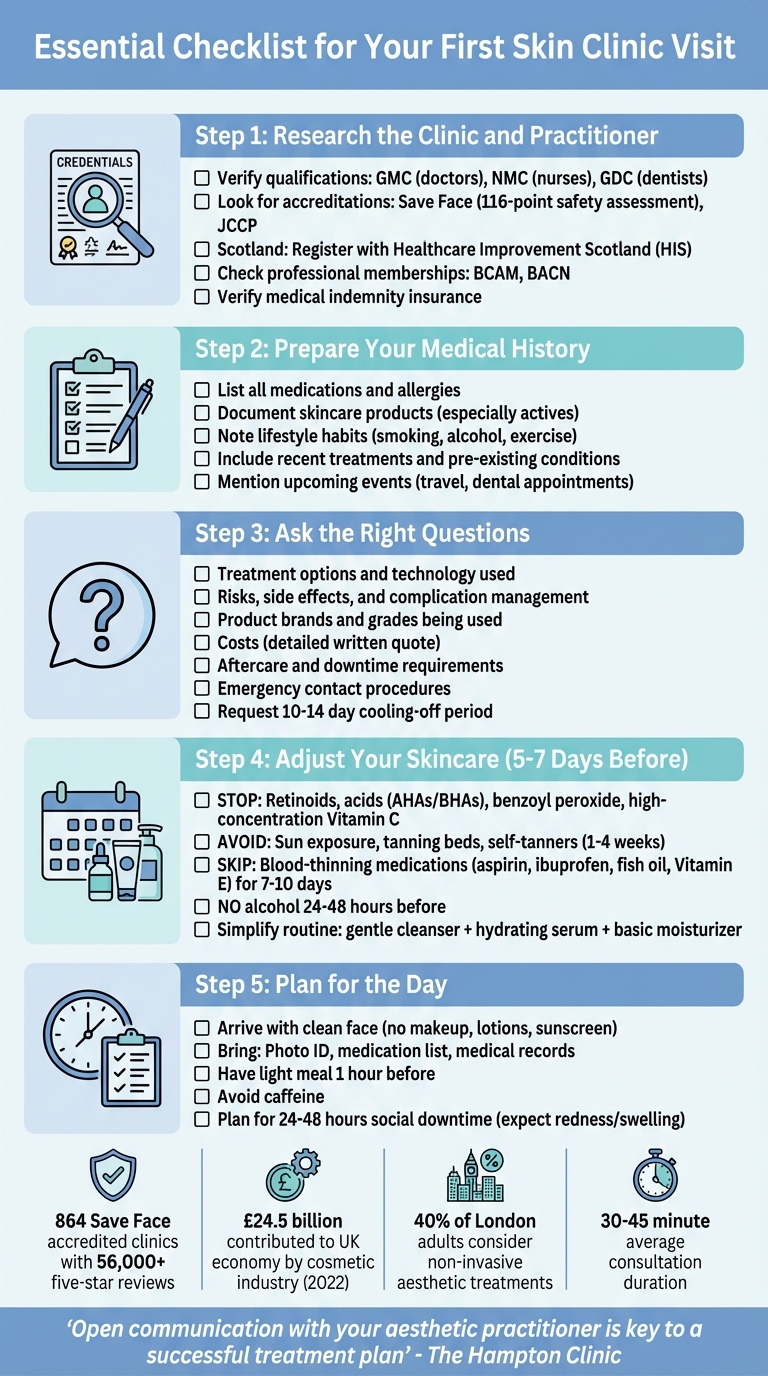 {First Skin Clinic Visit Preparation Checklist: 5 Essential Steps}
What To Expect From Your First Appointment At A Skin Clinic
Finding and Choosing Your Skin Clinic
The first step to a safe and successful cosmetic treatment is selecting the right clinic. Across the UK, there are thousands of clinics offering non-surgical cosmetic procedures. To make this process easier, Scotland Aestheticians connects you with verified aesthetic clinics and professionals throughout Scotland. You can search by location and specific treatments, streamlining your search.
Check Clinic Qualifications
It’s crucial to ensure that your chosen clinic and practitioners meet the necessary qualifications. Doctors should be registered with the GMC, nurses with the NMC, and dentists with the GDC. For treatments like Botox, which require a prescription, confirm that the practitioner is a Nurse Independent Prescriber listed on the NMC register.
"Safety is always the top priority and having a prescriber onsite is a key green flag for any clinic offering aesthetic treatments." – Clare McLoughlin, Founder, Appearance Based Medicine
In Scotland, clinics led by medical professionals are required to register with Healthcare Improvement Scotland (HIS). This regulation ensures a level of accountability - if a clinic doesn’t meet required standards, you have the option to report concerns to HIS. Beyond this mandatory registration, look for voluntary accreditations from organisations like Save Face or the Joint Council for Cosmetic Practitioners (JCCP). Save Face accreditation, for example, involves passing a 116-point safety assessment, and their register currently includes 864 accredited clinics with over 56,000 five-star reviews.
Membership in professional bodies such as the British College of Aesthetic Medicine (BCAM) or the British Association of Cosmetic Nurses (BACN) also demonstrates that practitioners are committed to ongoing education and ethical standards. During your consultation, ask to see original qualification certificates, such as Level 4, 5, or 7 diplomas in aesthetic practice. Additionally, confirm that the clinic holds valid medical indemnity insurance for the procedures they offer. Taking these steps ensures you’re fully informed and confident in your choice.
Confirm Available Treatments
Once you’ve identified qualified clinics, check that they offer the treatments you’re looking for. Scotland Aestheticians allows you to filter clinics by the type of service, helping you find specialists in treatments like microneedling or cryotherapy. During your consultation, ask about the practitioner’s experience - how often they perform the treatment - and request before-and-after photos of previous clients.
"Using a doctor-led clinic means that staff are more qualified to advise the best course of action. The advice will be based on their medical knowledge and extensive skill set." – Saniyya Mahmood, Aesthetica Medical
For treatments involving devices or equipment, ensure the clinic uses FDA-cleared systems and products. This guarantees that the equipment meets safety and efficacy standards. Be cautious of clinics that push you to make an immediate decision. A reputable clinic will offer a 10–14 day cooling-off period, giving you time to weigh your options without feeling pressured. Once you’ve confirmed treatment options, patient feedback can provide further guidance.
Review Patient Feedback
Patient reviews are a valuable resource when evaluating clinics. While testimonials on a clinic’s website or social media can be helpful, it’s better to rely on independent platforms like Google and Trustpilot for unbiased opinions.
"Be cautious with clinics that only post glowing feedback on their own site or social media." – The Aesthetic Directory
Pay attention to recurring comments about professionalism, the thoroughness of consultations, and treatment results. For additional reassurance, Save Face’s review system - with over 56,000 five-star reviews - can help you identify practitioners with consistently high ratings. Clinics registered with HIS in Scotland also have official inspection reports and quality ratings available on the Healthcare Improvement Scotland website. These reports offer an objective view of the clinic’s safety and practices.
Word-of-mouth recommendations from friends and family who have had similar treatments are another reliable source of information. However, steer clear of clinics that emphasise low prices over proper qualifications. While the cosmetic industry contributed £24.5 billion to the UK economy in 2022, its rapid growth has also attracted unqualified practitioners. Doing your research and verifying credentials is essential to protect both your safety and your investment.
Getting Ready for Your Consultation
Making the most of your 30–45 minute consultation is all about preparation. By building on your earlier research, you can ensure the session is focused and productive. Arriving with the right questions and information helps your practitioner craft a treatment plan tailored to your needs while prioritising safety.
Write Down Your Questions
Before your consultation, jot down all the questions you’d like to ask. Cover the essentials, such as the technology used, treatment duration, session frequency, and request examples like before-and-after images of similar cases. It’s also crucial to confirm the practitioner’s credentials and experience.
"Knowing the brand and grade of the substances that will be injected or applied to your skin is essential... non-branded options, though cheaper, are far less regulated and can come with severe risks." – Doctor Brad
Don’t shy away from asking about potential side effects, how complications are handled, and the specific brands of products being used. Make sure to request a detailed written quote that includes any potential extra costs, and clarify the clinic’s cancellation policy. Additionally, ask about aftercare, downtime requirements, and how to contact the clinic in case of an emergency.
Gather Your Medical Information
Your practitioner needs a full understanding of your health to ensure safe and effective treatment. Prepare a list of all medications, allergies, pre-existing conditions, and recent treatments. Don’t forget to include lifestyle factors like smoking, alcohol use, and exercise habits, as these can influence healing.
Take photos of the ingredient labels on your skincare products, especially if they contain active ingredients like retinoids, Vitamin C, or acid exfoliants (AHAs/BHAs). Mention any upcoming dental appointments, travel plans that involve sun or swimming, and major social events, as these can affect the timing of your treatment.
Know What Happens During Consultation
During the consultation, your practitioner will examine your skin, discuss goals, and review your medical history. They’ll also explore your reasons for seeking treatment, ensuring your expectations are both realistic and achievable. This step is part of their responsibility to determine whether the treatment is suitable for you.
"A responsible practitioner... will always ask about your expectations and sometimes guide you towards different options if what you're imagining isn't achievable - or safe." – Doctor Brad, Aesthetic Specialist
Bring reference images or provide clear descriptions of your desired results. Remember, the aim is to enhance your natural appearance rather than replicate someone else’s. Your practitioner will outline treatment alternatives, set realistic expectations for results and timelines, and explain any preparation or downtime required.
Some clinics may charge a consultation fee, which might be deducted from future treatments. Keep in mind that many treatments deliver subtle, gradual improvements and often require multiple sessions or ongoing maintenance. Understanding this process will help you approach your consultation with patience and clarity, ensuring you’re well-prepared for the journey ahead.
Pre-Visit Preparation Checklist
Once your appointment is scheduled, it's important to fine-tune your skincare routine, daily habits, and arrival plans to get the best results from your treatment. Here's how you can prepare your skin and reduce the risk of complications.
Adjust Your Skincare Routine
Before any aesthetic procedure, your skin should be calm and well-prepared. About 5–7 days prior to your appointment, stop using retinoids, exfoliating acids, benzoyl peroxide, and any Vitamin C products with high concentrations or low pH. These can make your skin more sensitive.
In the three days leading up to your visit, simplify your skincare to just the essentials: a gentle cleanser, a hydrating serum (like hyaluronic acid), and a basic moisturiser. Stay out of the sun, avoid tanning beds, and skip self-tanning products for at least 1–4 weeks beforehand, as tanned or compromised skin can increase the risk of complications. Avoid scheduling other skin treatments like chemical peels, facials, or laser therapy for 1–2 weeks prior, and refrain from waxing, threading, or using depilatory creams on the treatment area for at least a week.
Keep your skin hydrated by drinking plenty of water in the days leading up to your appointment. To minimise bruising, stop taking blood-thinning medications and supplements - such as aspirin, ibuprofen, fish oil, and Vitamin E - 7–10 days before your visit. Also, avoid alcohol for 24–48 hours beforehand to help reduce inflammation and dehydration.
Stop Smoking and Nicotine Use
If you're a smoker, it's crucial to stop smoking and using nicotine products at least four weeks before your treatment. Nicotine disrupts blood flow and slows the skin's natural healing process, which can interfere with your results. This is especially important for more invasive procedures, such as injectables or body contouring. Be upfront about your nicotine use during your consultation, as your practitioner will need this information to create a safe and effective treatment plan.
Prepare for Arrival
On the day of your appointment, come with a clean face - free of makeup, lotions, sunscreens, or perfumes. Bring a list of any medications you're taking, along with any necessary documents like photo ID or medical records. Have a light meal about an hour before your session to avoid feeling lightheaded, and consider skipping caffeine to help reduce skin sensitivity.
Finally, plan for some social downtime (24–48 hours) after your treatment. Many procedures may leave your skin temporarily red or slightly swollen, similar to a mild sunburn. By following these steps, you'll set yourself up for a smooth, stress-free experience and help your results shine.
What Happens During Your Visit
Initial Assessment and Paperwork
Checklist Step: Complete all paperwork accurately. Arrive a little early to fill out intake forms covering your health history, current medications, allergies, and any past cosmetic treatments. These forms also include consent documents explaining the procedure, along with potential risks and side effects.
The practitioner will carry out a detailed skin examination. This could be a full-body check or a focused assessment of specific issues like acne or pigmentation. For closer inspection, they may use a handheld dermatoscope to examine any irregularities or lesions. If you're there for an aesthetic procedure, they'll also perform a psychological and risk evaluation to ensure you're an appropriate candidate. Once the paperwork and examination are complete, the discussion will naturally move towards your treatment options.
Review Your Treatment Plan
Checklist Step: Understand your personalised treatment options. After the assessment, the practitioner will walk you through a treatment plan tailored to your skin type, medical history, and personal goals. They'll compare options in terms of results, duration, discomfort levels, and safety. You'll also get information about the technology, equipment, and product brands that will be used.
"A reputable clinic will recommend the most effective treatment for you, not just the services they promote." – Derma Revive Skin Clinic
Visual aids, like before-and-after photos, can help set clear expectations. The practitioner will also discuss possible complications, expected downtime - such as redness or swelling - and the number of sessions you'll need. Reliable clinics encourage you to take your time deciding, so there's no pressure to commit on the spot. You can request a written breakdown of the risks, benefits, and costs to review at home. Once you're clear on your treatment plan, the final step is understanding the aftercare instructions to ensure smooth recovery.
Get Your Aftercare Instructions
Checklist Step: Follow your aftercare instructions carefully. Before leaving, you'll receive customised aftercare guidance tailored to your specific treatment and skin needs. These instructions will focus on protecting your skin, managing activities, and using recommended recovery products. For instance, applying a broad-spectrum SPF 30 to 50 multiple times a day is crucial, as treated skin becomes more vulnerable to UV damage and hyperpigmentation.
You'll need to avoid active skincare ingredients - like retinol, AHAs, and BHAs - for 48–72 hours. It's also important to skip intense exercise, saunas, and steam rooms for 24–48 hours to help minimise swelling. The clinic will provide an emergency contact number in case of unexpected pain, skin discolouration, or allergic reactions. A follow-up appointment will be scheduled to monitor your healing and decide if any adjustments or additional treatments are needed.
Conclusion
By following the steps outlined in the checklist, you can approach your first skin clinic visit with clarity and confidence. What might initially feel overwhelming becomes a manageable and informed process when you focus on key areas like researching credentials, preparing your medical history, asking thoughtful questions, and understanding aftercare. In the UK, checking practitioner credentials isn’t just a helpful step - it’s a critical measure for ensuring your safety.
At the heart of a successful experience are three essential elements: detailed research, honest preparation, and clear communication.
"Open communication with your aesthetic practitioner is key to a successful treatment plan and a positive experience overall." – The Hampton Clinic
Interestingly, nearly 40% of adults in London consider non-invasive aesthetic treatments to boost their confidence, so you’re certainly not alone in exploring these options. Taking the time to prepare thoroughly can mean the difference between a rewarding experience and one that falls short of expectations. Don’t rush your decision - request a cooling-off period if needed, and resist any pressure to commit immediately. Trustworthy clinics will always support your need to reflect before making a final choice.
FAQs
To ensure your practitioner is properly qualified, verify their registration with the relevant UK regulatory bodies. For doctors and dentists, check the General Medical Council (GMC) or General Dental Council (GDC). If you're considering cosmetic procedures, look into accredited registers such as the Joint Council for Cosmetic Practitioners (JCCP) or Save Face. These organisations uphold safety and qualification standards, giving you confidence in selecting a skilled professional for your treatment.
If you notice a skin reaction, start by evaluating how serious it is. Minor issues like swelling, bruising, or discomfort are typically nothing to worry about. Stick to the aftercare instructions provided by your practitioner, and if you spot anything out of the ordinary - like pale patches or a sensation of coldness - reach out to the clinic for advice.
However, if you experience severe symptoms such as trouble breathing, swelling in your face, or hives, call 999 straight away. It's also important to let the clinic know about any side effects so they can offer additional guidance.
It's a good idea to pause the use of active skincare products - like retinoids, acids, or exfoliants - 5 to 7 days prior to your appointment. This step helps reduce skin sensitivity and ensures your treatment goes as smoothly as possible.