How to Find a Verified Aesthetician Near You
Finding a verified aesthetician in Scotland is now safer and simpler, thanks to new regulations and trusted directories. With stricter licensing laws introduced in 2026, procedures like Botox or fillers must be performed by qualified professionals in registered settings. Here's how you can ensure your practitioner is legitimate:
- Check Credentials: Look for government-regulated certifications (e.g., Ofqual or SQA logos) and qualifications like the Level 7 Diploma in Aesthetics.
- Verify Memberships: Use trusted registers like Save Face or JCCP to confirm professional affiliations and safety compliance.
- Review Insurance: Ensure the practitioner has proper indemnity insurance to cover potential complications.
- Use Trusted Directories: The Scotland Aestheticians directory lists 337 verified clinics across 83 locations, making it easy to find reliable practitioners nearby.
- Inspect Reviews: Focus on feedback from verified platforms and check for compliance with hygiene and safety standards.
How to Check Credentials and Certifications
Making sure an aesthetician is properly qualified is your first safeguard against unsafe treatments. It's crucial to confirm that their certifications come from government-regulated organisations and align with National Occupational Standards. These steps can help you verify the necessary credentials.
"The UK beauty industry is unregulated - this means that anyone can open a salon, or work as a therapist, without any training, qualifications, or insurance." – BABTAC
When reviewing an aesthetician's qualifications, check for the Ofqual or Scottish Qualifications Authority (SQA) logos on their certificates. These marks indicate the qualification has been government-regulated. Certificates should also display the Awarding Organisation's name (such as CIBTAC, CIDESCO, VTCT, or City & Guilds) and include security features like watermarks or holographic stamps. If you're unsure about a certificate's legitimacy, you can contact the awarding body directly - they maintain records of all issued qualifications.
Recognised Qualifications to Look For
The Level 7 Diploma in Aesthetics is considered the gold standard for advanced practice, equivalent to a Master's degree-level qualification. This diploma reflects extensive academic and practical training. However, aestheticians typically build their skills progressively, starting with lower-level qualifications (like Level 3 or 4) before advancing to Level 7.
For practitioners offering injectable treatments such as Botox or dermal fillers, JCCP (Joint Council for Cosmetic Practitioners) registration is crucial. Full JCCP membership requires at least two years of experience in a specific area, proof of competence, and adherence to a strict Code of Practice. You can confirm an aesthetician's JCCP membership using their online "Find a Professional" tool.
Training and Assessment Requirements
Training programmes should be regulated by Ofqual or SQA and include practical assessments to ensure competence. Beyond certificates, look for evidence of thorough training and independent evaluations. Key indicators include procedural logbooks and DOPS assessments (Direct Observation of Procedural Skills), which confirm an aesthetician’s clinical abilities.
"Any Ofqual regulated qualification issued by an Awarding Organisation (AO) is government regulated and mapped to the National Occupational Standard (NOS)." – BABTAC
Ask to see their treatment portfolio and proof of specific indemnity insurance. For those without traditional certifications, some may have completed an Accreditation of Prior Experiential Learning (APEL) through JCCP-approved centres. This process verifies practical skills, but you should always request evidence of this assessment before proceeding with treatment.
Checking these credentials is an essential step in ensuring you receive safe and professional aesthetic treatments.
sbb-itb-349970b
Professional Memberships to Verify
@figure 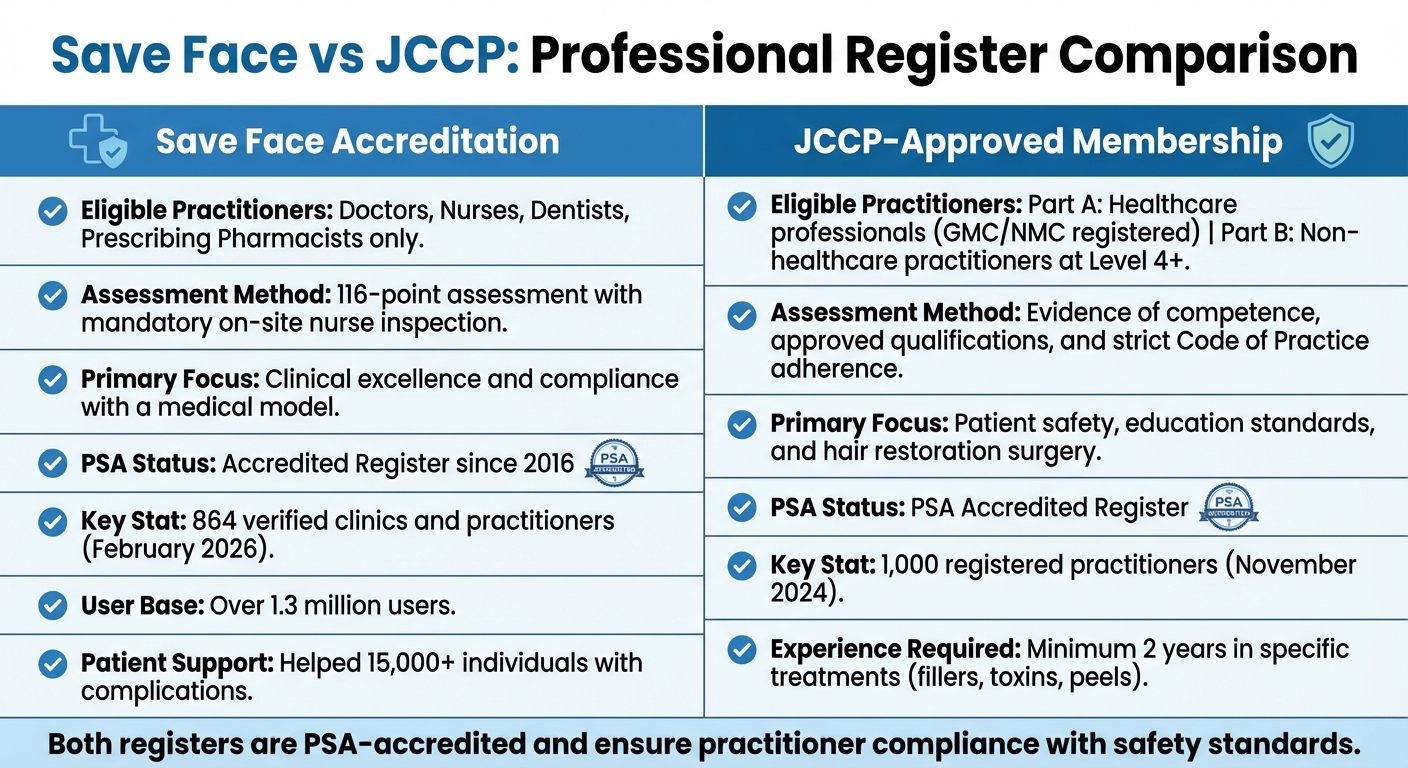 {Save Face vs JCCP Accreditation Comparison for Aestheticians}
Once you've checked individual qualifications, the next step is to verify professional memberships. These memberships act as an extra safeguard, ensuring practitioners follow strict safety and ethical standards. Organisations like Save Face and the Joint Council for Cosmetic Practitioners (JCCP) maintain registers accredited by the Professional Standards Authority (PSA). Membership in these organisations indicates that a practitioner has been independently assessed and complies with rigorous safety protocols.
The Save Face register, trusted by over 1.3 million users, plays a vital role in protecting patients. It has helped over 15,000 individuals who faced complications after visiting unverified practitioners. Similarly, the JCCP achieved a milestone in November 2024, reaching 1,000 registered practitioners, reflecting the industry's growing commitment to safety and professionalism. Checking for accreditations like Save Face and JCCP membership is a good way to confirm a practitioner's reliability.
Save Face Accreditation
Save Face maintains the only government-approved register specifically for registered doctors, nurses, dentists, and prescribing pharmacists. Practitioners must pass a 116-point assessment covering areas such as clinical performance, insurance, and product safety. To ensure compliance, Save Face deploys nurse assessors to physically inspect each accredited clinic, checking hygiene, equipment, and treatment protocols on-site.
"A Save Face nurse assessor inspects every part of the clinic to ensure that we are treating our patients with the utmost care." – Dr Manav Bawa, Time Clinic
Additionally, practitioners must prove they use genuine products sourced from licensed suppliers, protecting patients from counterfeit substances. You can easily confirm a practitioner's accreditation by searching the online Save Face register, which listed 864 verified clinics and practitioners as of February 2026. For added reassurance, also check for JCCP membership.
JCCP-Approved Membership
The JCCP register is divided into two categories: Part A, for healthcare professionals registered with statutory bodies like the GMC or NMC, and Part B, for non-healthcare practitioners qualified at Level 4 or above. Members must demonstrate their competence through the JCCP framework and commit to a strict Code of Practice.
"The JCCP has been established as a vehicle to promote patient safety in the world of non-surgical aesthetics and hair restoration surgery." – JCCP
To qualify for full membership, practitioners typically need at least two years of experience in specific treatments such as fillers, toxins, or peels. The JCCP also collaborates with regulators like the GMC and NMC to share alerts about practitioner conduct through Fitness to Practice procedures. When using the JCCP register, make sure to check the specific treatments the practitioner is accredited for, as they may not be approved for every service they offer.
| Feature | Save Face Accreditation | JCCP-Approved Membership |
|---|---|---|
| Eligible Practitioners | Doctors, Nurses, Dentists, Prescribing Pharmacists only | Healthcare professionals (Part A) and non-healthcare practitioners at Level 4+ |
| Assessment Method | 116-point assessment with mandatory on-site nurse inspection | Evidence of competence, approved qualifications, and strict Code of Practice adherence |
| Primary Focus | Clinical excellence and compliance with a medical model | Patient safety, education standards, and hair restoration surgery |
| PSA Status | Accredited Register since 2016 | PSA Accredited Register |
How to Use the Scotland Aestheticians Directory
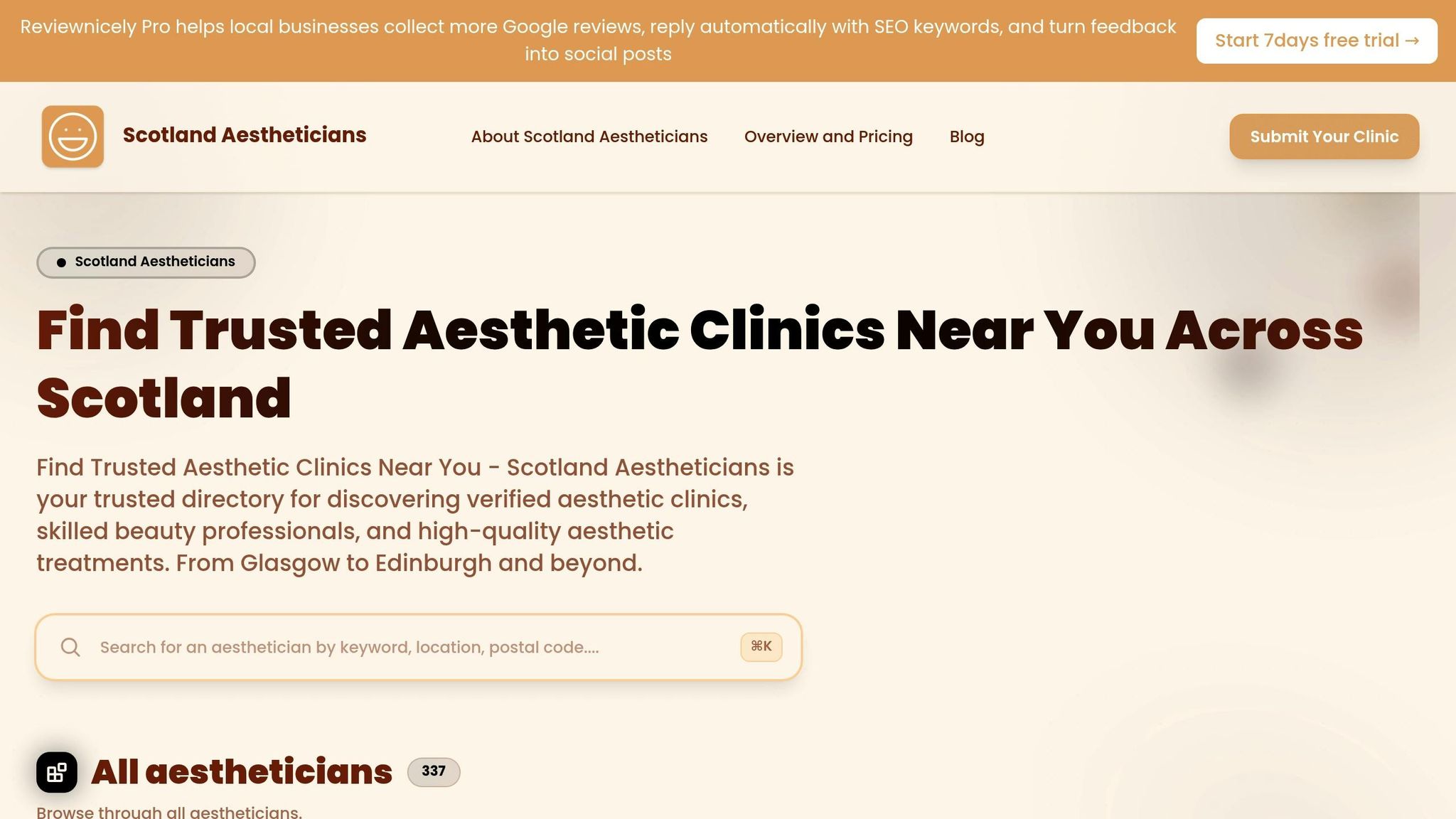
The Scotland Aestheticians directory is your go-to resource for finding verified clinics and practitioners across Scotland. It covers everything from bustling cities like Glasgow and Edinburgh to smaller towns like Aviemore and Stirling. With a transparent and searchable list of safe, professional services, the platform includes 337 aestheticians across 83 locations as of February 2026.
"Every clinic is verified to ensure authenticity, professionalism, and safety." – Scotland Aestheticians
Each clinic featured in the directory carries a "✅ Vetted Clinic" badge. This badge is a guarantee that the clinic has passed thorough checks for authenticity, professionalism, and safety. With this system in place, you can skip the guesswork and confidently select a trusted provider.
Search by Location and Treatment Type
The directory’s filtering system allows you to search by location and treatment type. Whether you’re in Aberdeen, Dundee, Inverness, or Bathgate, you can select one of the 83 supported locations. From there, you can refine your results using any of the 49 treatment tags to find specialists offering services like microneedling, medical spa treatments, or skin care consultations.
Navigation is made even easier with the quick-search command (⌘K), and each listing includes the clinic’s postal code to help you determine how close it is. For instance, The Goddess Clinic in Edinburgh (EH8 9PY) has earned the loyalty of over 223 clients, while Ever Clinic in Glasgow (G1 2DT) boasts 246+ satisfied clients. Once you’ve narrowed down your options, the verified listings make it simple to evaluate a clinic’s reputation and service quality.
Understanding Verified Listings
Verified listings often include star ratings and client reviews, giving you a snapshot of a clinic’s reputation. Premium profiles go a step further, providing detailed descriptions of the clinic, its treatment offerings, and additional verification information.
"We connect clients only with reputable, licensed aesthetic specialists." – Scotland Aestheticians
When browsing a listing, take note of the treatment tags to confirm that the clinic offers the procedure you’re looking for. The "Vetted Clinic" label is your assurance of quality and safety, making it easier to choose a trusted provider.
How to Evaluate Reviews and Clinic Standards
What to Look for in Online Reviews
When checking online reviews, prioritise feedback from verified platforms rather than relying solely on social media. Trusted sources like government-approved registers can provide a clearer picture. For example, Save Face features over 56,721 5-star reviews, helping you identify practitioners who prioritise safety and hold proper qualifications. Pay close attention to recurring themes in reviews. Look for mentions of whether the practitioner is a registered doctor, nurse, or dentist, as well as comments on their professionalism during consultations and aftercare. Reviews that discuss the clinical environment, such as cleanliness and hygiene, or note on-site inspections, are particularly valuable.
Be mindful of warning signs, such as unregistered practitioners, treatments offered in non-clinical settings, or the use of unverified products. In Scotland, for instance, private clinics must be registered with Healthcare Improvement Scotland (HIS), and operating without this registration is illegal. You can check the HIS register for inspection reports and seek out clinics rated as "Good" or "Exceptional" over those graded "Satisfactory" or "Unsatisfactory".
These insights from reviews should complement your checks of practitioner credentials and directories, reinforcing the importance of choosing clinics with verified safety measures.
Insurance and Safety Protocol Verification
Beyond reviews, ensuring the practitioner has proper insurance and adheres to safety protocols is critical. Always ask for proof of insurance. Trusted professionals are transparent about their coverage. For instance, BABTAC members are labelled as "Qualified, Verified & Insured", which highlights their commitment to safety. This step is essential, as it protects you in case of complications.
"If you were to receive a treatment from an unqualified or uninsured therapist, and something went wrong or you had a reaction, then you may find yourself in a vulnerable situation." – BABTAC
Also, confirm that the clinic follows strict safety protocols, including having a formal complaints process in place. Accredited registers often require their members to meet high standards, and the Professional Standards Authority (PSA) Quality Mark ensures practitioners handle complaints professionally and run their businesses responsibly. Additionally, check that the clinic uses authentic products sourced from licensed suppliers. Remember, complications from unregulated treatments can cost the NHS nearly £20,000 per patient.
Scottish Regulations and Licensing Requirements
2026 Licensing Requirements
Scotland has rolled out a detailed regulatory framework aimed at safeguarding clients seeking aesthetic treatments. Procedures are categorised into three risk-based groups, each with specific licensing and practice requirements for both practitioners and their premises.
Group 1 treatments include lower-risk procedures such as microneedling (up to 1.5 mm), superficial peels, and laser hair removal. For these, both the practitioner and their premises must hold a licence issued by the local authority.
Group 2 treatments cover moderate-risk procedures like Botox and dermal fillers up to 2 ml. These procedures must take place in premises registered with Healthcare Improvement Scotland (HIS), and non-medical practitioners can only perform them under the supervision of a regulated healthcare professional.
Group 3 treatments are high-risk procedures, including thread lifts, deep peels, and augmentative fillers over 2 ml. These can only be carried out by qualified healthcare professionals in HIS-licensed clinical settings.
Additionally, the regulations set a strict minimum age of 18 for all non-surgical cosmetic procedures, with no exceptions for parental consent. Practitioners who operate without the required licences face penalties of up to £2,500. Failing to inform authorities about significant business changes could result in fines of up to £1,000.
"Our Committee believes patient safety must always come first and that's why we are supportive of this Bill which will provide much needed regulation of the non-surgical procedures industry." – Clare Haughey, Committee Convener, Scottish Parliament
These measures highlight the importance of ensuring your chosen clinic complies with all current regulatory standards.
Finding Local Resources
To find verified practitioners who meet Scotland's 2026 regulatory standards, consult the Scotland Aestheticians directory. This resource allows you to search for practitioners by location and treatment type. For Group 1 treatments, ensure both the practitioner and premises hold valid local authority licences. For Group 2 and Group 3 procedures, check the Healthcare Improvement Scotland register to confirm the clinic is a licensed independent healthcare provider.
You can also verify a practitioner's professional credentials through registers such as the General Medical Council (GMC), Nursing and Midwifery Council (NMC), or General Dental Council (GDC). These steps will help ensure you receive care from qualified and authorised professionals.
Conclusion
Choosing a verified aesthetician in Scotland doesn’t have to be complicated if you follow the steps outlined earlier. Ensuring your safety starts with checking the practitioner's credentials, particularly for procedures like injectables. Confirm their medical qualifications, memberships in relevant organisations, and insurance coverage as described.
The Scotland Aestheticians directory makes this process easier by listing vetted clinics across more than 80 locations, from bustling cities like Glasgow and Edinburgh to smaller towns such as Aviemore and Lerwick. Each clinic in the directory undergoes rigorous checks to ensure compliance with safety and professional standards. You can also filter by location and treatment type, making it simple to find qualified practitioners nearby.
It’s crucial to confirm that any clinic meets current regulatory requirements. Many people find it challenging to distinguish between regulated and unregulated qualifications, which is why using a trusted directory for independent verification is so valuable.
When booking, consider the T.I.M.E. checklist: Training (qualifications), Insurance (specific provider), Monitoring (care before and after treatment), and Evidence (certifications and testimonials). Don’t hesitate to ask practitioners directly about their credentials - your safety should always come first. By following these steps and relying on verified directories, you can significantly reduce risks and ensure professional, high-quality care.
FAQs
The quickest way to confirm if your clinic is authorised to provide your treatment in Scotland is by checking its registration with Healthcare Improvement Scotland. You can verify this by visiting their official registry or reaching out to them directly. This guarantees that the clinic complies with the necessary safety and professional standards.
To verify if a certificate is genuinely regulated by Ofqual or the SQA, you should consult the official registers. The Ofqual Register of Regulated Qualifications and the SQA Accreditation website both provide lists of recognised qualifications and awarding organisations. These resources help ensure the certificate is legitimate and meets the necessary standards for professional accreditation.
During your consultation, take the time to ask about the aesthetician's qualifications and training to ensure they are both certified and experienced. It's also a good idea to confirm whether they carry professional insurance, such as public liability or treatment-specific cover, for added peace of mind.
When it comes to aftercare, make sure to discuss the recommended post-treatment steps. Ask about activities you should avoid, any necessary follow-up appointments, and warning signs to keep an eye on. A good aesthetician will provide clear, detailed aftercare instructions to help you achieve the best results safely.