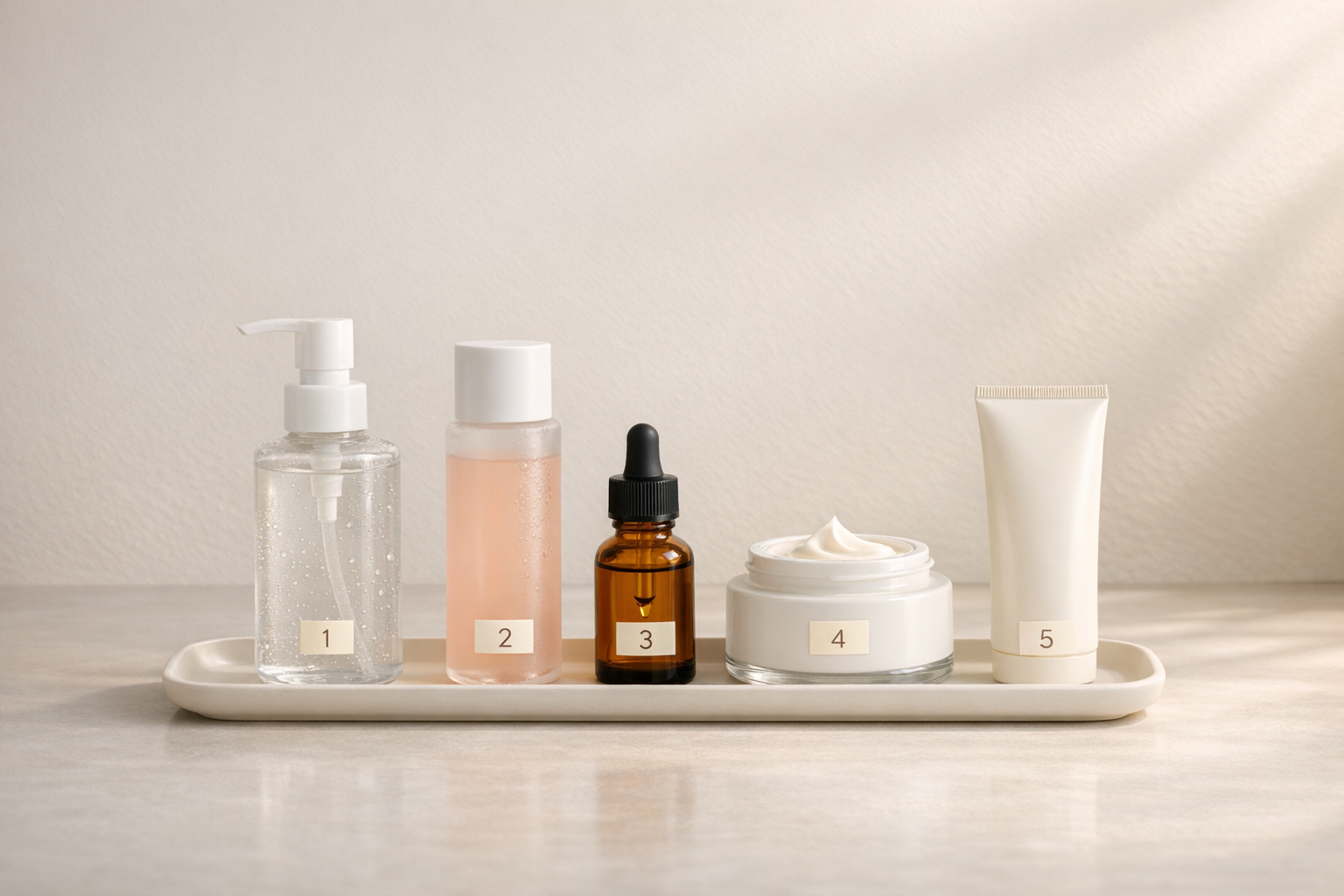
5 Steps for Dry Skin Care
Dry skin can feel uncomfortable, tight, and flaky, especially in challenging climates like Scotland's. Here's a simple 5-step routine to tackle dryness and boost hydration:
- Cleanse Gently: Use a cream, milk, or oil-based cleanser with ingredients like glycerin or ceramides. Avoid hot water and harsh sulphates.
- Tone for Hydration: Opt for hydrating toners with humectants (e.g., hyaluronic acid) to restore moisture and balance your skin's pH.
- Apply a Hydrating Serum: Use serums with hyaluronic acid, ceramides, or niacinamide to deeply hydrate and repair the skin barrier.
- Moisturise Thoroughly: Lock in hydration with a rich moisturiser containing ceramides, squalane, or shea butter.
- Protect with Sunscreen: Use SPF 30+ daily, even in cloudy weather, to prevent further moisture loss and UV damage.
For Scotland’s cold, windy climate, layer hydrating products, use richer creams in winter, and consider a humidifier to combat dry indoor air. Stick to this routine consistently, and you’ll notice softer, smoother skin in a few weeks.
@figure 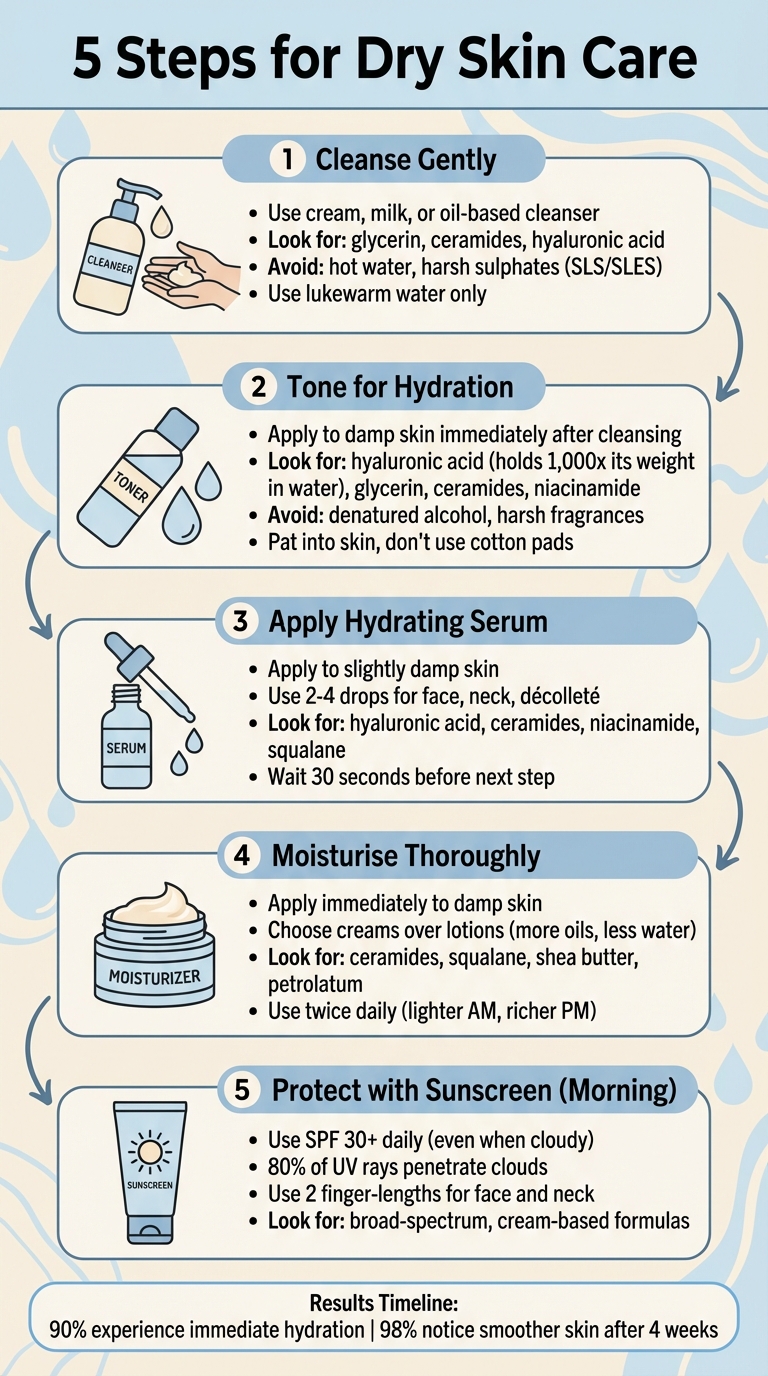 {5-Step Dry Skin Care Routine for Hydration and Protection}
Step 1: Cleanse Gently
Why Use a Gentle Cleanser?
If your skin feels tight and dry after washing, it’s likely your cleanser is doing more harm than good. That "squeaky-clean" sensation often means your skin’s natural lipids - essential for maintaining a healthy moisture barrier - have been stripped away. For dry skin, this can be a nightmare, as it makes it even harder to retain moisture, creating a frustrating cycle of dryness.
Traditional cleansers, especially those containing sulphates like SLS or SLES, can be harsh, particularly when paired with hard water. These ingredients strip away oils and leave behind residues that can further damage your skin’s natural defences.
Gentle cleansers, on the other hand, are designed to clean without causing harm. They often come in cream, milk, or oil-based formulas and include ingredients like glycerin and hyaluronic acid to draw in moisture, as well as ceramides and squalane to help repair the skin barrier. These cleansers not only remove dirt and impurities but also start the hydration process during cleansing itself.
How to Cleanse Properly
Protecting your skin’s moisture starts with how you cleanse. Always use lukewarm water - hot water can strip away natural oils, especially when combined with the minerals in hard water.
- Apply your cleanser to damp skin, gently massaging in circular motions for about 30 seconds.
- In the evening, try double cleansing: start with an oil-based balm to remove SPF and makeup, then follow up with a gentle cream cleanser to ensure your skin is clean without losing moisture.
- In the morning, if your skin feels particularly dry or sensitive, you can skip the cleanser altogether and simply rinse with lukewarm water.
After rinsing, pat your face dry with a soft towel - don’t rub, as this can irritate dry skin. Follow up immediately with a toner or serum while your skin is still slightly damp to help lock in moisture from the cleansing process.
Best Drugstore Skincare Routine for Dry Skin | Dermatologist Recommended Products
Step 2: Tone for Hydration
After cleansing, the next step is all about replenishing your skin's hydration. Cleansing can disrupt your skin's pH balance, and that's where a hydrating toner comes into play. Think of it as the middle step that transitions your skin from cleansing to moisturising. It helps restore the natural pH balance and preps your skin to absorb products more effectively. As Dr Angela Wei, a dermatology resident, explains:
"When you apply a toner immediately after cleansing, you're increasing the water content of that outer layer of skin, which improves product absorption. It kind of acts like a sponge by helping those other skin care ingredients sink in".
Today's hydrating toners are formulated to add moisture without stripping your skin. They also help remove any leftover makeup or mineral residue, especially important if you live in areas with hard water, like London or the South East. Hard water can leave your skin feeling tight and uncomfortable.
Choosing a Toner for Dry Skin
The magic lies in the ingredients. Look for humectants like hyaluronic acid (which can hold up to 1,000 times its weight in water) and glycerin, which draws moisture from the air into your skin. Ceramides are excellent for repairing your skin's protective barrier, while niacinamide (Vitamin B3) helps your skin retain moisture and calms inflammation. Soothing ingredients like aloe vera, rose water, and chamomile can also bring relief to dry or irritated patches.
On the flip side, steer clear of products with denatured alcohol (often labelled as "alcohol denat"), harsh fragrances, or astringents that tighten pores. These ingredients can exacerbate dryness. Board-certified dermatologist Dr Mona Gohara sums it up perfectly:
"Toners for dry skin are like the extra drink of water your face didn't know it needed. They help hydrate, soothe, and balance your skin".
How to Apply Toner
Getting the timing and technique right makes a big difference. Apply toner to damp skin immediately after cleansing to lock in moisture and improve absorption. Instead of using a cotton pad - which can soak up product and potentially irritate your skin - pour a small amount into clean palms and gently pat it into your face. This method ensures the toner penetrates deeply and prepares your skin for the next steps in your routine.
If your skin is very dry, you can layer the toner 2–3 times, allowing each layer to fully absorb before applying the next. This technique, often called the "skins method", gives your skin an extra hydration boost. Just don’t forget: humectants like hyaluronic acid need to be sealed in with a moisturiser. This is especially important in centrally heated rooms, where dry air can pull moisture out of your skin.
Step 3: Apply a Hydrating Serum
Using a hydrating serum is a key step to deliver concentrated active ingredients deep into your skin. These serums are designed to provide intense hydration with ingredients like hyaluronic acid and ceramides. Dr Priya Verma, an aesthetic doctor at London's ART Clinic, explains:
"Serums are usually formulated with smaller, more concentrated active molecules designed to penetrate the skin, so they should go on first. Moisturiser then sits over the top to reduce water loss, support the barrier and help seal those actives in".
Benefits of Hydrating Serums
Hydrating serums are packed with ingredients that not only hydrate but also repair your skin's barrier. They combine humectants, which draw water into the skin, with barrier-repairing ingredients, which help lock in that moisture. Hyaluronic acid, for example, is a standout ingredient - it holds up to 1,000 times its weight in water, leaving your skin plump and refreshed. Glycerin also plays a role by aiding skin cell turnover, helping to remove dead cells for a clearer complexion.
Ceramides are vital for reinforcing your skin's protective barrier, reducing water loss. Niacinamide helps calm inflammation and strengthen the barrier, while squalane mimics your skin's natural oils to leave it soft and smooth. Some serums even include peptides, which can visibly reduce fine lines over time.
How to Apply Serum
The way you apply your serum can make a big difference. For best results, apply it to slightly damp skin - right after toning or misting - so the humectants can effectively draw in moisture. Use 2–4 drops and spread it across your face, neck, and décolleté. Instead of rubbing, gently press the serum into your skin, starting at the centre of your face and working outward towards your cheeks and forehead.
Let the serum absorb for about 30 seconds before applying your moisturiser. This helps prevent pilling (when products clump on the surface) and ensures each layer works as intended. One essential tip: in dry climates or heated indoor spaces - common in the UK - you must follow your serum with a moisturiser. Without that protective layer, humectants can draw moisture out of your skin into the dry air, leading to further dehydration. Think of the serum as your hydration boost and the moisturiser as the seal that locks it all in. Apply your moisturiser straight away to maximise the benefits.
Step 4: Moisturise Thoroughly
Once your serum has absorbed, it's time to lock in all that hydration with a moisturiser. Dr Joshua Zeichner, Director of Cosmetic & Clinical Research in Dermatology at Mount Sinai Hospital, stresses the importance of this step:
"When treating dry skin, focus on repairing the skin barrier - not just adding moisture."
This step does more than just hydrate - it strengthens your skin's natural barrier. A quality moisturiser works by trapping water in the skin while shielding it from external irritants. Look for formulas that combine humectants (like glycerin and hyaluronic acid) to draw in water, emollients (such as ceramides, squalane, or shea butter) to smooth and repair, and occlusives (like petrolatum or dimethicone) to create a protective layer that prevents moisture from escaping.
Selecting a Moisturiser for Dry Skin
For dry skin, creams or ointments are better than lotions because they contain more oils and fewer water-based ingredients. To avoid clogged pores, go for products labelled as "non-comedogenic."
Ceramides are a standout ingredient in many effective moisturisers. These lipids fill the gaps between skin cells, helping to strengthen your skin's barrier and retain moisture. As Dr Ava Shamban, a board-certified cosmetic dermatologist, explains:
"Ceramides can smooth and soften the skin by filling in the 'gaps' between skin cells and help skin retain moisture by fortifying our protective barrier."
Some advanced formulations even replicate your skin's natural lipid structure with a balanced mix of ceramides, cholesterol, and fatty acids. If you're looking for options, budget-friendly picks like Aquaphor Healing Ointment (around £5) or CeraVe Moisturising Cream (around £13) are excellent choices. For a splurge, Dr Jart+ Ceramidin Cream (approximately £38) is known for delivering noticeable hydration improvements in just a few days.
When and How to Moisturise
To maximise your moisturiser's effectiveness, apply it immediately to damp skin after your serum. Use gentle, downward strokes to avoid irritating your skin. For best results, moisturise twice daily - opt for a lighter cream in the morning and a richer one at night to boost overnight repair. If your skin is extremely dry, try the 'slugging' method: apply a thin layer of a petrolatum-based ointment before bed to lock in moisture.
Don't forget to reapply moisturiser to your hands or other exposed areas after washing or whenever your skin feels tight. This is especially crucial in Scotland's climate, where cold winds and indoor heating can strip moisture from your skin. This step is the finishing touch to your hydration routine, ensuring your skin stays soft, smooth, and protected.
Step 5: Protect with Sunscreen (Morning)
Using sunscreen every morning is essential, even when it's overcast. Up to 80% of UV rays can penetrate clouds and reach your skin. UVA rays, responsible for premature ageing and DNA damage, are present all year round and can even pass through windows [36,37]. For those with dry skin, exposure to the sun without protection can deplete hyaluronic acid and collagen, leading to increased dehydration and roughness.
As skincare expert Mhairi Brown points out:
"Even in the cold and cloudy months the sun's UV rays can still cause us damage."
This highlights the importance of selecting the right sunscreen for your skin's needs.
Choosing the Right SPF
To minimise these risks, it's crucial to pick a sunscreen that not only shields your skin but also provides hydration. For dry skin, opt for a broad-spectrum sunscreen with SPF 30 or higher. Cream-based formulas are better than gels or oil-free options, as they help retain moisture rather than drying the skin out [36,38]. Look for products with hydrating ingredients like hyaluronic acid, glycerin, ceramides, niacinamide, or squalane. These ingredients help to lock in moisture and strengthen the skin barrier [38,39].
Dr Mona Foad, a board-certified dermatologist, highlights:
"When choosing a sunscreen for dry or sensitive skin, it's important to find one that protects and hydrates the skin barrier."
In the UK, check for a 4-star UVA rating or the UVA circle logo to ensure strong protection against UVA rays. For Scotland's climate, SPF 50 is recommended from March to October, while SPF 15 is adequate during the darker winter months. Avoid products containing denatured alcohol or strong fragrances, as these can worsen dryness and flakiness [38,40].
Affordable options include CeraVe Hydrating Mineral Sunscreen (around £12–£14). If you're looking for something mid-range, consider Beauty of Joseon Day Dew Sunscreen (£18) or EltaMD UV Clear (£32–£37), both of which offer excellent hydration and protection [38,39].
How to Apply Sunscreen Daily
Once your moisturiser has fully absorbed, apply sunscreen as the final step of your morning routine to lock in hydration and protect your skin. Use approximately two finger-lengths of product to cover your face and neck evenly [37,41]. If you wear makeup, apply sunscreen before starting your makeup routine [37,38].
Don't forget your lips! Use a lip balm with SPF 30 or higher, as the delicate skin on your lips is also vulnerable to UV damage and skin cancer.
Tips for Scotland's Climate
Adjusting Your Routine for Different Weather
Scotland's weather is famously unpredictable, often swinging between freezing winds and dry, heated indoor spaces. This constant back-and-forth can lead to what experts call "weather whiplash", which speeds up transepidermal water loss (TEWL) - essentially moisture escaping from your skin cells. Studies show that during winter, skin hydration and lipid levels drop significantly, while TEWL and dryness spike.
To manage these effects, try increasing indoor humidity. A humidifier works well, but even placing a bowl of water near radiators can help. When heading outside, protect your face with a silk scarf to shield it from harsh winds.
Cold weather calls for richer skincare products. Look for creams with occlusives like shea butter or petrolatum, and barrier lipids such as ceramides. A good tip for winter is to layer a hydrating toner or essence 2–3 times on damp skin before applying a heavier moisturiser. This helps lock in moisture and combat the dry air indoors. If you're using humectants like hyaluronic acid, always seal them with a heavier moisturiser to prevent them from pulling moisture out of your skin in dry conditions.
Winter’s lower UV levels also make it a great time to introduce retinoids or Vitamin C into your routine. However, during particularly cold spells, buffer these active ingredients with a moisturiser to minimise irritation. If you find these changes don’t improve your skin, it might be time to consult a professional.
When to Consult a Professional
Scotland’s challenging weather can sometimes push your skin beyond the help of at-home care. If dryness persists despite using a proper routine or if it escalates to dermatitis - symptoms include constant itching, redness that doesn’t improve with moisturiser, scaling, or cracking - it’s worth seeking professional advice. If your moisturiser only provides short-term relief, this could indicate underlying inflammation that requires medical-grade solutions.
Winter in Scotland also offers a prime opportunity for clinical treatments. With reduced UV exposure, your skin is better suited for procedures like hyaluronic acid skin boosters (e.g., Profhilo), polynucleotides for tissue regeneration, or gentle lactic acid peels. For tailored barrier repair treatments, check out trusted clinics through Scotland Aestheticians. They can connect you with qualified professionals offering advanced hydrating facials and medical-grade skincare designed for Scotland’s unique climate.
Conclusion
Taking care of dry skin boils down to five simple steps: gentle cleansing, hydrating toning, serum application, thorough moisturising, and daily SPF. These steps don’t just hydrate your skin - they work to repair the compromised barrier that causes moisture loss in the first place.
Patience and consistency are crucial. You may notice visible improvements within 2–4 weeks. In fact, consumer tests on hydrating serums found that 90% of users experienced immediate hydration, while 98% noticed smoother skin after four weeks of regular use.
Scotland’s climate, with its cold winters and centrally-heated homes, can be particularly harsh on the skin. Adjust your routine to suit the season - swap lighter products for richer creams during winter and consider using a humidifier to combat the dry indoor air. These small changes can make a big difference in maintaining your skin’s health and reinforcing its barrier.
As Dr. Mona Gohara puts it:
"Skincare for dry skin isn't about layering 10 products - it's about consistency with a few hydrating essentials".
Stick to the routine, apply products on damp skin, and tweak your formulations as the weather changes. With time, your skin barrier will thank you.
FAQs
When your skin feels tight after cleansing, it’s often a sign that your hydrolipid barrier - the protective layer of your skin - has been disrupted. This can lead to moisture loss and leave your skin dehydrated. The culprit? Harsh or overly stripping cleansers.
To avoid this, switch to gentle, hydrating cleansers that clean without removing your skin’s natural oils. Protecting your skin’s moisture levels and maintaining its barrier is essential for keeping that tight, uncomfortable feeling at bay.
For dry skin, toner isn't an absolute must, but a gentle, hydrating one can be a nice addition. It helps balance your skin's pH and prepares it to absorb moisturiser more effectively. That said, if your skincare routine already includes products that hydrate and nourish well, you can skip it without worry. The key is to prioritise gentle, moisture-boosting products that protect and strengthen your skin barrier.
To make sure hyaluronic acid works to hydrate your skin rather than drying it out, apply it to damp skin, not dry. After that, seal in the moisture with a moisturiser that includes ingredients like ceramides or petrolatum. Be cautious about over-exfoliating, as it can harm your skin's barrier. Instead, incorporate barrier-supporting ingredients, such as niacinamide or panthenol, into your routine. If you're in a dry climate, using a humidifier can also help retain moisture. These steps will help hyaluronic acid do its job effectively without causing dryness.