The Complete Guide to Professional Skincare Services
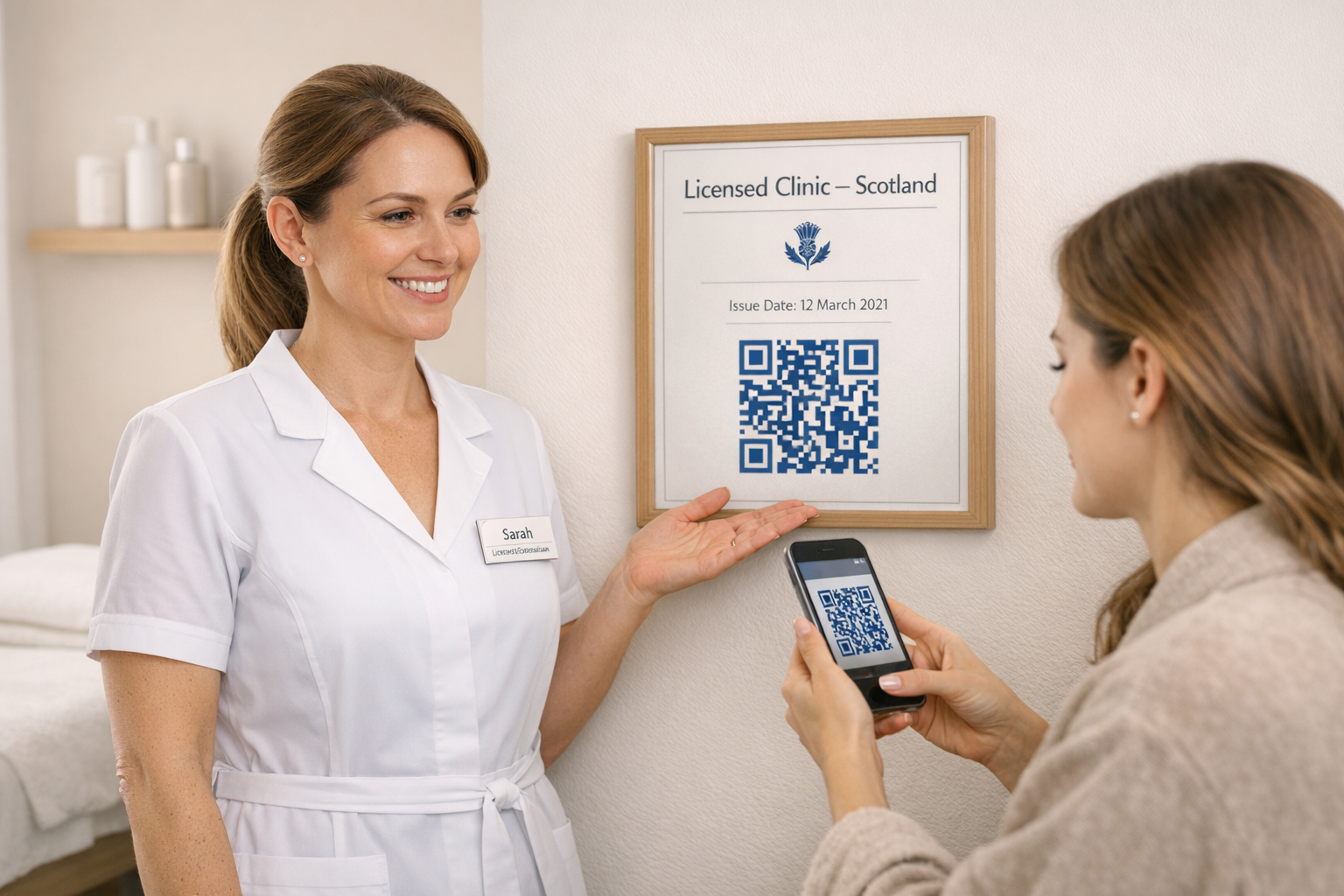
Professional skincare treatments offer solutions that go beyond home routines, targeting deeper skin layers for long-term results. From microneedling to chemical peels, these services address concerns like ageing, pigmentation, and acne scars. Clinics provide access to clinical-grade products and advanced tools, ensuring safer and more effective care. In Scotland, new regulations introduced in 2026 aim to improve safety by requiring practitioners and premises to hold licences based on treatment risk levels. Understanding these categories - low, moderate, and high risk - helps clients choose verified professionals and make informed decisions.
Key points:
- Low-risk treatments: Microneedling (up to 1.5mm), superficial peels, and laser hair removal.
- Moderate-risk treatments: Botox, dermal fillers, and mesotherapy, requiring clinical oversight.
- High-risk treatments: PRP, thread lifts, and deep lasers, restricted to healthcare professionals.
- New legislation: Scotland's licensing system ensures stricter safety standards for non-surgical procedures.
For safe results, always verify practitioner credentials and clinic compliance with Scotland's new regulations. Platforms like Scotland Aestheticians simplify finding licensed professionals, making your skincare journey safer and more effective.
Plastic Surgeon Ranks 12 Anti-Aging Treatments from Best to WORST
sbb-itb-349970b
Skincare Regulations in Scotland
@figure 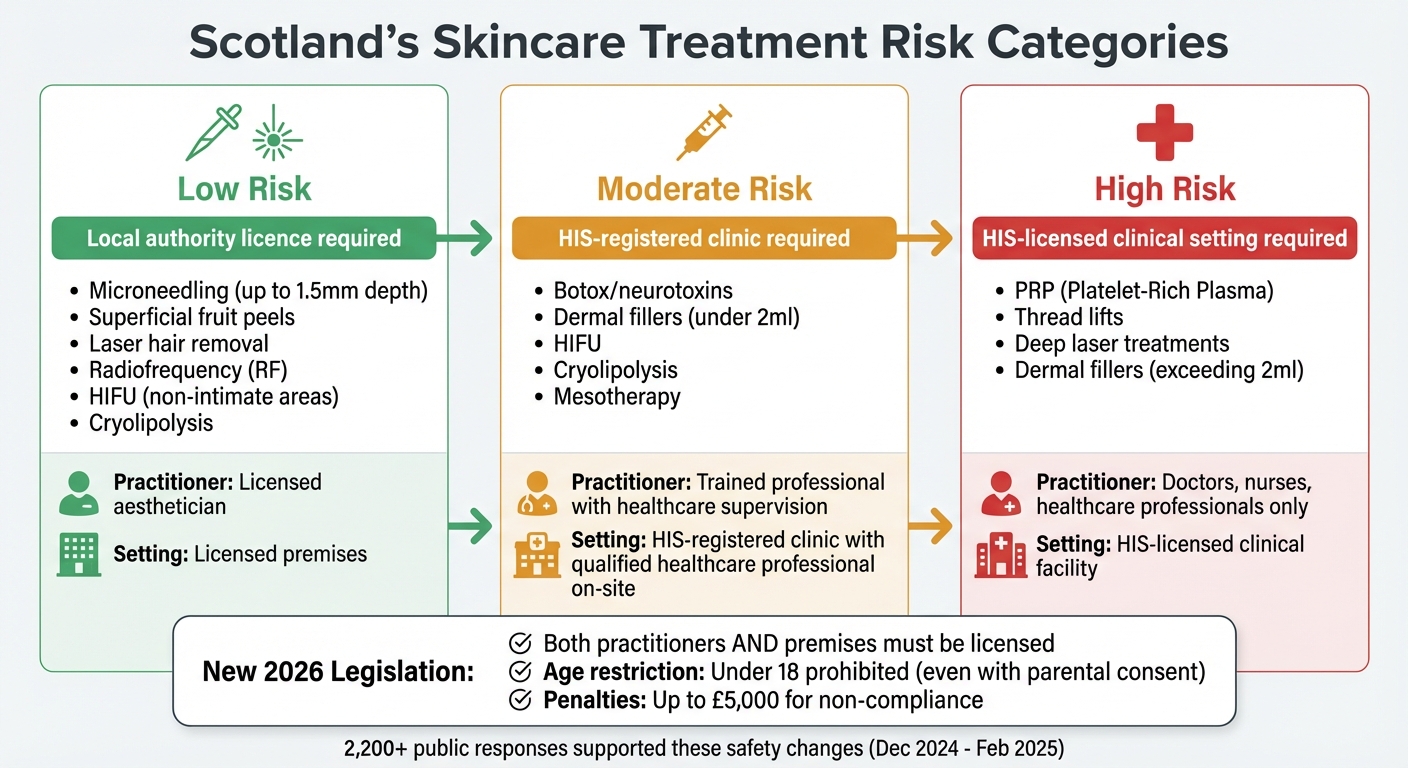 {Scotland's 3-Tier Skincare Treatment Risk Classification System}
Scotland is making significant changes to how professional skincare is regulated. The Non-Surgical Procedures and Functions of Medical Reviewers (Scotland) Bill, introduced in October 2025 and now at Stage 3 as of February 2026, seeks to address safety concerns in an industry where, until now, most procedures could be performed without any formal qualifications or training.
The Non-Surgical Procedures and Functions of Medical Reviewers (Scotland) Bill
This new legislation focuses on public safety. A 2025 survey found that over one-third of Scottish doctors had treated complications resulting from poorly executed injectable procedures. To tackle this, the Bill introduces a licensing system requiring both practitioners and their premises to be licensed before offering treatments that involve skin penetration. This approach ensures accountability for both individuals and businesses.
"The current gaps in regulation mean that anyone can perform most of these procedures without the need for any formal training or qualifications. These proposals reflect our determination to protect the public and ensure high standards across this growing industry." - Jenni Minto, Public Health Minister
The Bill also enforces strict age restrictions, making it illegal to carry out these procedures on anyone under 18, even with parental consent. Non-compliance carries penalties of up to £5,000 in fines. Healthcare Improvement Scotland (HIS) will have the authority to inspect and search premises suspected of breaching the new rules, while local councils will oversee lower-risk environments.
Categorising Skincare Treatments by Risk
The legislation classifies treatments into three risk-based groups:
- Group 1 (Low Risk): This includes procedures like microneedling up to a depth of 1.5mm, superficial fruit peels, and laser hair removal. Both practitioners and their clinics will need local authority licences to operate.
- Group 2 (Moderate Risk): Treatments such as Botox, dermal fillers under 2ml, HIFU, and cryolipolysis fall here. These must be conducted in HIS-registered clinics with supervision from a qualified healthcare professional on-site.
- Group 3 (High Risk): This category includes PRP, thread lifts, deep laser treatments, and fillers exceeding 2ml. These procedures are restricted to doctors, nurses, and other healthcare professionals working in HIS-licensed clinical settings.
For clients, this means ensuring that both the practitioner and the clinic have valid licences once the system is in place. The Scottish Government received over 2,200 responses during its consultation period between December 2024 and February 2025, reflecting strong public interest in these changes. Businesses can access free support through resources like Business Gateway and FindBusinessSupport.gov.scot to help meet the new requirements. These risk categories establish clear safety standards, offering greater protection for clients seeking low- and moderate-risk treatments.
Low-Risk Skincare Treatments
Popular Low-Risk Treatments and Their Benefits
Low-risk skincare treatments offer practical solutions for common skin concerns without the need for intensive medical supervision. These procedures are part of a broader range of professional services designed to cater to various skincare needs. Take microneedling, for instance - this treatment uses fine needles to create controlled micro-injuries, encouraging the production of collagen and elastin. When performed at depths of up to 1.5 mm, it’s classified as a Group 1 treatment in Scotland and has been shown to reduce acne scarring by 50–70%.
Superficial chemical peels are another popular option. These peels use acids like glycolic acid or fruit acids to exfoliate the outermost skin layer, promoting cell turnover and leaving you with a smoother, more radiant complexion. Costs for these treatments typically range from £130.00 to £210.00 per session. Meanwhile, laser hair removal and light-based therapies like IPL and LED are effective for hair reduction and managing issues such as sun damage and acne scars. Radiofrequency (RF) treatments are also gaining attention for their ability to tighten skin and reduce fine lines by heating deeper layers of the skin. Following consultations in late 2024 and early 2025, RF, alongside HIFU (for non-intimate areas) and cryolipolysis, has been reclassified as a Group 1 treatment in Scotland. This reclassification makes these procedures more accessible while maintaining high safety standards.
These low-risk treatments serve as a stepping stone for those considering more advanced procedures, all while adhering to strict safety protocols.
Safety and Accessibility of Low-Risk Treatments
These treatments are generally regarded as safe for all skin types and tones. According to the American Academy of Dermatology, “microneedling is minimally invasive and safe for all skin tones”. It’s worth noting that professional treatments often deliver superior results compared to at-home devices, which can pose risks such as infection, scarring, or even spreading viruses if not used correctly.
Before undergoing treatment, there are a few precautions to keep in mind. For example, it’s advised to stop using retinoids several days beforehand, avoid treatments on tanned or sunburned skin, and wait at least one month after finishing isotretinoin. After microneedling, it’s recommended to hold off on makeup application for 24 hours to minimise irritation.
Under the new Scottish framework, practitioners and clinics are required to operate from licensed premises, ensuring strict hygiene and safety standards. This regulatory approach reinforces the commitment to safe and professional cosmetic care. While these low-risk treatments are highly accessible, understanding their potential risks is crucial, especially for those considering more complex procedures in the future.
Moderate-Risk Skincare Treatments
Examples of Moderate-Risk Treatments
Moderate-risk treatments (Group 2) sit a step above low-risk options in terms of invasiveness, requiring careful clinical oversight to ensure safety. These include procedures like injectable neurotoxins (e.g., Botox), dermal fillers, and mesotherapy.
Botox works by temporarily blocking nerve signals to targeted muscles, helping to smooth out fine lines and wrinkles. Its effects typically last between 3 and 6 months before another session is required. Dermal fillers, often made with hyaluronic acid, restore volume beneath the skin, reducing deep lines and giving a more youthful look. Mesotherapy, on the other hand, involves injecting vitamins and minerals into the dermis using fine needles, which can stimulate collagen production and improve skin texture.
While these treatments can deliver noticeable results, they are not without risks. As noted by the Scottish Government:
"If dermal fillers... are misapplied they can cause a vascular occlusion, where a blood vessel is blocked... which can cause dangerous and irreversible consequences, including tissue death".
This underlines the importance of strict clinical supervision during such procedures.
Why Professional Oversight Matters
Given the risks involved, it is mandatory in Scotland for moderate-risk treatments to be carried out in HIS-regulated clinics. These clinics must meet rigorous standards for hygiene, equipment safety, and insurance. Even when a trained non-healthcare practitioner administers the treatment, an "appropriate healthcare professional" - such as a doctor, nurse, dentist, or pharmacist - must be physically present during the procedure.
Many of these treatments involve prescription-only medicines, such as Botox or hyaluronidase (used to address filler complications), which legally require medical supervision. Without proper oversight, the safety of these treatments cannot be guaranteed.
Public opinion strongly supports tighter regulations. A Citizens' Panel survey revealed that 90% of respondents favoured more regulation for procedures performed by non-healthcare professionals. Additionally, 98% of participants in a 2020 consultation agreed on the need for stricter controls over non-surgical cosmetic treatments. Before booking any moderate-risk procedure, always check that the clinic is HIS-registered and ensure a qualified healthcare professional will be present during your appointment.
Choosing Verified Aesthetic Professionals
When it comes to skincare treatments, selecting verified professionals isn't just important - it's essential. It ensures your treatments are both safe and effective, aligning perfectly with the focus on regulated, expert care outlined in this guide.
Using Scotland Aestheticians to Find Trusted Clinics
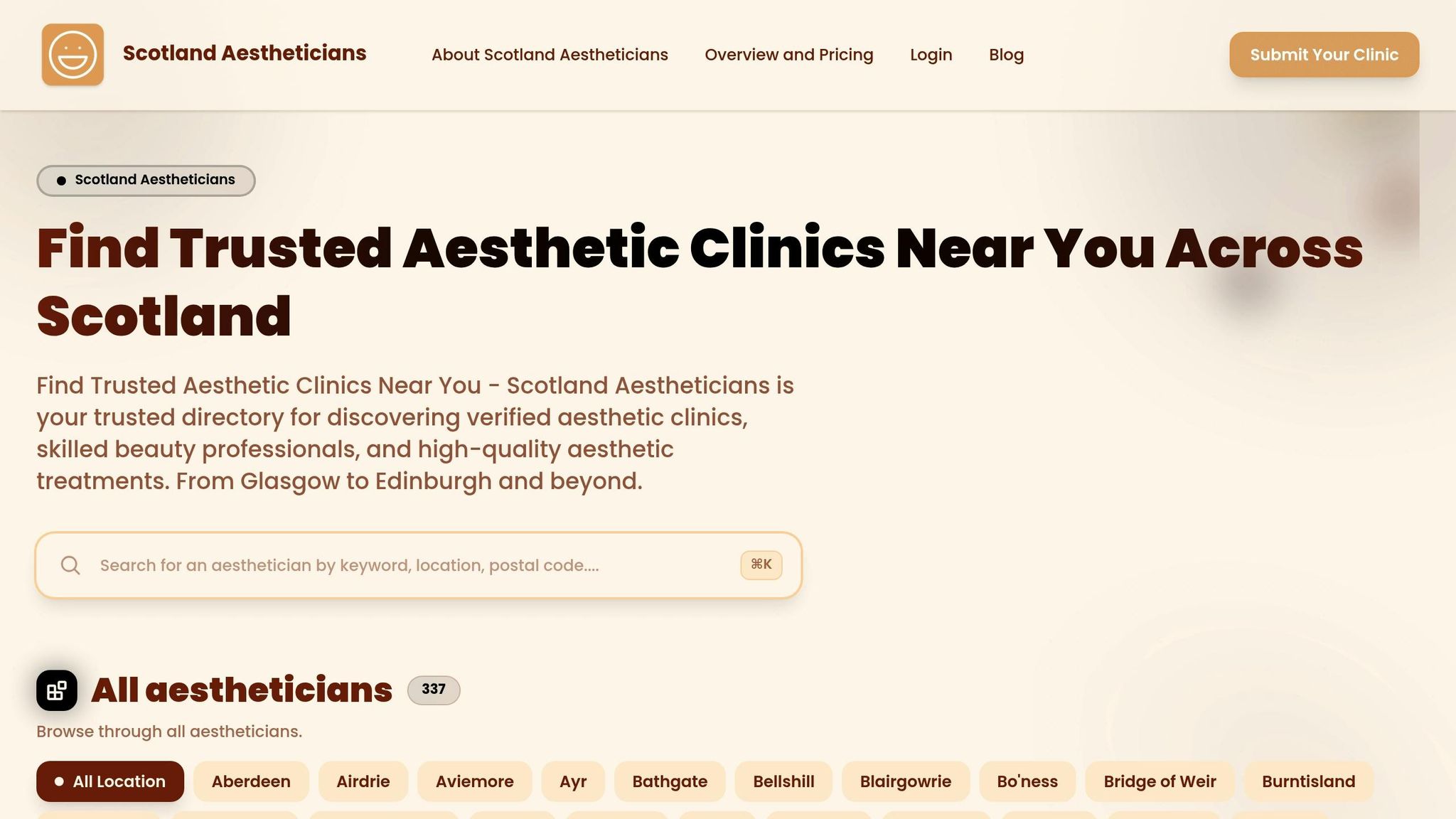
If you're in Scotland, finding a qualified aesthetic professional is easier than you might think. Scotland Aestheticians offers a comprehensive directory of verified clinics throughout the country, helping you connect with practitioners who meet strict industry standards. With 337 verified aestheticians listed, the directory covers everything from beauty salons to medical spas.
What sets Scotland Aestheticians apart is its thorough manual review process. Each clinic undergoes a detailed verification that includes checks on public business data, professional licences, and client feedback. This ensures that every listing is authentic and complies with industry regulations.
The directory also features genuine client reviews and ratings, giving you a clearer picture of a clinic's reputation. For instance, Chic Pharmacy Health & Aesthetics in Glenrothes has earned a flawless 5.0-star rating, while Ever Clinic in Glasgow boasts over 246 satisfied clients. You can easily filter results by location, treatment type, or service category to find the perfect match for your needs.
For moderate or high-risk treatments, make sure the clinic is registered with Healthcare Improvement Scotland (HIS). Treatments involving prescription-only medicines like Botox require a face-to-face consultation with a qualified prescriber - not just the person administering the injection. Be cautious of practitioners who rely solely on social media ads, offer mobile services in private homes, or prioritise low prices over a solid reputation.
Now, let’s explore how clinics can enhance their visibility on this platform with tailored listing plans.
Comparing Listing Plans for Clinics
Scotland Aestheticians offers several listing plans designed to suit different needs and budgets:
-
Basic Listing: This free option ensures your clinic is verified and searchable by location and treatment tags. It’s a great choice for new clinics or those testing the platform, though visibility is limited compared to paid plans.
-
Premium Listing: Ideal for established clinics looking to stand out in competitive areas like Edinburgh or Glasgow, this plan includes featured placement, local SEO optimisation, and priority in search results. Pricing is available upon request.
-
Enterprise Plan: Tailored for larger practices with ambitious growth goals, this plan builds on the Premium features with added marketing support, custom strategies, and analytics to track performance. Pricing details are also available upon request.
| Plan | Price | Key Features | Best For |
|---|---|---|---|
| Basic Listing | Free | Verified listing, searchable by location and tags | New clinics or those testing the platform |
| Premium Listing | Contact for pricing | Featured placement, local SEO boost, priority in search | Established clinics seeking greater visibility |
| Enterprise Plan | Contact for pricing | All premium features, custom marketing, analytics support | Larger practices with dedicated growth goals |
The right plan for your clinic depends on factors like size, location, and marketing goals. No matter the choice, being part of this trusted directory ensures your business is aligned with a network that values transparency and client safety.
Addressing Common Skincare Concerns
Professional treatments can effectively tackle acne scarring, pigmentation, and signs of ageing. The secret lies in pairing the right treatment with your specific concern - because there’s no one-size-fits-all solution. These approaches build on earlier discussions about treatment safety and effectiveness.
Solutions for Acne and Scarring
Acne scarring impacts about 55% of those with acne. The right treatment depends entirely on the type of scars you have. For instance, ice pick scars respond well to TCA CROSS or fractional CO2 lasers, while rolling scars improve with a combination of subcision and RF microneedling.
Fractional CO2 lasers are a top choice for severe scarring, delivering 70-80% improvement after treatment, though recovery takes 7–14 days. If you’re looking for a gentler option, RF microneedling offers 50-60% improvement over six months, with just 2-4 days of downtime. For those with darker skin tones (Fitzpatrick IV-VI), microneedling is often safer than heat-based lasers, as it carries a lower risk of post-inflammatory hyperpigmentation.
"Identifying your specific acne scar type (ice pick, boxcar, rolling, or hypertrophic) is crucial for determining the most effective treatment approach." - London Skin Clinic
To see the best results, most patients need 3-6 sessions spaced 4-6 weeks apart. After each session, it’s essential to avoid sun exposure for at least 72 hours and apply SPF 30 daily to protect your skin. Costs for single chemical peels start at £140.00, while more advanced treatments like Enerpeel begin at £155.00.
While addressing acne scars is vital, balancing skin tone and tackling signs of ageing is just as important for achieving an even, healthy complexion.
Managing Pigmentation and Signs of Ageing
Chemical peels are a popular choice for addressing uneven pigmentation. They use natural acids to exfoliate dead skin, revealing a brighter, smoother complexion. Superficial peels offer a quick glow with little downtime, while medium peels target deeper issues like age spots and fine lines but require a few days of recovery.
For more persistent pigmentation, laser resurfacing methods such as CO2RE or Fraxel can remove sun damage and uneven skin tone by working on both the surface and deeper layers of the skin. If downtime is a concern, Tixel treatment provides a less invasive way to tighten skin and improve pigmentation.
When it comes to wrinkles, it’s essential to differentiate between dynamic wrinkles (which appear when you smile or frown) and static wrinkles (which remain visible even when your face is at rest). Dynamic wrinkles respond well to neuromodulators like Botox, which typically last 3-4 months. Static wrinkles often require dermal fillers to restore volume, with results lasting anywhere from 6 months to 2 years.
Starting in your 30s, skin begins to lose around 1% of collagen per year, and sun exposure contributes to up to 80% of visible ageing signs. Daily use of SPF 30+ sunscreen is your best defence, while nightly retinoids help boost collagen production to keep skin firm.
The Importance of Personalised Skincare Plans
A tailored skincare plan ensures your treatments are targeted and effective. For example, deeper chemical peels like TCA carry a higher risk of hyperpigmentation for darker skin types (Fitzpatrick IV-VI), making a professional skin analysis essential.
Experts often recommend a phased approach to treatments: start by addressing pigmentation, then refine skin texture, and finally focus on tightening. This step-by-step method often delivers better results than trying to tackle multiple concerns all at once. For acne scars, combining techniques - such as subcision with fillers or microneedling - typically yields more noticeable improvements than standalone treatments.
"How their skin will look is 80% from homecare and 20% from routine skincare treatments." - Jess Ashcroft, Licensed Master Aesthetician, Advanced Dermatology & Skin Surgery
Your at-home routine plays a critical role, too. Morning applications of Vitamin C serums protect against environmental damage, while retinoids at night encourage cell turnover. For the best results, most treatments require 6-8 sessions, rather than a single visit.
Conclusion: Making Informed Skincare Decisions
Key Takeaways from the Guide
Professional skincare hinges on three critical elements: regulatory compliance, qualified practitioners, and tailored treatment plans. With the introduction of Scotland's Non-Surgical Cosmetic Procedures Bill, all clinics are now required to hold either a local authority licence or Healthcare Improvement Scotland (HIS) registration, depending on the level of risk associated with their treatments. This dual licensing system stems from a 2020 Scottish Government consultation, where an overwhelming 98% of participants supported increased regulation to enhance public safety.
Before committing to any treatment, it's essential to confirm your practitioner’s credentials. They should either be registered with a statutory body such as the GMC, NMC, GPhC, or GDC, or listed on an accredited voluntary register like Save Face or the Joint Council of Cosmetic Practitioners. During your consultation, make sure to ask how experienced they are with the procedure, what their protocols are for handling complications like vascular occlusion, and what kind of insurance coverage they have in place. These steps are crucial in protecting yourself from risks like infection, tissue damage, or permanent scarring.
"Our committee believes patient safety must always come first and that's why we are supportive of this Bill which will provide much needed regulation of the non-surgical procedures industry."
– Clare Haughey, Convener, Health, Social Care and Sport
Stay cautious of red flags, such as practitioners who exclusively advertise on social media, offer mobile services in private homes, or skip face-to-face consultations. Scotland Aestheticians simplifies the process by connecting you with clinics that meet all necessary licensing standards. Whether you're considering a Group 1 treatment like microneedling or a Group 3 procedure that requires medical oversight, these verified listings ensure you’re accessing qualified, compliant professionals.
Start Your Skincare Journey Today
Now that you’re equipped with the essentials, it’s time to take control of your skincare journey. Whether your goal is to address acne scars, pigmentation, or signs of ageing, the first step is a detailed consultation at a verified clinic. Scotland Aestheticians offers a trusted resource for finding clinics across Scotland that adhere to the latest regulations. Use their optimised listings to locate professionals by treatment type and location. Book your consultation, ask the important questions, and take that first step towards healthier, more confident skin.
FAQs
To ensure a clinic in Scotland is operating legally, check if it is registered with Healthcare Improvement Scotland (HIS). This organisation oversees independent healthcare clinics to ensure they meet regulatory standards. You can verify a clinic's registration by either contacting the clinic directly or searching for their details on the official Healthcare Improvement Scotland website. Confirming this registration is an important step to guarantee safe and regulated aesthetic treatments.
Treatments such as microneedling, chemical peels, laser procedures, and cryotherapy often need to be performed with a healthcare professional present. These procedures involve techniques that penetrate deeper layers of the skin or carry a higher level of risk, placing them in the category of non-surgical cosmetic treatments. Having qualified supervision ensures both safety and adherence to necessary regulations.
During your consultation, take the opportunity to discuss which treatments are most suitable for your skin. Request to see before-and-after photos to gauge expected results, and ensure you fully understand the steps involved in the procedure, how long it will take, and whether anaesthetic will be required. It’s also important to clarify any potential risks, the recovery period, the necessary aftercare, and how long the results are likely to last.
Make sure your practitioner is qualified, has ample experience, and is a member of recognised professional associations. Lastly, confirm the total cost of the treatment, including any possible additional fees, so you can make a well-informed decision.