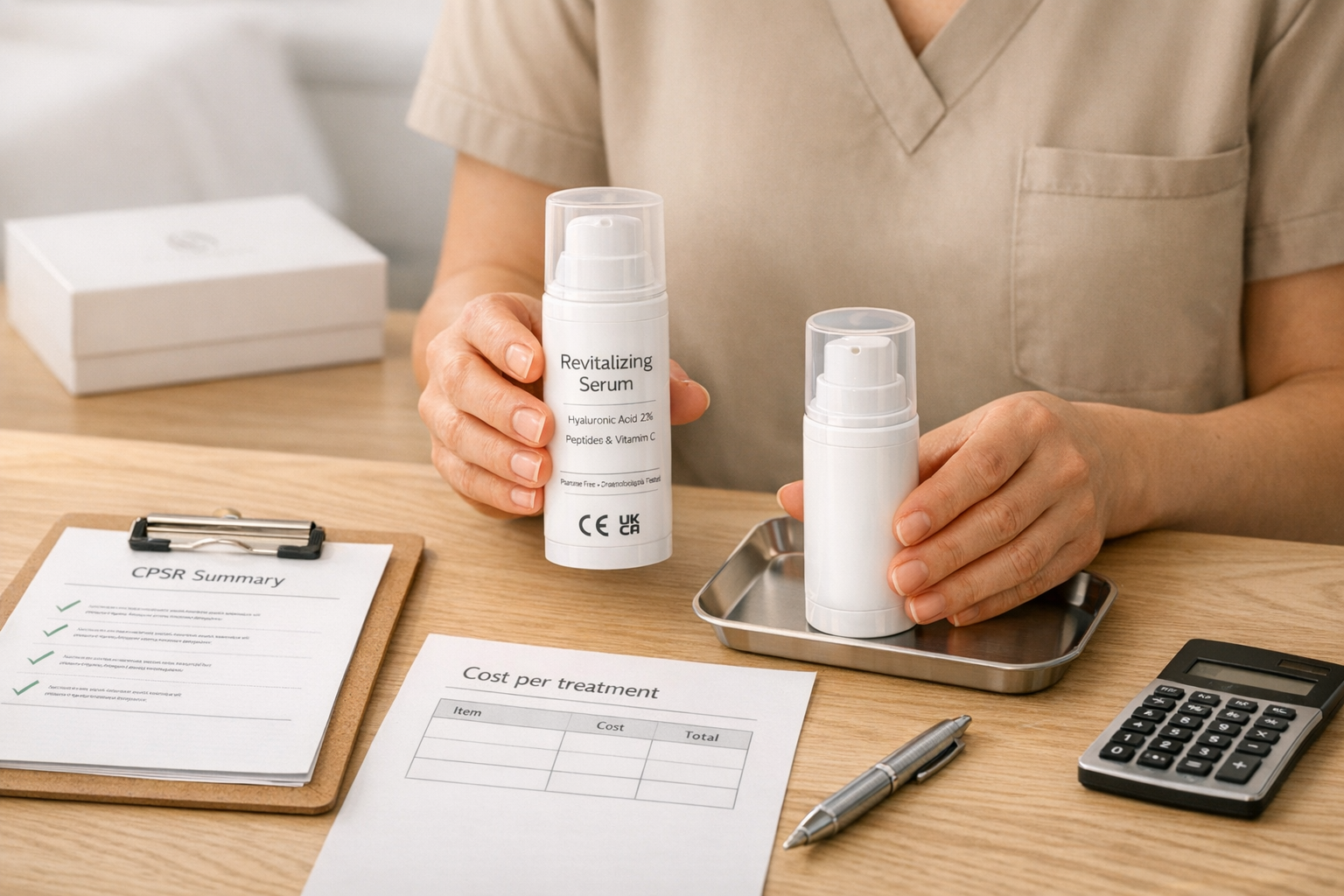
How to Choose Skincare Products for Aesthetic Clinics
To run a successful aesthetic clinic, selecting the right skincare products is critical. The products you use impact client safety, treatment results, and your clinic's reputation. Here's how to make informed decisions:
- Understand Client Needs: Use client data to tailor products based on demographics and skin concerns (e.g., acne solutions for younger clients, hydration for mature skin).
- Prioritise Quality and Safety: Opt for clinical-grade products with verified certifications (CE/UKCA marks, CPSR) and traceable batch numbers to ensure safety and compliance.
- Match Products to Treatments: Choose products that complement your services (e.g., pre- and post-procedure kits for microneedling or chemical peels).
- Evaluate Suppliers: Work with reliable suppliers offering training, marketing support, and consistent product availability. Verify their credentials and avoid grey market goods.
- Balance Costs and Value: Calculate cost-per-treatment and retail margins. Invest in products that deliver results and offer long-term business benefits.
Clinical Studies: What to Look for When Choosing Your Skincare
Understanding Your Clinic's Client Needs
Use your clinic management software to dig into data about your client base, such as age, gender, and ethnicity. This information helps you understand who your clients are and how to align your product offerings with their budgets and lifestyles. By combining this data with local demographic trends, you can tailor your product selection to meet both personal preferences and clinical treatment protocols.
It's also important to distinguish between what clients want and what they need. For instance, a client might ask for "glowing skin" or a "filter-free look", but their actual requirement could be barrier repair or collagen stimulation. Matt Taylor, Brand & Education Manager at Eve Taylor London, highlights this crucial distinction:
"It would be futile to select a high-performance scientific-based brand if 90% of your client base books treatments mainly for relaxation" - Matt Taylor, Eve Taylor London
If your clients lean more towards relaxation-focused treatments, a luxury product line might be a better fit than a clinical-grade range.
Identifying Your Target Demographics
Once you've gathered your data, break down your client base into groups based on their main skin concerns and characteristics. For example:
- Younger clients in their 20s and 30s often look for acne solutions, preventative care, and a fresh complexion. Products with Salicylic Acid, light hydrators, and Vitamin C are ideal for this group.
- Menopausal and mature clients tend to deal with thinning skin and significant moisture loss. Look for formulations featuring PLLA, Exosomes, Peptides, and richer occlusives.
- For clients with darker skin tones, ensure your products are safe for higher Fitzpatrick types. Include pigment inhibitors and peels designed to minimise the risk of post-inflammatory hyperpigmentation.
Also, think about underserved groups who might not currently visit your clinic because their needs aren't being addressed. This could include services like pre-pregnancy body restoration or hormonal skin support. Vanessa Bird, Managing Director of The Aesthetic Consultant, advises:
"Trends will only work if there is a demand in clinic for them and if there is longevity in it. If this treatment or device does not fit with the needs of your business and your demographic, then it will be a waste of money for you" - Vanessa Bird, The Aesthetic Consultant
These insights are essential for shaping your product selection strategy, ensuring it aligns with your clinic's demographic profile.
Matching Products to Treatment Protocols
Once you've identified your clients' needs, focus on products that complement the treatments you offer. For instance, if you specialise in chemical peels or microneedling, look for brands that provide pre- and post-procedure kits to optimise results. Some formulations are specifically designed to pair with devices like lasers or other energy-based treatments, so ensure compatibility with the equipment you use. If you're leaning towards medical-grade products, prioritise those supported by clinical studies, as this evidence can help build trust and justify the investment for your clients.
It's also a good idea to experience the products firsthand. Book a professional treatment with the brand and test the products on your own skin. If the results don't meet your standards, it's unlikely your clients will be satisfied either. To make the selection process easier, create a comparison spreadsheet. Include factors like ingredient quality, ROI, training support, and Fitzpatrick safety. This method ensures you're choosing products that genuinely meet your clinic's needs, rather than simply following industry trends.
Evaluating Product Quality and Safety
@figure 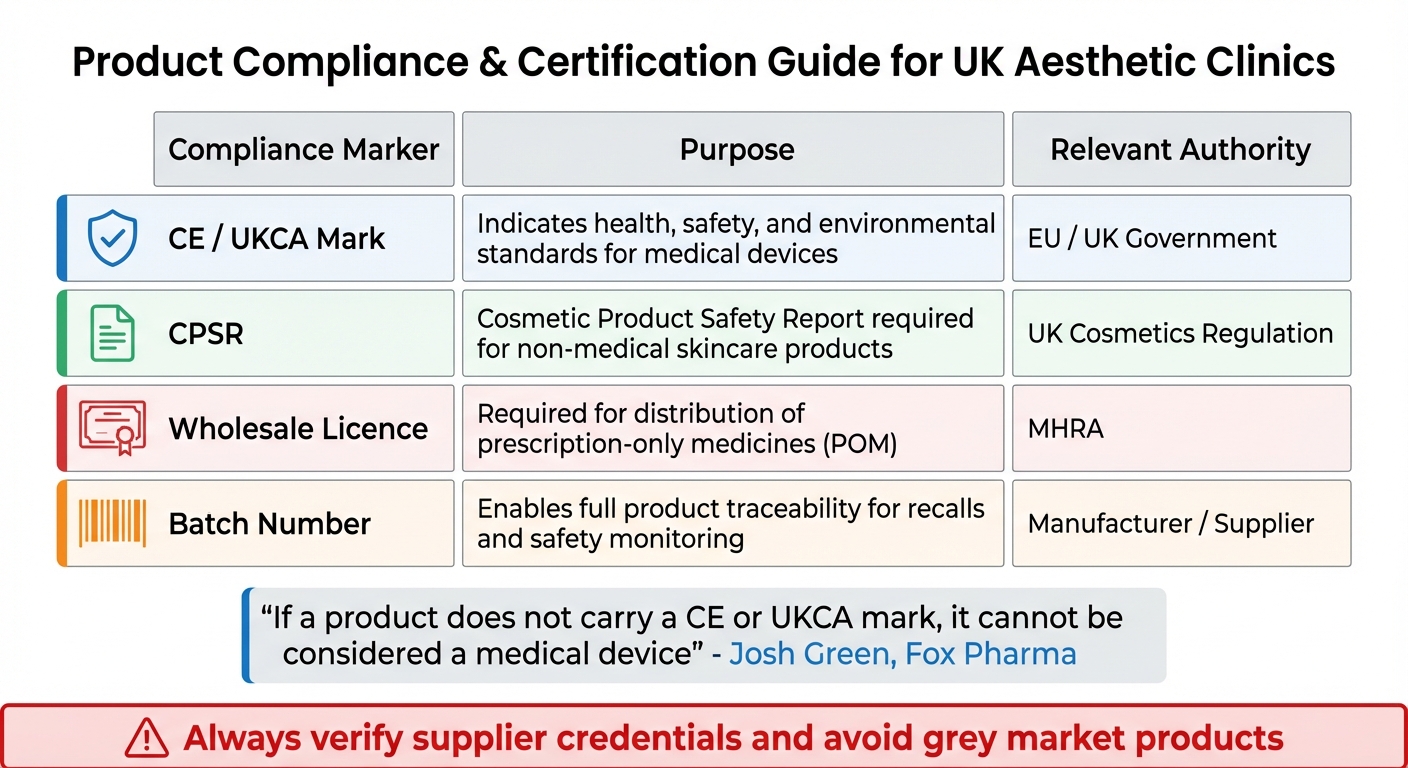 {Product Compliance and Certification Requirements for UK Aesthetic Clinics}
After identifying your client base and aligning products with your treatment protocols, the next step is to ensure that every product meets clinical safety and efficacy standards. This not only protects your clients but also reinforces your clinic's reputation. A thorough review of each product's formulation and certification details is crucial for a complete quality check.
Clinical-Grade Products and Ingredient Standards
Ensuring the clinical quality of products is a key step after matching them to treatment protocols. Clinical-grade products are formulated with higher concentrations of active ingredients, designed to penetrate the skin more effectively than standard alternatives. Look for labels that specify active ingredient concentrations, such as 5–10% AHAs, 2–5% niacinamide, or up to 1% retinol, to confirm their effectiveness. For example, a six-month study found that the retinoid adapalene reduced forehead wrinkles by 40%, while trials demonstrated that a 5% niacinamide formulation significantly improved skin texture and tone within 8 to 12 weeks.
Replenix highlights the importance of these formulations:
"Medical‐grade skincare products are specifically designed to address various skin concerns and conditions. These products contain active ingredients that are backed by scientific research and are known for their effectiveness" - Replenix
When selecting products, choose vitamin C packaged in dark, airless containers to preserve its potency, and opt for medical-grade peptides with advanced delivery systems to enhance skin regeneration.
In addition to formulation standards, regulatory compliance plays a vital role in maintaining professional integrity.
Certifications and Regulatory Compliance
All medical devices used in your clinic - such as dermal fillers, microneedling tools, and skin boosters - must carry either the CE mark (European Conformity) or the UKCA mark (UK Conformity Assessed). Josh Green from Fox Pharma stresses this point:
"If a product does not carry a CE or UKCA mark, it cannot be considered a medical device" - Josh Green, Fox Pharma
Always check the packaging for these marks. If they are absent, the product is not legally classified as a medical device and should not be used in treatments.
For cosmetic products like serums and topical treatments, ensure they are registered through the SCPN (Submitting Cosmetic Product Notifications) portal for the UK or the CPNP (Cosmetic Products Notification Portal) for the EU. Additionally, request a Cosmetic Product Safety Report (CPSR) from your supplier, along with certificates of conformity and batch testing details. IGO Aesthetics warns:
"Substandard or counterfeit products not only put your clients at risk but can also lead to legal issues, damage your credibility, and jeopardise your business" - IGO Aesthetics
To ensure safety and traceability, check for clear batch numbers and expiry dates on all packaging. Confirm that suppliers adhere to "cold-chain" protocols for temperature-sensitive products to maintain ingredient stability.
| Compliance Marker | Purpose | Relevant Authority |
|---|---|---|
| CE / UKCA Mark | Indicates health, safety, and environmental standards | EU / UK Government |
| CPSR | Cosmetic Product Safety Report for non-medical skincare | UK Cosmetics Regulation |
| Wholesale Licence | Required for POM distribution | MHRA |
| Batch Number | Enables full traceability for recalls | Manufacturer / Supplier |
To avoid risks associated with the "grey market", purchase only from official manufacturers or authorised distributors. Products sold through unauthorised channels may lack guaranteed storage history and authenticity. Verify your supplier's legitimacy by checking their registration with Companies House. For prescription-only medicines, confirm that they hold an MHRA wholesale distribution licence and have a registered pharmacist overseeing their operations.
Assessing Supplier Reliability and Support
Once product safety is confirmed, the next step is finding a supplier you can count on. It’s not just about getting the goods; it’s about forming a partnership that supports your business. As IGO Aesthetics puts it:
"In an industry where precision and quality are paramount, your supplier is more than just a vendor; they are a partner in your success." - IGO Aesthetics
A dependable supplier guarantees a steady stock supply, maintains clear communication during orders, and steps up with effective support when challenges arise.
Supplier Reputation and Reviews
Start by verifying the supplier’s legitimacy. Check their Companies House registration, as mentioned earlier, and ensure suppliers of prescription-only medicines hold an MHRA wholesale distribution licence.
Next, dive into independent reviews on platforms like Trustpilot and Google Reviews. Focus on feedback regarding product authenticity, delivery reliability, and customer service. Membership in organisations like BABTAC (British Association of Beauty Therapy & Cosmetology) or BCAM (British College of Aesthetic Medicine) is another good sign of credibility.
As Insync Insurance highlights:
"Vetting beauty and aesthetics suppliers isn't just about product quality - it's about protecting your business, your clients, and your professional credibility." - Insync Insurance
Be cautious of warning signs such as unclear product sourcing, suspiciously low prices, or repeated complaints about shipping delays and damaged goods. Before committing to a large purchase, consider placing a small trial order. This allows you to evaluate packaging, delivery speed, and how well the supplier’s support team handles any issues. Attending UK trade events like Professional Beauty London or the Aesthetics Conference and Exhibition can also be a great way to meet suppliers face-to-face and see their products in action.
Beyond delivering products, the level of support a supplier provides is equally critical.
Training Resources and Support
Test how quickly and clearly the supplier responds to your initial queries. Top-tier suppliers often go a step further by assigning dedicated account managers or Practice Development Specialists. These professionals can guide you on inventory planning, treatment protocols, and even strategies for expanding your business. As one Plastic Surgeon noted:
"The team is knowledgeable, supportive, and even shows up in person to help with client education and sales events." - Plastic Surgeon, Florida
Look for suppliers offering various training options, such as in-person workshops, live-streamed demonstrations, and discovery calls with clinical educators. Many also provide access to professional networks where practitioners can exchange ideas and resources. Before committing, send a technical question to test their expertise and response times. Make sure their training covers theory, product knowledge, and hands-on practice, ideally leading to professional certification.
| Support Feature | What to Look For |
|---|---|
| Training | In-person workshops, live webinars, and step-by-step protocols |
| Logistics | Real-time tracking, same-day dispatch, and cold-chain management |
| Business Growth | Marketing materials and inventory planning support |
| Compliance | CE/UKCA marks, batch traceability, and MHRA registration |
Availability and Local Distribution
Stock shortages can throw your operations off track. Leading UK suppliers often offer same-day dispatch for orders placed before 1 pm, helping you restock quickly and keep inventory levels lean, which is great for cash flow.
Local suppliers are better positioned to handle cold-chain requirements for temperature-sensitive products like skin boosters, ensuring product integrity during transit. They are also more likely to comply with UKCA/CE marking standards and post-Brexit regulations. Delivery delays can lead to rescheduled appointments and unhappy clients, so it’s essential to ask about a supplier’s storage protocols. Confirm they rigorously monitor their cold chain and use a First-In, First-Out (FIFO) system to deliver products with the longest possible expiry dates. Lastly, check that pricing is transparent, with VAT and shipping costs included upfront, so there are no surprises that could affect your treatment margins.
Pricing and Value for Investment
Once you've ensured product safety and supplier reliability, the next step is to evaluate costs and the value you’re getting for your money. Pricing isn’t just about finding the cheapest option - it’s about understanding the value behind the price tag. As Matt Taylor, Brand & Education Manager at Eve Taylor London, explains:
"Making the right decisions can result in high profit margins and client loyalty, while making the wrong decision can become a costly mistake." - Matt Taylor, Eve Taylor London
A product that seems inexpensive upfront can end up costing more in the long run if it delivers poor results or damages your reputation.
Balancing Cost and Quality
To truly gauge the value of a product, calculate the cost per treatment and include retail margins and any added benefits. Start by determining how much product is needed for a single session and compare that to what you can reasonably charge your clients. This will give you a clear picture of your profit margin. Don’t forget to factor in the retail potential of homecare products, as strong retail margins can help balance the cost of professional-use supplies.
Be cautious of products with prices that seem unusually low. These could be counterfeit, expired, or sourced from the grey market. Such products often lack batch traceability, which can lead to poor treatment outcomes, legal risks, and a loss of client trust.
It’s also worth considering the extra benefits provided by suppliers. Perks like free staff training, marketing support, and ongoing technical assistance can significantly reduce your operational costs over time. While a slightly higher upfront price might seem like a drawback, these additional services can make the investment worthwhile. Additionally, investigate whether the supplier allows other stockists to heavily discount their products online, as this could undercut your clinic’s retail profitability.
Lastly, take a comprehensive look at supplier plans to ensure you have full transparency on costs.
Comparing Supplier Plans
When assessing suppliers, don’t focus solely on the initial order price. Check for hidden costs like VAT, shipping fees, or customs charges, and ensure these are clearly outlined upfront. Before committing to bulk orders, test the supplier’s product quality, delivery reliability, and packaging standards with smaller orders.
| Factor | What to Evaluate |
|---|---|
| Cost per Treatment | Determine the cost of product per treatment session |
| Retail Margin | Compare retail pricing (RRP) against wholesale costs to assess profit margins |
| Support Package | Look for training, samples, marketing tools, and account management services |
| Market Protection | Ensure policies are in place to prevent heavy online discounting by other sellers |
| Logistics | Confirm VAT clarity, delivery reliability, and FIFO (first in, first out) stock management |
Opt for suppliers that offer bulk purchase discounts and loyalty incentives for long-term partnerships. Additionally, verify that they follow FIFO protocols to ensure stock stays fresh and within optimal expiry dates. Keep in mind that a well-run aesthetic clinic typically aims for an operating margin between 15% and 25%. Every percentage saved on your cost of goods sold (COGS) can have a direct impact on your profitability.
How Directories Help Clinics Attract Clients
Having quality skincare products in your clinic is just the start; making sure potential clients can find you is just as important. Think of it this way: just as carefully chosen products improve treatment results, verified directories like Scotland Aestheticians can boost your visibility and help connect you with clients actively searching for aesthetic services. These directories ensure your clinic stands out, complementing the quality of your services and drawing in local clients who are ready to book.
Benefits of Verified Listings
Being listed in a manually verified directory instantly adds credibility to your clinic. When people know that every listing has been checked, they’re more likely to trust the clinics they find. This verification process acts as a kind of quality assurance, giving potential clients confidence that they’re dealing with professional, legitimate businesses - not untrustworthy operators.
Verified listings also help turn casual browsers into actual bookings. A well-optimised profile that includes clear images and detailed descriptions of your services - whether it’s dermal fillers, chemical peels, or laser treatments - can make all the difference. Regularly updating your profile with accurate contact details and current offerings ensures potential clients don’t encounter outdated information, which could lead them to look elsewhere.
Using Local SEO to Increase Visibility
Building on your clinic’s reputation, local SEO is another tool that can significantly boost your visibility. For aesthetic clinics, local SEO is particularly effective because it targets people searching for location-specific services like "lip fillers near me" or "skin clinic in Edinburgh." Jane Nriapia, Founder of Boutique SEO, highlights its importance:
"Local SEO is one of the most powerful and sustainable ways to grow your aesthetics clinic online. Unlike paid ads, which stop the moment your budget does, local SEO builds long-term visibility and patient trust." - Jane Nriapia, Boutique SEO
Consistency is key when it comes to local SEO. Ensuring your NAP (Name, Address, Phone number) details are identical across all directories can improve your rankings on Google. Even minor inconsistencies - like writing "St" instead of "Street" - can confuse search engines and hurt your visibility.
Directories like Scotland Aestheticians offer both free and paid listing options. For as little as £4.99 per month, you can secure a dofollow listing to improve your search engine rankings. Featured placements are also available, giving your clinic a prime spot above standard listings. When combined with other marketing efforts like social media, client reviews, and your website, directory listings can play a key role in ensuring your clinic is front and centre when potential clients are ready to book.
Conclusion
Selecting the right skincare products for your aesthetic clinic plays a crucial role in ensuring client safety, achieving effective treatment results, and maintaining your professional reputation. Using low-quality products can compromise all three.
Start by aligning your product choices with your clients' unique needs. Focus on quality and compliance by looking for CE or UKCA marks, verifying batch traceability, and sourcing exclusively from official distributors - steering clear of the grey market. This careful approach lays the groundwork for making sound decisions about suppliers and managing costs effectively.
When choosing suppliers, look for those who provide added value, such as in-depth training, marketing support, and reliable UK-wide delivery. It’s also important to consider cost-per-treatment and profit margins. As Matt Taylor, Brand & Education Manager at Eve Taylor London, points out:
"Choosing a new product range is an extremely important decision to make for your beauty business as it will greatly impact your treatment offering" - Matt Taylor, Eve Taylor London
Once you’ve established a solid product range and dependable supply chain, the next step is to enhance your clinic’s visibility. Verified directories such as Scotland Aestheticians can help by offering local SEO optimisation, turning online searches into confirmed bookings. By combining thoughtful product selection, reliable suppliers, and improved visibility, your clinic can achieve sustainable growth and foster lasting client relationships.
FAQs
To align products with your client demographics effectively, start by clearly defining your target market. Consider factors like their needs, preferences, age group, spending habits, and treatment goals. Are they looking for tangible results, or do they value a luxurious experience? Are they budget-conscious, or do they lean towards premium options? By understanding these details, you can streamline your product selection process and ensure it meets your clients' expectations.
To spot counterfeit or grey-market skincare products, start by examining the documentation and batch traceability. Make sure the product has a valid expiry date clearly displayed. Be cautious of items sold by unverified suppliers or those priced suspiciously lower than the standard market rates. Pay attention to the packaging - it should be clear, with authentic labels that meet UK safety standards. It's also wise to check the supplier's reputation and ask for proof of authenticity to ensure you're buying genuine and safe skincare products.
Before choosing a supplier, make sure to check if they comply with UK regulations. This includes verifying batch traceability and expiry dates. Look into their commitment to safety standards, the authenticity of their products, and their overall reputation. It's also crucial to ensure they provide clear documentation and dependable customer service. Taking these steps will help you find a supplier who meets both legal and quality standards.