How to Choose a Safe Chemical Peel Clinic in Scotland
Chemical peels are a popular treatment in Scotland for addressing skin concerns like pigmentation, fine lines, and acne scars. However, safety is critical. Choosing the right clinic can mean the difference between achieving healthy results and facing serious complications like scarring or infections. Here’s what you need to know:
- Credentials Matter: Ensure practitioners hold recognised qualifications (e.g., Qualifi Level 5 Certificate) and are registered with relevant bodies like the GMC or GDC.
- Regulations: From September 2027, only licensed healthcare professionals or those under their supervision can perform chemical peels in Scotland under the Non-surgical Procedures Bill.
- Clinic Standards: Look for clinics registered with Healthcare Improvement Scotland (HIS) and avoid mobile or pop-up providers. Reputable clinics like FrownDocs in Stirling provide the clinical environment necessary for safe treatment.
- Consultation and Aftercare: A thorough consultation should assess your skin type and medical history. Post-treatment care, including sunscreen use and avoiding active skincare products, is vital for recovery.
- Costs: Professional chemical peels typically start at £100, with package deals offering savings. Avoid cheap, unregulated options as they may compromise safety.
Prioritise clinics with strong reviews, verified credentials, and transparent practices to protect your skin and achieve the desired results. Established providers such as Clinetix in Glasgow exemplify these safety standards.
@figure 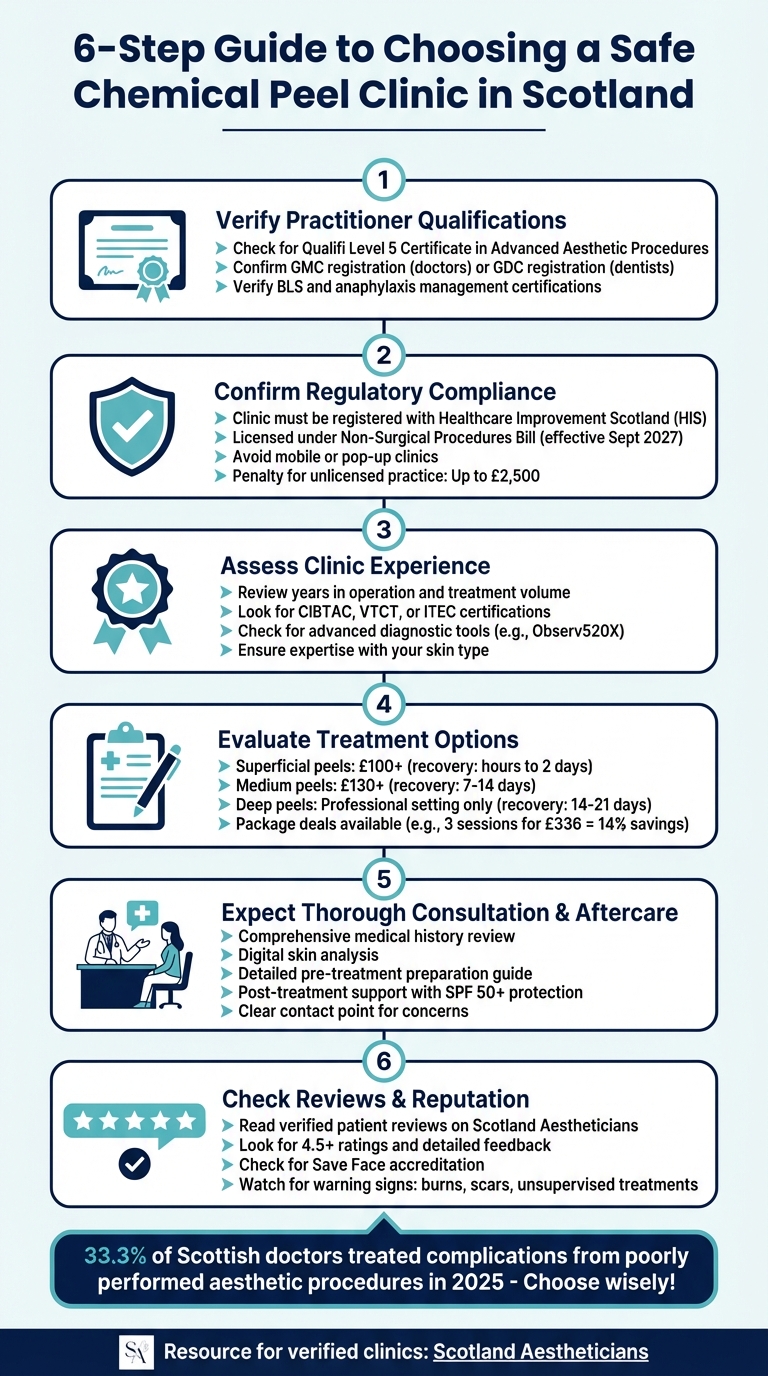 {6-Step Guide to Choosing a Safe Chemical Peel Clinic in Scotland}
What Are Chemical Peels and What Safety Standards Apply?
What Are Chemical Peels?
Chemical peels - also called chemexfoliation or dermapeeling - are minimally invasive treatments designed to improve skin texture by using a chemical solution to remove dead or damaged skin cells. This process causes controlled damage to the skin, which eventually peels away, revealing fresher, smoother skin underneath. These treatments not only exfoliate but also encourage cell renewal and stimulate the production of collagen and elastin, which can help reduce the appearance of fine lines and wrinkles.
Stephen Hannan, Group Clinical Services Director at sk:n clinics, explains:
Chemical peels, or skin peels, harness the power of naturally occurring acids and active ingredients, clinically proven to deeply exfoliate the skin, stimulate collagen production, and new cell growth and turnover.
Chemical peels are widely used to tackle concerns such as acne, scarring, sun damage, age spots, fine lines, uneven skin tone, enlarged pores, and melasma. Choosing the right type of peel is essential to address specific skin concerns effectively.
Types of Chemical Peels
Chemical peels are classified by how deeply they penetrate the skin, with each type suited to different skin issues and recovery times.
-
Superficial (light) peels work on the outermost layer of skin (epidermis) and use mild acids like glycolic acid, salicylic acid, or lactic acid. These peels are ideal for treating fine lines, mild acne, and rough skin texture, with minimal recovery time - usually just a few hours to a couple of days. For specific needs, lactic acid is suitable for dry or sensitive skin, while salicylic acid is better for oily or acne-prone skin.
-
Medium peels go deeper, reaching the upper dermis. They often use trichloroacetic acid (TCA) or Jessner's solution. These peels are effective for moderate wrinkles, age spots, and superficial scarring, but they require more recovery time - typically 7 to 14 days with redness, swelling, and crusting.
-
Deep peels penetrate to the lower dermis using phenol (carbolic acid) or high-concentration TCA. These are designed for severe wrinkles and deep scars, delivering dramatic results. However, they come with a recovery period of 14 to 21 days, often involving bandages and significant downtime. Deep peels are generally a one-time treatment for the face due to their intensity and depth.
Selecting the right peel requires careful consideration of skin type and concerns, as well as the expertise of a trained professional to avoid complications.
Why Professional Administration Matters
On 18th March 2026, the Scottish Parliament passed the Non-surgical Procedures and Functions of Medical Reviewers (Scotland) Bill. This legislation restricts regulated non-surgical procedures, such as chemical peels, to licensed healthcare professionals - including doctors, dentists, nurses, midwives, and pharmacists - or those working under their supervision. The law is set to take full effect in September 2027, with penalties of up to £2,500 for unlicensed practitioners.
Professional oversight is especially important for deeper peels, which use potent chemicals like phenol to penetrate the deeper layers of skin. These procedures require advanced skill and may involve local anaesthesia or sedation. Risks such as uneven skin tone are higher for individuals with darker skin, while those with very pale skin, freckles, or a history of abnormal pigmentation may be advised against undergoing these treatments. Additionally, deep peels using phenol can pose serious risks, including cardiotoxicity and systemic toxicity, necessitating cardiac monitoring during the procedure.
For safety reasons, clinic-strength chemical peels should always be performed in a professional medical setting. Attempting these treatments in non-clinical environments significantly increases the risk of severe complications, such as infections, abnormal pigmentation, or heart-related issues.
CHEMICAL PEEL DO'S AND DONT'S | HOW TO AVOID DAMAGE AND GET SAFE, GLOWING RESULTS | KRISTEN MARIE
How to Check a Clinic's Credentials and Accreditation
When it comes to chemical peel treatments, ensuring the clinic and its practitioners are properly qualified and accredited is a key step in safeguarding your health and achieving the desired results.
Verifying Professional Qualifications
Before booking a chemical peel, take the time to check your practitioner's qualifications. For medium-grade chemical peels, they should hold a Qualifi Level 5 Certificate in Advanced Aesthetic Procedures: Chemical Peels (RQF: 610/6075/6), a recognised UK qualification tailored for treatments on areas like the face, chest, and hands. Additionally, they should have completed a Level 4 Certificate in Aesthetic Practice or a Level 4 Diploma in Aesthetic Procedures for Skin Rejuvenation as a prerequisite to advancing to Level 5.
It's also essential to confirm that the practitioner has up-to-date certifications in Basic Life Support (BLS) and anaphylaxis management. For deeper peels or those involving prescription-only medications, ensure they are a registered healthcare professional. Doctors should be listed with the General Medical Council (GMC), and dentists with the General Dental Council (GDC). These registrations can be verified online, giving you peace of mind before proceeding with any treatment. Beyond the practitioner, the clinic itself must also meet regulatory standards and hold the necessary accreditations.
Regulatory Compliance and Accreditation
The clinic's compliance with regulations is just as important as the practitioner's credentials. In Scotland, for instance, independent clinics offering medical aesthetic treatments are required to register with Health Improvement Scotland (HIS). You can verify a clinic's registration status directly on the HIS website. Furthermore, under the Non-Surgical Cosmetic Procedures Bill, which was enacted on 18th March 2026, both practitioners and premises must hold appropriate licences. High-risk treatments like phenol peels must be conducted in an HIS-licensed clinical setting, while beauty salons offering superficial fruit peels need a local council premises licence.
Lesley Blair MBE, Chief Executive and Chair of the British Association of Beauty Therapy and Cosmetology (Babtac), highlighted the importance of this regulation:
The Bill now reflects a proportionate approach to regulation without impacting client safety and professional standards, which is imperative for the future of the sector in Scotland.
Be wary of mobile or pop-up clinics, as they often fail to meet proper hygiene and safety standards. A 2025 poll found that over one-third of Scottish doctors (33.3%) had treated complications resulting from poorly performed aesthetic procedures, underscoring the risks of unregulated providers. To make your search easier, platforms like Scotland Aestheticians list verified clinics and HIS-registered professionals, helping you connect with reliable providers across Scotland.
Assessing Clinic Experience and Treatment Options
After verifying credentials, it's equally important to evaluate a clinic's experience and the variety of treatments they offer. Understanding their expertise and available options ensures both safety and personalised results when it comes to chemical peels.
Checking Experience and Specialisation
The experience of a clinic plays a huge role in determining the safety and effectiveness of your chemical peel. According to the American Academy of Dermatology:
the results you see after getting a chemical peel depend largely on the skill of the person performing the peel.
When evaluating a clinic, look into their history - how long they've been in operation and the number of treatments they’ve carried out. Ensure that practitioners have appropriate certifications, such as CIBTAC, VTCT, or ITEC.
Another sign of an experienced clinic is their use of advanced diagnostic tools. For example, reputable providers might use systems like the Observ520X, which can analyse deeper layers of the skin. This technology helps visualise underlying pigmentation and oil distribution, enabling tailored treatment recommendations. For individuals with skin of colour, choosing a clinic with expertise in treating darker skin tones is crucial. As the American Academy of Dermatology points out:
Even people who have skin of colour can safely have a chemical peel - but they should see a dermatologist who has expertise using chemical peels to treat darker skin tones.
Without such specialisation, there’s a higher risk of complications like permanent pigmentation issues or scarring.
Reviewing Available Treatments
The variety of chemical peels offered can give you insight into a clinic's ability to address different skin concerns. A good clinic should offer a range of treatments, from superficial "lunchtime" peels that improve dullness and texture to medium-depth peels designed for more serious issues like pigmentation or acne scarring. For example:
- Salicylic acid-based peels: Effective for targeting congestion and blackheads.
- Combination treatments: May include chemical peels paired with LED Light Therapy to speed up recovery.
Treatment costs can vary, and some clinics may offer packages that provide better value.
Make sure to ask for a detailed explanation of each treatment option, including its benefits and recovery time. Professional clinics will also screen for contraindications during your consultation. This includes checking for conditions like aspirin allergies (important for salicylic acid peels), pregnancy, breastfeeding, or active skin issues. Some advanced clinics even address medical concerns, such as treating actinic keratoses (precancerous growths), which reflects a higher level of expertise.
To simplify the process of comparing clinics, platforms like Scotland Aestheticians provide listings of verified providers with detailed service descriptions. By considering these factors alongside earlier checks on qualifications and safety, you can make a more informed decision.
Consultation Process and Aftercare Support
When it comes to chemical peels, the consultation and aftercare are just as crucial as the treatment itself. These steps ensure your skin is properly assessed beforehand and cared for during recovery, reducing potential risks and helping you achieve the best results.
What Happens During a Consultation
A comprehensive consultation typically starts with a review of your skin health and medical history. The practitioner will check for any contraindications, such as pregnancy, breastfeeding, aspirin allergies, or active skin issues like cold sores or dermatitis. This step is vital to confirm whether the treatment is suitable for you.
Some advanced clinics may use digital skin analysis to create a treatment plan tailored to your needs. This technology helps practitioners decide on the number of layers and the type of peel - such as salicylic acid-based options - that will best align with your goals. During the consultation, you should also receive a clear explanation of what the procedure entails, including possible sensations like tingling or warmth, and an overview of the recovery process. For medium-depth peels, for instance, you might experience redness similar to sunburn on the first day, followed by dryness and peeling that usually resolves within five days.
In preparation for your chemical peel, you’ll be advised to avoid laser or IPL treatments for one week prior and stop using products containing tretinoin, benzoyl peroxide, or salicylic acid at least three days before. Reputable clinics will provide a detailed pre-treatment guide to ensure your skin is in the best possible condition. This thorough consultation naturally transitions into a personalised aftercare plan to protect and enhance your results.
Why Aftercare Support Matters
Once your treatment is complete, following a well-structured aftercare plan is essential for maintaining your results and avoiding complications. The way you care for your skin in the days after the procedure can significantly impact your healing process. As CoLaz, a leading UK skin clinic network with over 1 million treatments performed, explains:
Those first few days at home can either protect your skin or create setbacks that take weeks to correct.
Proper aftercare minimises risks such as dark marks, scarring, and infections while supporting the repair of your skin barrier. A trustworthy clinic will provide a detailed post-treatment advice sheet and a clear point of contact for any concerns, such as yellow crusting, oozing, or signs of infection.
Key aftercare steps often include avoiding face washing for 12–24 hours after the peel, applying broad-spectrum SPF 50 daily, and pausing the use of active skincare ingredients like retinol or glycolic acid for 7–14 days for superficial peels (or up to four weeks for deeper treatments). You’ll also need to steer clear of intense exercise, saunas, and direct sun exposure for 7–14 days. It’s crucial not to pick or peel flaking skin; instead, let it shed naturally while keeping it hydrated with fragrance-free moisturisers.
West Lodge Medical highlights the importance of sun protection:
It's important to use a high factor sun block after the medium depth peel... as hypo or hyper pigmentation can occur after exposure to sunlight.
For added reassurance, clinics registered with Healthcare Improvement Scotland (HIS) can offer medical support, such as prescribing hydrocortisone cream in rare cases of adverse reactions. If you’re comparing clinics, platforms like Scotland Aestheticians can help you find verified providers that offer thorough consultation and aftercare services.
Understanding Costs and Pricing Transparency
Chemical Peel Pricing in Scotland
In Scotland, professional chemical peels typically start at around £100, with light to medium treatments - like the Obagi® Radiance Peel combined with LED Light Therapy - costing approximately £130 per session. Many clinics offer package deals to make treatments more affordable. For example, a package of three sessions might cost £336, bringing the per-session price down to about £112, which represents a 14% saving. These packages often come with extra perks, such as detailed skin assessments or post-treatment therapies like Dermalux® LED Light Therapy, which aid recovery and enhance the overall results.
Several factors influence the pricing of chemical peels. These include the expertise and qualifications of the practitioner, the use of premium solutions like Jan Marini, Jessners, or Theraderm Peels, and the clinic’s adherence to regulatory standards. Sessions typically last between 40 and 50 minutes, and maintenance peels are usually recommended every 4 to 6 weeks.
Weighing Cost Against Quality
When considering the cost of chemical peels, it’s not just about finding the lowest price - it’s about ensuring quality and safety. A clinic’s pricing often reflects its professional standards, so while cheaper treatments might be tempting, they could indicate lower standards or increased risks.
Clinics that charge higher fees often do so because they meet stringent safety and professional standards. Look for clinics with HIS (Healthcare Improvement Scotland) registration and practitioners with recognised medical qualifications like GMC or GDC. Many of the top clinics also serve as training centres for aesthetic medicine, meaning their staff are often leaders in the field. For example, Clinetix, a leading Scottish clinic, highlights its focus on safety and patient care:
"The Clinic specialises in a wide range of treatments that have been proven to be safe and effective, and we pride ourselves on offering the highest level of patient care".
While package deals can offer savings, they should never come at the expense of safety or proper oversight. When evaluating clinics, make sure to check their HIS registration, confirm practitioner credentials, and prioritise those recognised as training centres. High-quality clinics often provide thorough consultations and medically supervised treatments - services that lower-cost, unregulated providers may not offer. To help you find trusted clinics with clear pricing and strong safety records, platforms like Scotland Aestheticians can be a valuable resource.
Next, let’s delve into how a clinic’s reviews and reputation can further reveal its quality and transparency.
Using Reviews and Reputation to Choose a Clinic
Once you’ve verified a clinic’s credentials and treatment practices, reviews can provide valuable insight into its safety and quality.
Finding Verified Reviews
Patient reviews can shed light on how well a clinic performs, but not all feedback is equally trustworthy. To find reliable information, start with platforms that verify both clinic listings and patient experiences. For example, Scotland Aestheticians offers verified details about clinics across Scotland, allowing you to access genuine feedback from patients who have undergone treatments. Instead of focusing solely on star ratings, take the time to read detailed comments about consultations, treatments, and aftercare.
Reputable clinics often highlight their ratings. For instance, sk:n clinics boast a 4.9 out of 5 rating for acne scar treatments, based on 172 reviews, and are rated "Excellent" on Trustpilot. When reading reviews, look out for mentions of professionalism and transparency. As one patient, Ms E Lewis, shared:
The Clinic staff were very helpful and friendly most of all honest, they weren't trying to 'sell' me a treatment for the sake of it. That honesty is what stood out.
Verified reviews, along with external accreditations, can confirm whether a clinic prioritises safety. Clinics accredited by Save Face - a national register for aesthetic practitioners - or regulated by Health Improvement Scotland follow rigorous safety protocols. Award-winning clinics, such as Dr Nestor's Medical Cosmetic Centre, which was named 'Best Clinic Scotland' in 2019, have earned their reputations by consistently delivering quality care.
Spotting Warning Signs in Reviews
Certain patterns in reviews can hint at unsafe practices. For instance, the FDA has never approved any chemical peel product, meaning the safety of these treatments relies entirely on professional administration. When scanning reviews, watch for terms like "burns", "scars", "unsupervised", or "emergency", as these could signal serious safety issues.
Mentions of "chemical burns", "disfiguring scars", or "permanent skin colour changes" may indicate improper use of acids, such as incorrect concentrations or poor application techniques. Similarly, reviews noting that a practitioner was "not on hand" or left patients "unsupervised" during a procedure suggest a breach of basic safety standards. Comments about "infection", "extreme pain", or swelling requiring additional medical treatment are also red flags. According to the FDA:
These products remove layers of skin to varying depths and may cause severe chemical burns, pain, swelling, infection, skin colour changes, and disfiguring scars.
Be especially cautious if multiple reviews mention patients needing outside medical help to address "disfiguring" results. Additionally, feedback indicating that staff are overly focused on selling proprietary skincare products rather than offering medically appropriate solutions should raise concerns. Repeated complaints about practitioners lacking the necessary training to handle high-concentration acids, such as TCA, glycolic, or salicylic acids, are another signal to explore other options.
Conclusion
When selecting a chemical peel clinic in Scotland, start by verifying the clinic’s credentials, safety measures, and patient reviews. Look for practitioners with recognised qualifications, such as CIBTAC, VTCT, or ITEC, or those registered with regulatory bodies like the GDC. These qualifications ensure that your treatment is handled by skilled professionals.
A thorough consultation is essential before undergoing any treatment. Reputable clinics often use advanced tools like the Observ520X to provide a detailed skin assessment, helping to minimise risks and tailor the treatment to your specific needs. This step is crucial for reducing complications and ensuring the peel suits your skin type.
While cost might be a consideration, prioritising safety is far more important. Professional chemical peels typically cost around £130, but opting for cheaper, unregulated treatments can lead to serious issues like burns, scarring, or infections. Trustworthy clinics focus on proper peel neutralisation and provide structured aftercare, including broad-spectrum SPF50 protection, to safeguard your skin.
Patient feedback is another valuable resource. Look for verified reviews that highlight the clinic's consultation process, treatment methods, and aftercare. Platforms like Scotland Aestheticians can connect you with trusted clinics across Scotland, offering insights from real patients to help guide your choice. Combining professional verification with genuine patient experiences will give you confidence in your decision.
FAQs
To confirm a Scottish clinic is licensed to perform chemical peels, ensure it adheres to Scotland’s updated regulatory requirements, such as the Non-Surgical Procedures Bill. Look for registration with local authorities or Healthcare Improvement Scotland. Additionally, request evidence of licensing and practitioner qualifications to ensure they comply with safety and training standards.
The best chemical peel for your skin tone and concerns will depend on your specific skin type and what you hope to achieve. For individuals with darker skin tones, it's important to select peels that minimise the chance of side effects like hyperpigmentation or scarring. Options such as the Obagi® Radiance Blue Peel are generally considered safe for a variety of skin types. To ensure the treatment is both effective and safe, always seek advice from a qualified aesthetic professional who can customise the peel to suit your unique needs.
After a chemical peel, certain symptoms can indicate that something isn't right. These include:
- Infection: Watch for unusual swelling, pus, or fever, which could signal an infection.
- Severe Redness or Soreness: While some redness is normal, excessive discomfort or prolonged redness might be a concern.
- Blisters: The appearance of blisters could mean the peel has caused more damage than intended.
- Scarring: Noticeable scars developing after the treatment should not be ignored.
- Burns: Intense burning sensations or visible burns are clear signs of an adverse reaction.
If you notice any of these issues, it’s crucial to contact a professional immediately. Acting quickly can help prevent more serious complications.