Botox vs Dermal Fillers: Which Treatment Is Right for You?
When deciding between Botox and dermal fillers, understanding their purpose is key. Botox temporarily relaxes muscles to smooth wrinkles caused by facial movements (dynamic wrinkles), such as forehead lines and crow’s feet. Dermal fillers, on the other hand, restore lost volume and address wrinkles visible when the face is at rest (static wrinkles), like nasolabial folds and hollow cheeks.
Here’s a quick breakdown:
- Botox: Best for dynamic wrinkles (forehead, crow’s feet, frown lines). Effects last 3–4 months. Costs start at £150–£200 per area.
- Dermal Fillers: Ideal for static wrinkles and volume loss (cheeks, lips, jawline). Results last 6–24 months. Prices range from £250–£750 per syringe.
For comprehensive results, combining both treatments can address multiple ageing concerns. Consult a qualified practitioner to determine the best approach for your goals.
@figure 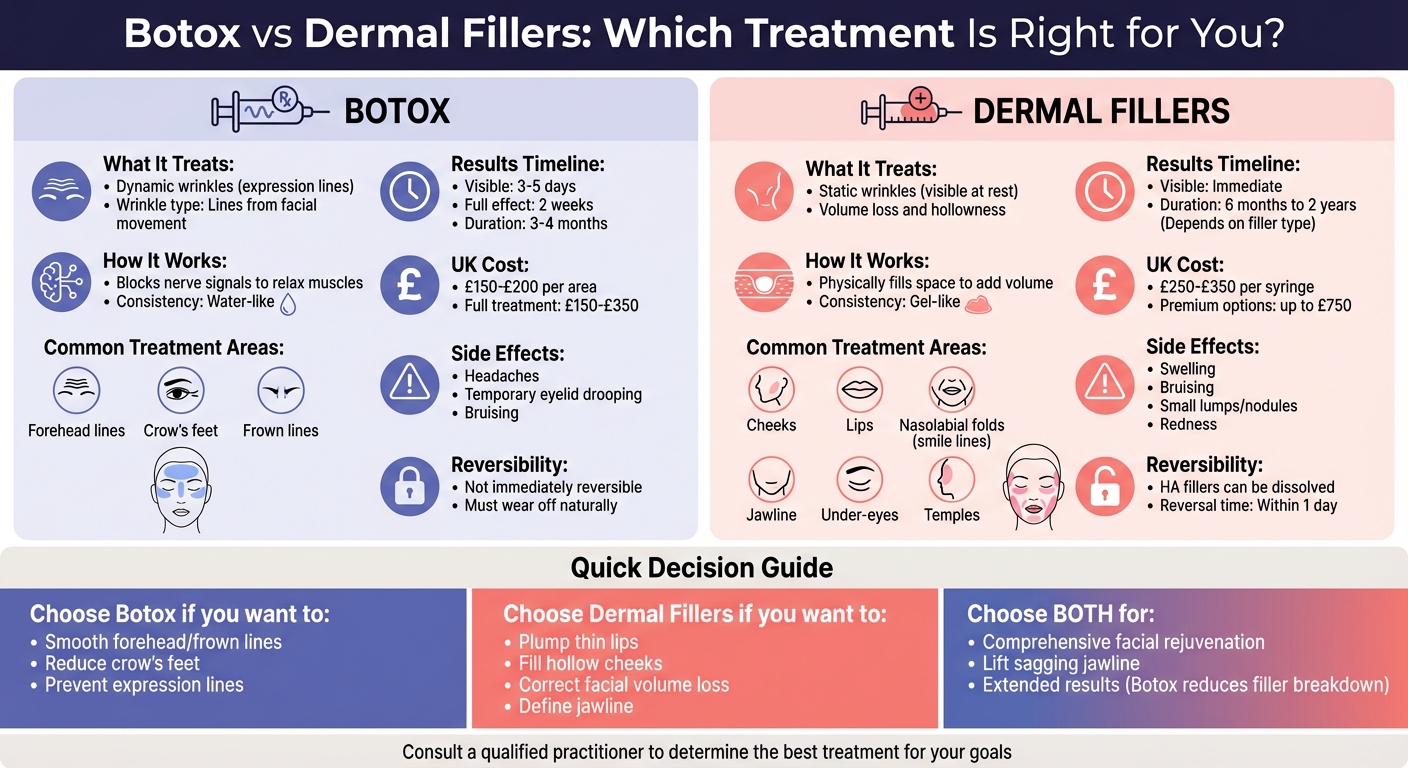 {Botox vs Dermal Fillers Comparison Chart: Treatment Areas, Duration, and Costs}
Botox vs Filler Injection : Understanding the Difference | Dr. Shalini Gupta
What Is Botox?
Botox, derived from the Clostridium botulinum bacteria, is a neuromodulator that has been a staple in aesthetic medicine for decades. In 2015 alone, approximately 6.7 million Botox procedures were performed in the United States. As a prescription-only treatment, it requires a face-to-face consultation with a qualified medical professional before proceeding. While widely known for its cosmetic applications, Botox is also approved for medical conditions like chronic migraines, excessive sweating (hyperhidrosis), overactive bladder, and TMJ disorders. Its wide-ranging uses have cemented its role in both medical and beauty treatments.
How Botox Works
Botox works by temporarily blocking nerve signals that cause muscles to contract. This interruption allows the targeted muscle to relax.
"Botox works by blocking nerve signals in the muscles where it is injected. When those nerve signals are interrupted, the affected muscle is temporarily paralysed or frozen." - Medical News Today
Results typically start to show within 2 to 10 days, peak around the two-week mark, and last for 3 to 4 months. Once the effects wear off, muscle activity gradually returns, and wrinkles reappear, requiring repeat treatments for maintenance. In the UK, prices for Botox treatments generally start at around £200 per area.
It’s worth noting that Botox is ineffective on static wrinkles - those visible even when the face is at rest, often caused by factors like sagging skin, sun damage, or collagen loss. For these concerns, dermal fillers are usually the better option.
Let’s take a closer look at the specific areas where Botox treatments are most commonly applied.
Common Treatment Areas for Botox
Botox’s ability to relax muscles makes it highly effective for treating various facial concerns, especially on the upper face. Common treatment areas include:
- Horizontal forehead lines: Smooths out the creases that appear across the forehead.
- Frown lines (glabellar lines): Reduces the vertical lines between the eyebrows.
- Crow’s feet: Softens the fine lines around the outer corners of the eyes.
Other uses include addressing bunny lines on the sides of the nose, smoothing a dimpled or "pebbly" chin, lifting downturned mouth corners, and defining the jawline by relaxing the masseter muscles. Botox can also target vertical neck bands or create a "lip flip" to subtly enhance the shape of the upper lip.
"Botox stops your muscles contracting, meaning wrinkles can't form as easily when you move your face." - Dr. Rekha Tailor, Medical Director, Health & Aesthetics
After treatment, it’s recommended to avoid rubbing or massaging the treated areas for at least 24 hours. This precaution helps prevent the toxin from spreading to unintended muscles, which could lead to side effects like eyelid drooping or facial asymmetry. When performed by experienced, board-certified professionals, side effects are rare, occurring in less than 1% of cases.
What Are Dermal Fillers?
Dermal fillers are injectable treatments designed to restore volume, smooth out lines, and enhance facial contours. They are especially effective for addressing age-related volume loss. Unlike Botox, which relaxes muscles to reduce dynamic wrinkles, fillers work by physically plumping the skin from underneath, targeting static lines and areas that have lost volume over time.
"Dermal fillers treat wrinkles that are visible when your face isn't moving. Fillers also add volume to areas of the face which can become hollow with age - such as the cheeks and under the eyes - to create fuller, more youthful-looking face." - Dr. Rekha Tailor, Medical Director, Health & Aesthetics
As we age, the natural loss of collagen and subcutaneous fat can cause the skin to thin, sag, or appear sunken. Dermal fillers counteract these changes by replenishing lost volume. With over 3 million people in the United States choosing dermal filler treatments each year, they remain one of the most sought-after non-surgical cosmetic procedures.
How Dermal Fillers Work
Dermal fillers work by lifting the skin, smoothing out wrinkles, and filling hollow areas. Many fillers are made from hyaluronic acid (HA), a substance naturally found in the body that helps retain water, keeping the skin hydrated and firm. HA fillers provide immediate results, with effects lasting around 6 to 12 months. On the other hand, advanced fillers, such as those containing calcium hydroxylapatite (CaHA) or poly-L-lactic acid (PLLA), promote collagen production for longer-lasting results - often up to 2 years or more. For instance, CaHA fillers used for wrinkle treatment can last as long as 3 years.
After receiving dermal fillers, it’s recommended to avoid activities like strenuous exercise, alcohol consumption, and high-sodium foods for 24–48 hours to reduce swelling and bruising.
Common Treatment Areas for Dermal Fillers
Dermal fillers are incredibly versatile, addressing a range of facial concerns. Popular treatment areas include:
- Cheeks: To restore mid-face volume.
- Lips: For enhancing shape and fullness.
- Nasolabial folds: To soften smile lines.
- Under-eyes: To reduce hollowness.
- Jawline and chin: For improved definition and symmetry.
- Temples: To replenish volume in sunken areas of the upper face.
In the UK, the cost of dermal filler treatments varies, typically ranging from £230 to £1,200.
Next, we’ll take a closer look at the differences between Botox and dermal fillers, helping you decide which treatment best suits your goals.
Key Differences Between Botox and Dermal Fillers
Botox and dermal fillers are both popular injectable treatments for addressing signs of ageing, but they function in entirely different ways. Botox is a neuromodulator that temporarily relaxes muscles by blocking nerve signals. This makes it effective for treating dynamic wrinkles - those caused by repetitive facial movements, like frown lines and crow’s feet. On the other hand, dermal fillers are designed to add volume beneath the skin, tackling static wrinkles (visible even when the face is at rest) and restoring fullness to areas like the cheeks and lips.
Another difference lies in how quickly results appear. Dermal fillers provide instant changes, while Botox typically takes 3 to 5 days to show initial effects, with the full outcome becoming visible after about two weeks.
"Neurotoxins and filler are designed to do two different things."
- Dr Shilpi Khetarpal, Dermatologist, Cleveland Clinic
Comparison Table: Botox vs Dermal Fillers
| Feature | Botox | Dermal Fillers |
|---|---|---|
| Mechanism of Action | Blocks nerve signals to relax muscles | Physically fills space to add volume |
| Wrinkle Type Treated | Dynamic (expression lines) | Static (visible at rest) |
| Common Treatment Areas | Forehead, crow's feet, frown lines | Cheeks, lips, nasolabial folds, jawline |
| Physical Consistency | Water-like | Gel-like |
| Speed of Results | 3–5 days (full effect at 2 weeks) | Immediate |
| Reversibility | Not immediately reversible | HA fillers can be dissolved within a day |
Duration, Cost, and Side Effects Comparison
When deciding between Botox and dermal fillers, understanding their longevity, costs, and side effects is key. Botox typically lasts around 3 to 4 months before needing a touch-up, while dermal fillers can provide results for anywhere between 6 months and 2 years, depending on the type of filler and the area treated. The difference lies in how they work: Botox blocks nerve signals, causing temporary muscle relaxation, whereas fillers remain in the skin until they are gradually absorbed.
"Fillers generally last longer than Botox. Botox wears off more quickly because it's based on nerve signal interruption, while fillers take longer to fade because they remain as a physical substance in the skin until your body absorbs them."
- Dr Sophie Shotter, Aesthetic Doctor
Cost Comparison
In the UK, Botox treatments typically start at £150 to £200 per treatment area, with full treatments costing up to £350. Dermal fillers, on the other hand, have a higher initial price, starting at £250 to £350 per 1ml syringe, with premium options reaching £750. Despite the higher upfront cost, fillers may offer better value in the long run due to their extended duration, requiring fewer treatments compared to Botox’s more frequent maintenance schedule.
Side Effects and Safety
Both treatments share common side effects like mild bruising, swelling, and redness at the injection site. Botox-specific risks include temporary headaches and eyelid drooping, while dermal fillers may occasionally cause small lumps or nodules. One notable benefit of hyaluronic acid (HA) fillers is their reversibility. If needed, they can be dissolved with hyaluronidase in as little as a day. Botox, however, must naturally wear off over time.
Comparison Table: Longevity, Costs, and Side Effects
| Feature | Botox | Dermal Fillers |
|---|---|---|
| Duration of Results | 3–4 months | 6 months to 2 years |
| UK Starting Price | £150–£200 per area | £250–£350 per syringe |
| Full Treatment Range | £150–£350 | £250–£750 |
| Common Side Effects | Headache, drooping eyelids, bruising | Swelling, bruising, lumps, redness |
| Recovery Time | Minimal; "lunchtime procedure" | Minimal; swelling may last 24–48 hours |
| Reversibility | Not immediately reversible | HA fillers can be dissolved within a day |
| Serious Complications | Breathing/swallowing difficulties (rare) | Vascular occlusion (extremely rare) |
This comparison highlights the differences in how long each treatment lasts, what they cost, and their safety profiles. With this information, you can make an informed choice based on your specific goals and preferences.
When to Choose Botox, Dermal Fillers, or Both
Deciding between Botox and dermal fillers comes down to the specific signs of ageing you want to address. Botox works best for wrinkles that appear with facial movement, while dermal fillers are ideal for lines visible at rest or areas that have lost volume, like the cheeks or temples. Sometimes, combining the two treatments can provide the most balanced results. Here's a closer look at when to choose each or both.
Choosing Botox for Expression Lines
Botox targets the muscles behind repeated facial movements, making it an excellent solution for dynamic wrinkles like forehead lines, crow's feet, and frown lines. Many people start Botox treatments in their late twenties or early thirties to prevent deeper expression lines from forming. A quick test: if your wrinkles vanish when your face is relaxed, Botox can help smooth them out.
Choosing Dermal Fillers for Volume Loss
Dermal fillers are designed to restore volume and add fullness to areas that appear hollow due to ageing or weight loss. They work particularly well in the lower and mid-face, such as the cheeks, lips, nasolabial folds, and jawline. Try the "pinch test": if your skin feels thin or looks sunken when pinched, dermal fillers might be the right choice. They’re also a popular option for enhancing lip volume or addressing facial fat loss. The best part? The results are visible immediately after treatment.
Combining Botox and Dermal Fillers
For a more comprehensive approach, combining Botox and dermal fillers can tackle multiple signs of ageing. Botox relaxes the muscles to smooth the skin, while fillers restore structure and lift beneath the surface. This pairing can even extend the life of fillers, as reduced muscle movement slows their breakdown.
"Botox and fillers aren't rivals - they're partners. Used together, they can subtly lift, smooth and rejuvenate your face while keeping your natural expressions intact."
- Joanna Niciejewska, Aesthetic Practitioner
Popular combination treatments include using Botox in the masseter muscles with jawline fillers to create a slimmer and more defined jaw, pairing a lip flip with fillers for enhanced shape and volume, or addressing deep frown lines with Botox first, followed by fillers 10 to 14 days later to smooth any residual creases.
| Goal | Recommended Treatment |
|---|---|
| Smooth forehead/frown lines | Botox |
| Plump thin lips | Dermal Fillers |
| Reduce crow's feet | Botox |
| Fill hollow cheeks | Dermal Fillers |
| Lift sagging jawline | Combination (Botox + Fillers) |
| Correct facial fat loss | Dermal Fillers |
Conclusion
Botox and dermal fillers address different aspects of ageing: Botox works by relaxing muscles to smooth out expression lines, while dermal fillers restore lost volume to rejuvenate the face. The key to choosing the right treatment lies in understanding the type of wrinkles you're dealing with - dynamic wrinkles (caused by movement) or static wrinkles (visible even when at rest). This distinction highlights the importance of a personalised approach to facial rejuvenation.
In many cases, combining Botox and dermal fillers can deliver the best results. As mentioned earlier, Botox is effective for a few months, while fillers offer longer-lasting volume enhancement. Together, they can tackle a wide range of ageing concerns, creating a balanced and refreshed appearance.
"The aim of both treatments is not necessarily to make you look younger, but to help you appear refreshed and rejuvenated."
- Dr Rekha Tailor, Medical Director, Health & Aesthetics
It's essential to consult a board-certified practitioner who can assess your facial structure and develop a customised treatment plan. When performed by skilled professionals, these procedures are considered very safe, with side effects occurring in less than 1% of cases. However, improper injection techniques can lead to serious complications, such as skin necrosis, infection, or vascular occlusion. A personalised treatment plan, whether it involves Botox, fillers, or a combination, ensures natural-looking results while minimising risks. Working with an experienced practitioner allows you to enhance your unique features and achieve a refreshed, rejuvenated appearance.
FAQs
The outcome of Botox or fillers looking natural hinges on a few key factors: your unique facial structure, the expertise of the practitioner, and what you aim to achieve aesthetically. Botox works by relaxing dynamic wrinkles - think frown lines or crow’s feet - resulting in a smoother, more refreshed appearance without freezing your expressions. On the other hand, fillers are used to bring back lost volume in areas like the cheeks or lips, helping to create a youthful yet balanced look. The secret to achieving subtle, natural results lies in choosing a skilled practitioner who can enhance your features without overdoing it.
Yes, it's possible to get Botox and fillers during the same appointment. These treatments complement each other well because they address different issues - Botox helps smooth out wrinkles by relaxing muscles, while fillers add volume to areas that have lost fullness. When used together, they can create a more harmonious and refreshed appearance, customised to suit your personal goals.
To reduce the chance of bruising, try not to touch, press, or rub the treated areas for the remainder of the day. Over the next 24-48 hours, steer clear of intense physical activities, and avoid consuming alcohol, caffeine, spicy dishes, or foods high in salt or sugar. Additionally, avoid any puckering, kissing, or sucking motions during this time.