Best Anti-Ageing Treatments Available in Scotland

Looking for anti-ageing treatments in Scotland? Here's what you need to know:
- Popular treatments include injectables like Botox and dermal fillers, energy-based therapies, and professional skincare options. Costs vary, starting around £150 for Botox and £199 for fillers.
- New trends focus on subtle, natural results, often called "High-Fidelity Aesthetics", with treatments like polynucleotides and exosome therapy gaining traction for their regenerative effects.
- Safety first: Scotland's regulations are tightening. By May 2026, high-risk procedures will require licensed clinics and qualified practitioners. Verify credentials through Healthcare Improvement Scotland (HIS).
- Risks of unqualified providers: 85% of complaints involve non-healthcare professionals. Choose regulated clinics to avoid complications.
Scotland Aestheticians offers a directory of verified clinics to help you find safe, qualified providers. Always check practitioner credentials and clinic registration before booking.
Types of Anti-Ageing Treatments Available
@figure 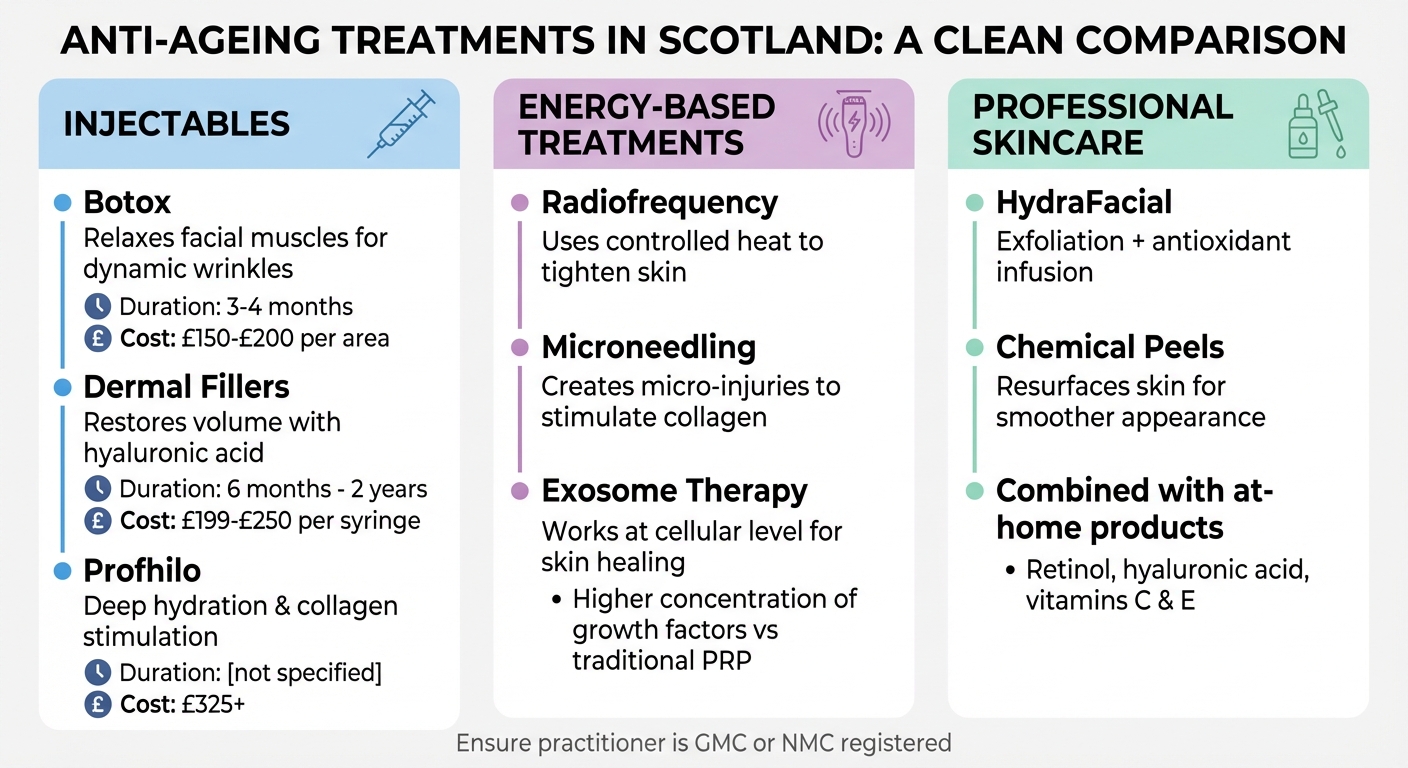 {Scotland Anti-Ageing Treatment Types, Costs and Duration Guide}
Scotland offers a variety of anti-ageing treatments designed to address different skin concerns. These options highlight the growing demand for precise and carefully regulated solutions across the country.
Injectables remain a popular choice for tackling signs of ageing. Botox works by relaxing facial muscles to smooth out dynamic wrinkles - those lines that appear with facial expressions like smiling or frowning - and its effects typically last for 3–4 months. Dermal fillers, made with hyaluronic acid, help restore lost volume in areas like hollow cheeks, thinning lips, and jawlines. They are effective for static lines, which are visible even when the face is at rest, with results lasting anywhere from 6 months to 2 years, depending on the product and treatment area. Another option, Profhilo, acts as a skin booster by deeply hydrating and stimulating collagen production. Clinics such as sk:n, which treats 35,000 clients monthly across Scotland, ensure these procedures are carried out safely. For those seeking alternatives to injectables, energy-based treatments offer another effective route.
Energy-based treatments use advanced technologies like radiofrequency and microneedling to tighten skin and stimulate collagen production. These methods rely on controlled heat or micro-injuries to rejuvenate the skin. Dr. Usman Qureshi of Luxe Skin in Glasgow, who has performed over 20,000 aesthetic procedures, now offers exosome therapy. He describes this as working "at a cellular level" to speed up skin healing and regeneration, delivering a higher concentration of growth factors compared to traditional PRP treatments.
Professional skincare treatments target surface-level concerns, focusing on enhancing skin texture and tone. Treatments like HydraFacial combine exfoliation with antioxidant infusion, while chemical peels resurface the skin for a smoother appearance. To maximise results, these treatments are often paired with at-home skincare products containing ingredients like retinol, hyaluronic acid, and vitamins C and E. Clinics may also combine procedures, such as microneedling with radiofrequency, to address both skin texture and volume simultaneously.
Costs for these treatments can vary depending on the clinic and location. Botox typically starts at £150–£200 for one area, dermal fillers range from £199–£250 per syringe, and Profhilo treatments begin at approximately £325. It is essential to ensure your practitioner is medically qualified and registered with the General Medical Council or Nursing and Midwifery Council. With a range of options available, these treatments cater to diverse anti-ageing needs, allowing clients to choose what suits them best.
sbb-itb-349970b
Advanced Anti-Ageing Treatments in 2026
Regenerative Medicine and Bio-Stimulation
Scotland is embracing cutting-edge anti-ageing treatments that go beyond traditional methods, focusing on regenerative therapies that harness the body’s natural ability to repair itself. One standout treatment involves polynucleotides, sourced from purified salmon DNA. These molecules work at the cellular level, binding to cell membrane receptors to promote collagen and elastin production while offering antioxidant protection. Clinical studies reveal impressive outcomes: a 26% boost in skin elasticity, a 32% increase in hydration, and up to an 18% thickening of the skin after three monthly sessions, as measured by ultrasound imaging.
Another promising option is exosome therapy, a next-generation approach that uses extracellular vesicles to improve communication between skin cells. This process speeds up healing and enhances collagen production. Catherine, a 46-year-old patient from Luxe Skin Glasgow, shared her experience:
My skin texture had completely transformed, feeling firmer and looking much more radiant. What impressed me most was how natural the results looked - just like my skin but at its absolute best
.
For the best results, regenerative treatments typically require an initial series of 3–4 sessions spaced 3–4 weeks apart, followed by maintenance every 4–6 months. Costs range from £250 to £350 per session, with packages for areas like the under-eyes priced around £700 for three sessions. Post-treatment care includes avoiding strenuous activity and excessive heat for 24–48 hours. These therapies are now being applied beyond the face, targeting the neck, décolletage, hands, and even the scalp to improve hair quality. With these advancements, regenerative techniques are setting the stage for combined approaches that deliver even greater results.
Combination Treatment Approaches
Scottish clinics are taking anti-ageing to the next level by combining treatments to tackle multiple skin concerns in one go. Radiofrequency (RF) microneedling is a standout option, merging controlled micro-injuries with thermal energy to tighten deeper skin layers while refining surface texture. Glasgow Skincare Clinic offers Skin Fusion Therapy, which uses 24K gold-plated needles to deliver nutrient-rich solutions at depths of 0.6mm to 1mm, significantly boosting collagen and elastin production.
Another effective combination involves cryotherapy paired with radiofrequency. SB Cosmetics Clinic in Glasgow provides a Cryo Radiofrequency Facelift, which tightens sagging skin and stimulates collagen for a non-invasive lift. For neck rejuvenation, McKeown Medical in Glasgow combines CoolSculpting, which reduces fatty tissue, with Sofwave technology to tighten the remaining skin. Dr Darren McKeown, a cosmetic surgeon at the clinic, highlights the advantages of this approach:
When it comes to the neck, combination treatments are usually the answer to the best results
.
These treatment pairings work synergistically, delivering cumulative improvements over time rather than relying on a single-session fix.
How to Choose a Clinic in Scotland
Verifying Practitioner Qualifications
To ensure your safety and the quality of your treatment, it’s crucial to verify both the practitioner's credentials and the clinic's registration with Healthcare Improvement Scotland (HIS). HIS registration is legally required for independent clinics offering medical aesthetic treatments in Scotland.
Start by checking the practitioner's professional registration online. Doctors can be verified through the General Medical Council (GMC), nurses through the Nursing and Midwifery Council (NMC), and dentists via the General Dental Council (GDC). Practitioners should willingly provide their registration number. If your treatment involves prescription-only medicines like Botulinum Toxin, the practitioner must either be a qualified prescriber or work under the direct supervision of one, following a face-to-face consultation.
Scotland's regulatory framework categorises treatments into three risk levels, each requiring different oversight:
- Group 1: Low-risk treatments such as microneedling can be carried out by trained practitioners under a licensing scheme.
- Group 2: Moderate-risk procedures, including Botox and dermal fillers under 2ml, require supervision by a healthcare professional in a HIS-regulated clinic.
- Group 3: High-risk treatments like PRP, thread lifts, and deep chemical peels must be performed by a doctor or nurse prescriber in a HIS-regulated clinic.
Always confirm that the practitioner's qualifications and the clinic's registration align with the treatment you’re seeking.
Additionally, review the clinic's most recent HIS inspection report, which rates facilities as Exceptional, Good, Satisfactory, or Unsatisfactory. This step is vital, as over one in three Scottish doctors reported treating complications from poorly performed injectable procedures in 2025, underscoring the importance of proper verification. Be cautious of clinics that cannot provide proof of registration or those operating as temporary "pop-up" services without verifiable credentials.
Once you’ve confirmed individual qualifications, you can use a trusted directory to identify clinics that meet these rigorous standards.
Scotland Aestheticians: A Directory of Verified Clinics
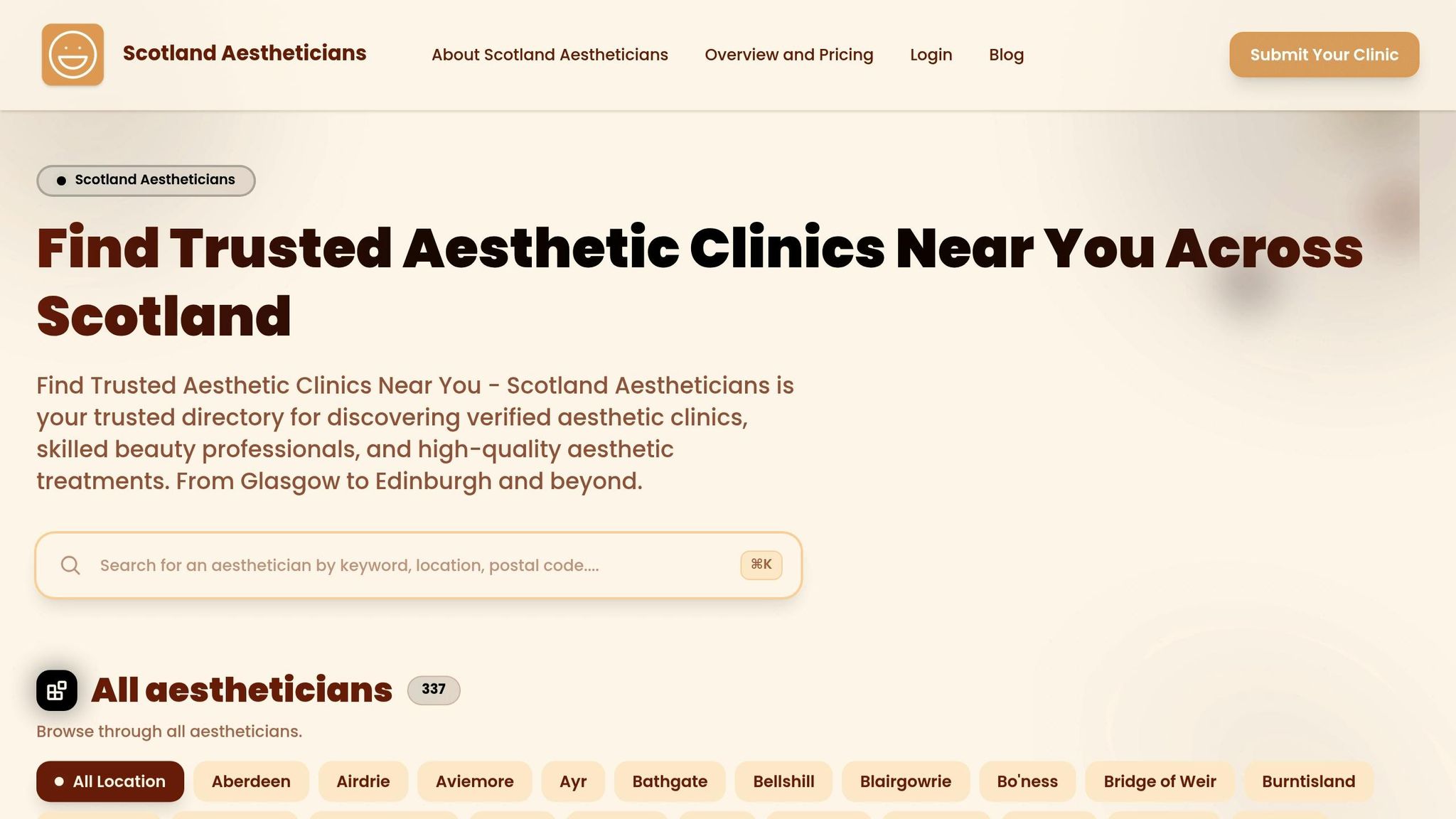
Scotland Aestheticians offers a reliable directory of HIS-registered clinics across cities like Glasgow, Edinburgh, and others. The directory allows you to filter options by location, treatment type, and practitioner credentials, making it easier to compare and select providers. Each clinic listed undergoes verification to ensure compliance with HIS registration and professional body standards, giving you peace of mind that you're considering only legitimate and regulated providers.
Regulations and Patient Safety in Scotland
Scotland's new regulations aim to strengthen patient safety and ensure higher standards in aesthetic treatments.
New Licensing Requirements for Aesthetic Treatments
The Non-surgical Procedures and Functions of Medical Reviewers (Scotland) Bill, introduced in the 2025-26 Programme for Government, sets up a three-tiered risk classification system to regulate where treatments can take place and who is authorised to perform them.
- Group 1 procedures: Lower-risk treatments like microneedling and non-ablative lasers require both a premises licence and an individual practitioner licence, issued by local authorities.
- Group 2 procedures: Medium-risk treatments, such as Botox and dermal fillers, must be carried out in Healthcare Improvement Scotland (HIS) regulated settings under the supervision of a qualified healthcare professional who remains on-site during the procedure.
- Group 3 procedures: Higher-risk procedures, including thread lifts and liquid BBLs, are restricted to qualified healthcare professionals (doctors, nurses, dentists, or pharmacists) and must take place in HIS-regulated clinics.
Additionally, all non-surgical cosmetic and wellbeing treatments are now limited to individuals aged 18 and over. Violating these rules can result in fines of up to £10,000. These regulations stem from a 2025 consultation that gathered over 2,200 responses.
This tiered system not only clarifies responsibilities but also strengthens safeguards for patients.
How Regulation Protects Patients
These new measures directly tackle safety concerns that have persisted for years. Public Health Minister Jenni Minto highlighted the urgency of these changes:
The current gaps in regulation mean that anyone can perform most of these procedures without the need for any formal training or qualifications. These proposals reflect our determination to protect the public and ensure high standards.
The risks are evident - a 2024 survey found that over 33% of medical professionals had treated patients suffering complications from unregulated cosmetic procedures. To address this, Healthcare Improvement Scotland now has the authority to enter and search premises suspected of breaching safety standards. With an estimated 1,500 businesses performing unregulated procedures across Scotland, the scale of the issue is significant.
Key safety measures include requiring indemnity insurance, on-site medical supervision for injectable treatments, and face-to-face consultations with prescribers. These steps ensure that complications can be promptly handled by qualified professionals.
The public response has been overwhelmingly supportive, with 98% of consultation respondents backing stricter regulations for procedures performed by non-healthcare professionals. Professor David Sines CBE, Chair of the Joint Council for Cosmetic Practitioners, remarked:
The proposals included in this consultation document will dramatically improve consumer safety and reduce the risk of injury and harm arising from improperly performed cosmetic treatments.
These regulations emphasise the importance of selecting clinics that comply with these rigorous standards.
Conclusion
Scotland’s updated licensing rules are reshaping the way patient safety is prioritised in the aesthetics industry. When it comes to choosing anti-ageing treatments - whether injectables or more advanced procedures - it's crucial to make informed decisions. These treatments often represent a significant investment, making it essential to select a regulated, professional clinic that prioritises your safety and results.
The new licensing requirements have raised the bar for aesthetic treatments in Scotland. Practitioners must now meet stringent qualifications, and clinics are required to comply with Healthcare Improvement Scotland (HIS) standards. This ensures you can access treatments with confidence, knowing they are administered by trained professionals who can handle complications and deliver natural-looking outcomes. For instance, sk:n clinics emphasise the importance of skilled practitioners who provide anti-ageing injectables designed to enhance your natural radiance subtly and effectively.
To simplify the process of finding reputable providers, Scotland Aestheticians offers a directory of verified clinics across the country. This platform connects you with clinics that adhere to regulatory standards, offer transparent pricing, and employ medically qualified practitioners registered with the GMC, NMC, or GDC. By using such resources, you can avoid the risks posed by unqualified practitioners who may compromise your safety.
When considering a clinic, always verify practitioner credentials through official registers, insist on a thorough face-to-face consultation, and confirm the clinic’s HIS approval. Be cautious of heavily discounted offers, as these often indicate lower-quality products or rushed procedures. Your skin deserves enhancements that maintain your natural expression, not results that look artificial or overly dramatic.
FAQs
Choosing the best anti-ageing treatment really depends on the specific concerns you want to address. If fine lines and wrinkles are your main issue, anti-wrinkle injections like Botox can deliver noticeable results quickly, with little to no recovery time. For deeper lines or a loss of volume, dermal fillers are a popular choice, as they help to restore fullness and smooth out the skin.
If you're looking to improve skin elasticity or boost regeneration, treatments like exosome therapy or non-invasive options such as HIFU (High-Intensity Focused Ultrasound) can help by stimulating collagen production. Since everyone’s skin is different, it’s always best to consult a qualified professional who can guide you towards the most suitable solution for your needs.
To make sure a clinic and practitioner are properly licensed in Scotland, check if the clinic is registered with Healthcare Improvement Scotland. This organisation oversees independent healthcare providers. You can verify their registration by either contacting the clinic directly or reviewing their registration and inspection reports on the Healthcare Improvement Scotland website. This step helps ensure the clinic meets the necessary standards for safety and professionalism.
After treatments such as polynucleotides or exosomes, you can look forward to steady enhancements in skin texture, hydration, and firmness. Polynucleotides work by stimulating collagen, elastin, and hyaluronic acid production, which helps to minimise fine lines and wrinkles over several weeks. The effects typically last for around 6–8 months. On the other hand, exosome therapy promotes regeneration, leading to noticeable improvements in skin texture and radiance within 2–4 weeks, with results lasting up to 18–24 months. Both options contribute to maintaining healthier skin and a more youthful look over time.