How to Avoid Unsafe Aesthetic Treatments: A Simple Guide

Unsafe aesthetic treatments can cause serious harm, from infections to permanent disfigurement. Here's how you can protect yourself:
- Verify credentials: Ensure practitioners are registered with bodies like GMC or NMC, and clinics are listed with Healthcare Improvement Scotland (HIS).
- Avoid non-clinical settings: Treatments in homes or salons often lack proper hygiene and emergency equipment.
- Check licences: Clinics must have HIS registration, and certain treatments require specific local licences.
- Demand consultations: A proper medical history review and in-person assessment are essential before any procedure.
- Be cautious of social media ads: Nearly 90% of complications reported to SaveFace involved practitioners found online.
Your safety depends on choosing qualified professionals and regulated clinics. Always ask questions and walk away if anything feels off.
Warning Signs of Unsafe Clinics and Practitioners
Spotting the warning signs of an unsafe clinic is crucial to avoiding potential risks. Here are some key indicators to keep in mind before agreeing to any aesthetic procedure.
Missing Licences and Registrations
In Scotland, all independent clinics must be registered with Healthcare Improvement Scotland (HIS). This applies to clinics run by doctors, nurses, midwives, dentists, or pharmacists. If a clinic cannot provide its HIS registration certificate or latest inspection report, it’s best to walk away.
Since 19 June 2025, pharmacists and pharmacy technicians operating independent aesthetic clinics without HIS registration are committing a criminal offence. Healthcare Improvement Scotland explicitly states:
"It is a legal requirement for these private clinics to be registered with Healthcare Improvement Scotland".
Clinics in Scotland receive grades such as exceptional, good, satisfactory, or unsatisfactory. If a clinic refuses to disclose its grade or inspection history, consider this a major red flag. You can verify a clinic's registration by searching the HIS register online before making an appointment.
For treatments involving prescription-only medicines like Botox, a face-to-face consultation with a prescribing clinician is mandatory before treatment. Remote prescribing without an in-person consultation is unsafe and non-compliant. Additionally, procedures like microneedling or laser treatments require a Special Treatment Licence issued by the local council. If a practitioner cannot produce this licence, they may be operating illegally.
After verifying licences and registrations, take a closer look at the clinic’s hygiene practices to ensure your safety.
Poor Hygiene and Cleanliness
A clinic’s cleanliness speaks volumes about its safety standards. A treatment room should have a dedicated hand-washing sink, not just access to a shared restroom, as immediate hand hygiene is essential for infection control.
Pay attention to how prescription medicines are stored. For instance, Botox should be kept in a temperature-monitored refrigerator with active logs. Medications stored improperly or without monitoring records suggest a lack of basic safety measures. Similarly, ensure that equipment like lasers or other devices has valid safety certificates and proof of regular maintenance.
Check how clinical waste is handled. Used needles and other contaminated materials should be disposed of in designated clinical waste bins. Overflowing bins or the use of regular rubbish bags for medical waste are clear warning signs. The treatment room itself should be clean, well-lit, and ventilated. Dust or visible damage to the facility points to poor hygiene standards.
Inadequate Consultation Procedures
Credentials and hygiene aside, a thorough consultation is non-negotiable. If a practitioner rushes through the process or tempts you with an immediate discount, it’s time to leave. Alex Watkins from MediZen emphasises that being pressured into treatment or skipping a consultation entirely is a serious warning sign.
A proper consultation should include a detailed review of your medical history, including allergies and medications. Your practitioner should also assess your skin type and explain the specific risks of the procedure, such as infections, nerve damage, or scarring. Be wary of anyone claiming that a treatment is "100% safe" or "risk-free" - every procedure carries some level of risk.
Never settle for a rushed or incomplete consultation. Your safety depends on it.
sbb-itb-349970b
How to Check Clinic and Practitioner Credentials
After identifying potential warning signs, take these steps to verify the credentials of both the clinic and the practitioner.
Confirming Healthcare Improvement Scotland Registration
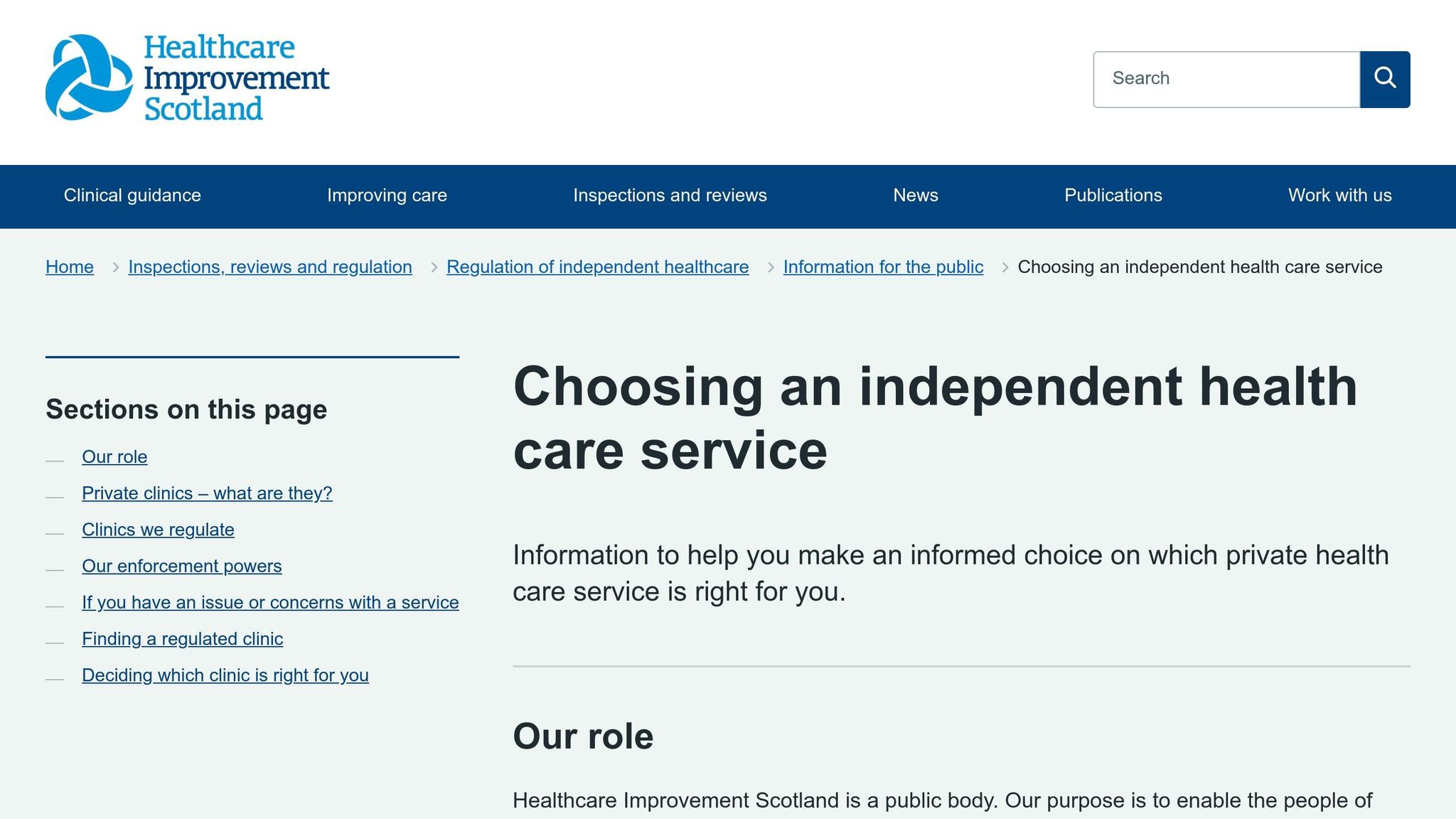
Start by searching the Healthcare Improvement Scotland (HIS) register online. On the clinic's page, check if it is listed as "Registered." This will also show approved treatments like dermal fillers or Botox and any age restrictions for patients. Look at inspection reports, which include ratings such as Exceptional, Good, Satisfactory, or Unsatisfactory. If you can’t find the clinic online, you can reach out to the HIS regulation team directly at 0131 623 4342 (Monday–Friday, 10 am–2 pm) or email them at [email protected]. Also, confirm that the clinic operates from an authorised and inspected facility.
Checking Practitioner Training and Certifications
Once the clinic's registration is verified, turn your attention to the practitioner's qualifications. Ensure they are registered with professional bodies like the GMC, NMC, GDC, or GPhC. When discussing treatment options, ask about their training. Practitioners offering injectables must have a regulated qualification, such as the JCCP-approved Level 7 Diploma in cosmetic injectables (PGDipAes). It’s a good idea to inquire where they trained, how long they have been practising, and whether they regularly attend advanced training sessions.
Ask for details about the products they use, including the manufacturer's name and whether these products are licensed in the UK. Make sure the practitioner has current insurance for the treatments they provide and, in Scotland, holds a valid Protecting Vulnerable Groups (PVG) certificate.
Ensuring Compliance with Scottish Regulations
Scotland has introduced stricter regulations to enhance safety. Performing regulated procedures on individuals under 18 is now illegal. Higher-risk treatments, such as injectables, must be carried out in "permitted premises" - typically HIS-registered clinics or facilities managed by qualified healthcare professionals. Treatments performed in a client’s home are no longer allowed. For lower-risk procedures, like laser hair removal or microneedling up to 1.5mm, clinics must comply with local authority licensing schemes under the Civic Government (Scotland) Act 1982. Always confirm that the clinic holds the necessary licence for the treatment you are considering.
As Clare Haughey, Convener of the Health, Social Care and Sport Committee, emphasised:
"Our committee believes patient safety must always come first and that's why we are supportive of this Bill which will provide much needed regulation of the non-surgical procedures industry".
With these checks complete, you’ll be better equipped to move on to asking your practitioner the critical questions before any treatment.
Finding Verified Clinics Through Scotland Aestheticians
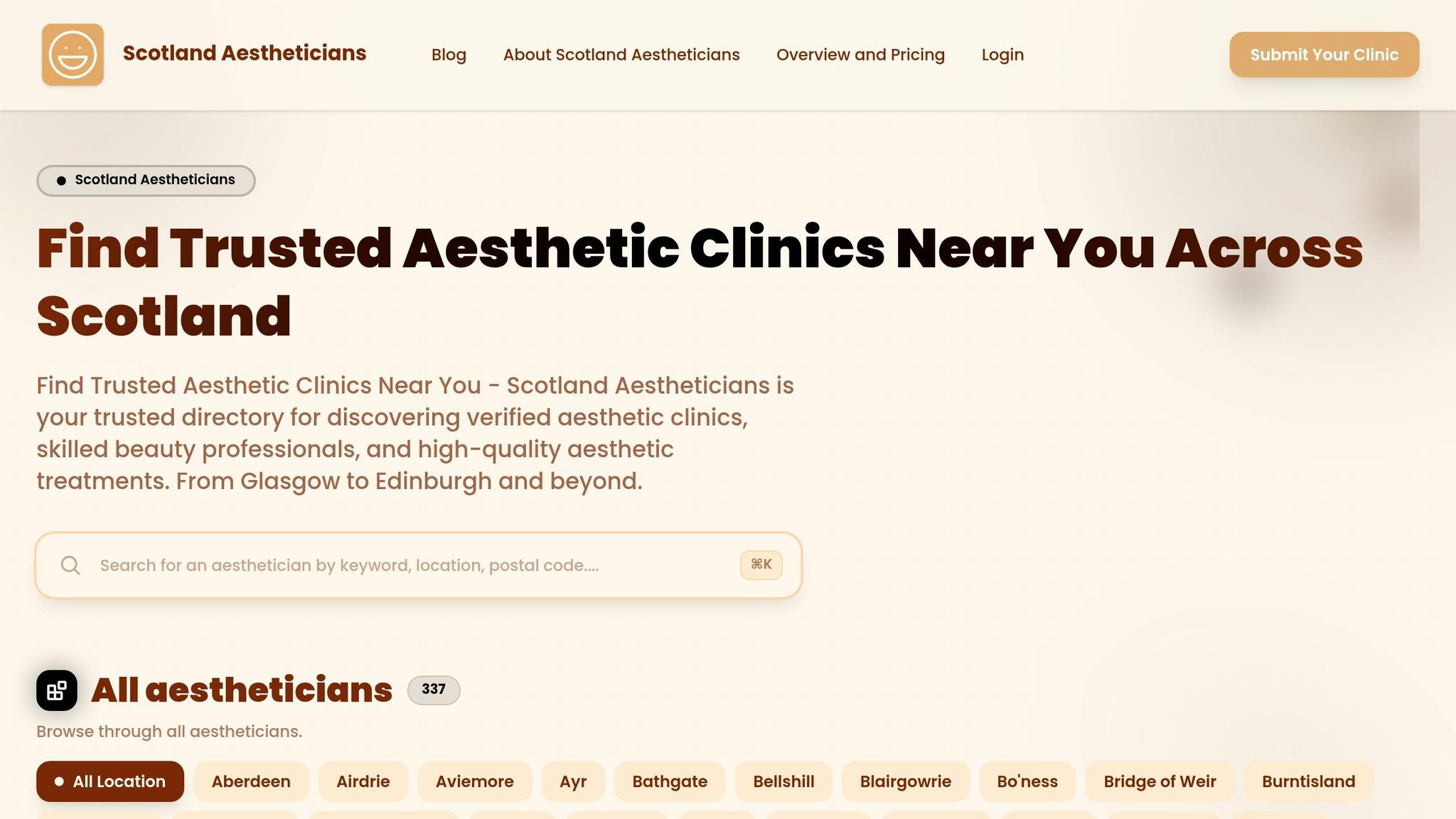
Once you've understood the importance of verified credentials for clinics and practitioners, the next step is finding clinics that meet these standards. Scotland Aestheticians makes this easier by providing a directory specifically for vetted aesthetic clinics and professionals across Scotland. In a country where the aesthetic industry remains largely unregulated, this platform is a vital tool for distinguishing qualified practitioners from those who aren't.
The platform addresses a major concern in patient safety. As Alex Watkins highlights:
The UK is the only country in the world where anyone can inject products into the face and body. It is not a legal requirement to be medically trained to perform these procedures.
By using a dedicated directory, you can minimise the risks that come with this lack of mandatory registration.
How to Search the Directory
To begin, simply input your location in Scotland - whether you're in Edinburgh, Glasgow, Aberdeen, or a smaller town. The platform allows you to search for practitioners near you, making it easier to find trusted clinics in your area. Once you've narrowed down your options, focus on verified listings to prioritise safety.
While the directory serves as an excellent starting point, you should also cross-check practitioners with professional registers to confirm their credentials. Additionally, ensure the clinic operates from a clean, professional setting rather than a non-clinical or residential space. With these steps, you can confidently choose clinics that prioritise safety and professionalism.
Why Choose Verified Listings
Verified directories ensure practitioners meet strict safety standards. For example, Save Face, a government-approved register, requires practitioners to pass a 116-point assessment before they can be listed. Similarly, Scotland Aestheticians runs its own verification process, but the goal is the same: to separate trustworthy clinics from unreliable ones often advertised on social media.
Opting for verified clinics comes with clear benefits. These clinics are more likely to have valid insurance, which often includes requirements like safety protocols and patch testing. They are also more likely to have an onsite prescriber who can handle rare but serious complications, such as dermal filler occlusions that need immediate prescription-only treatment. Aaron Carr, Founder of Highland Laser Clinic, underscores the importance of proper vetting:
Health Improvement Scotland have a very thorough process for vetting independent health care providers, but this only applies to clinics that employ registered health care professionals.
A verified directory helps fill this gap, offering a reliable way to find safe and qualified aesthetic practitioners.
Questions to Ask Before Your Treatment
@figure 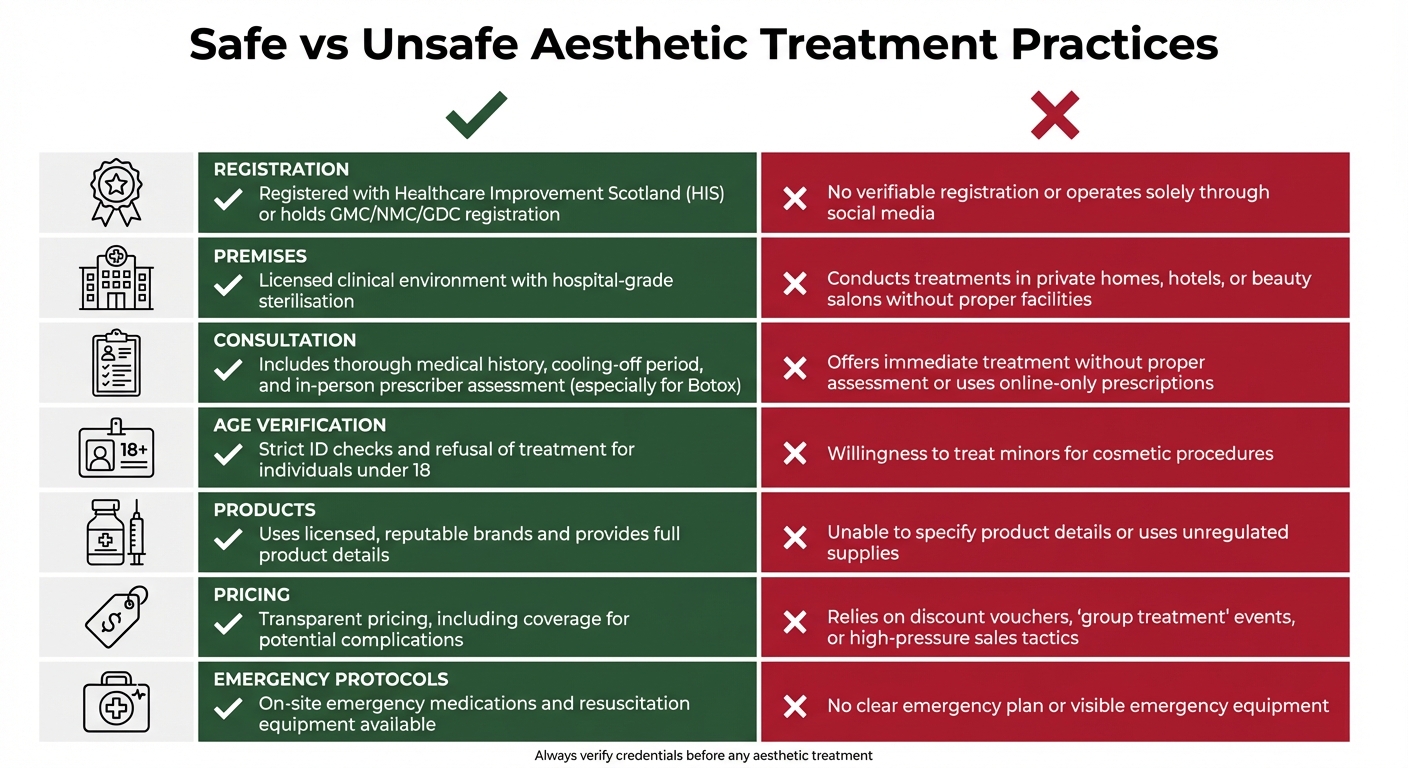 {Safe vs Unsafe Aesthetic Treatment Practices Comparison Guide}
A thorough consultation is your best safeguard against unsafe treatments. Reputable practitioners should answer your questions openly and without hesitation. If someone reacts defensively or dismisses your concerns about their credentials or safety measures, that’s a warning sign.
What to Ask Your Practitioner
Once you’ve checked the clinic’s credentials, focus on the individual practitioner. Start by confirming their Healthcare Improvement Scotland (HIS) registration by asking for their registration number. You can cross-check this on the official HIS register. For Botox treatments, ensure that the practitioner is a qualified prescriber - this includes doctors, nurses, or dentists. Remember, prescribing Botox remotely or online is strictly prohibited.
Ask about their training and experience with questions like: "Where did you train for this procedure, and how many times have you performed it?" Be cautious of practitioners who have only completed short or weekend training courses. Also, request procedure-specific certificates rather than general qualifications. It’s equally important to inquire about their complication rate and what emergency protocols they have in place if something goes wrong during your treatment.
Don’t forget to discuss the products and aftercare. Ask for the brand name, manufacturer, and confirmation that the product is CE-marked or UK-licensed. Confirm that the clinic has valid medical indemnity insurance. Additionally, ask: "What aftercare will I receive, and do you provide a 24/7 emergency contact line?" Make sure you receive written aftercare instructions along with a 24/7 emergency contact.
These questions can help you identify trustworthy practitioners and avoid unsafe operators.
Safe vs Unsafe Practices: Comparison Table
Here’s a quick breakdown of how to spot safe practices versus unsafe ones:
| Feature | Safe Practice | Unsafe Practice |
|---|---|---|
| Registration | Registered with Healthcare Improvement Scotland (HIS) or holds GMC/NMC/GDC registration | No verifiable registration or operates solely through social media |
| Premises | Licensed clinical environment with hospital-grade sterilisation | Conducts treatments in private homes, hotels, or beauty salons without proper facilities |
| Consultation | Includes a thorough medical history, cooling-off period, and in-person prescriber assessment (especially for Botox) | Offers immediate treatment without proper assessment or uses online-only prescriptions |
| Age Verification | Strict ID checks and refusal of treatment for individuals under 18 | Willingness to treat minors for cosmetic procedures |
| Products | Uses licensed, reputable brands and provides full product details | Unable to specify product details or uses unregulated supplies |
| Pricing | Transparent pricing, including coverage for potential complications | Relies on discount vouchers, "group treatment" events, or high-pressure sales tactics |
| Emergency Protocols | On-site emergency medications and resuscitation equipment available | No clear emergency plan or visible emergency equipment |
This table can serve as a handy reference to distinguish between safe and unsafe practices, ensuring you make informed choices for your treatment.
Conclusion
Protecting yourself from unsafe aesthetic treatments boils down to four practical steps. First, spot the warning signs - these include practitioners who lack proper registration, treatments being offered in informal settings like homes or hotels, and aggressive sales tactics. Any of these should make you think twice and walk away.
Second, check credentials carefully. Use public registers like the GMC, NMC, or GDC to confirm a practitioner's qualifications. In Scotland, ensure that clinics are registered with Healthcare Improvement Scotland (HIS).
Third, turn to Scotland Aestheticians for help finding verified practitioners. With the Non-Surgical Procedures Bill making its way through Parliament as of early 2026, licensing is becoming a legal requirement. Verified directories can guide you safely through these new regulations.
Finally, ask the right questions during your consultation. Enquire about the practitioner's training, the products they use, their insurance coverage, and what emergency protocols they have in place. A good practitioner will answer openly and honestly.
Clare Haughey, Convener of the Health, Social Care and Sport Committee, emphasised this point: "Our committee believes patient safety must always come first and that's why we are supportive of this Bill which will provide much needed regulation of the non-surgical procedures industry".
A trustworthy practitioner will never shy away from your questions. If they seem defensive or refuse to provide clear answers, take it as a sign to look elsewhere. Your safety and wellbeing are worth the effort.