10 Questions to Ask Before Choosing an Aesthetic Clinic

When choosing an aesthetic clinic, your safety and results depend on making informed decisions. In the UK, where regulations are still lenient, unqualified practitioners can legally perform treatments, increasing the risk of complications like infections, nerve damage, or even blindness. Asking the right questions ensures you select a qualified professional and a reputable clinic. Here's what you need to know:
- Verify Practitioner Credentials: Check if they’re registered with bodies like GMC (doctors), NMC (nurses), or GDC (dentists). Look for advanced training, such as Level 7 qualifications for injectables.
- Clinic Registration: Ensure the clinic is registered with the Care Quality Commission (CQC) in England or Healthcare Improvement Scotland (HIS) in Scotland.
- Experience: Ask how often the practitioner has performed the specific treatment and review their portfolio.
- Hygiene Standards: Confirm sterile conditions, proper waste disposal, and the use of single-use items.
- Emergency Protocols: Check if they have emergency kits and measures for complications like vascular occlusion.
- Aftercare Support: Reliable clinics provide detailed aftercare instructions, follow-up appointments, and emergency contact details.
- Transparent Pricing: Avoid clinics offering overly cheap deals. Request a full cost breakdown, including follow-up fees.
@figure 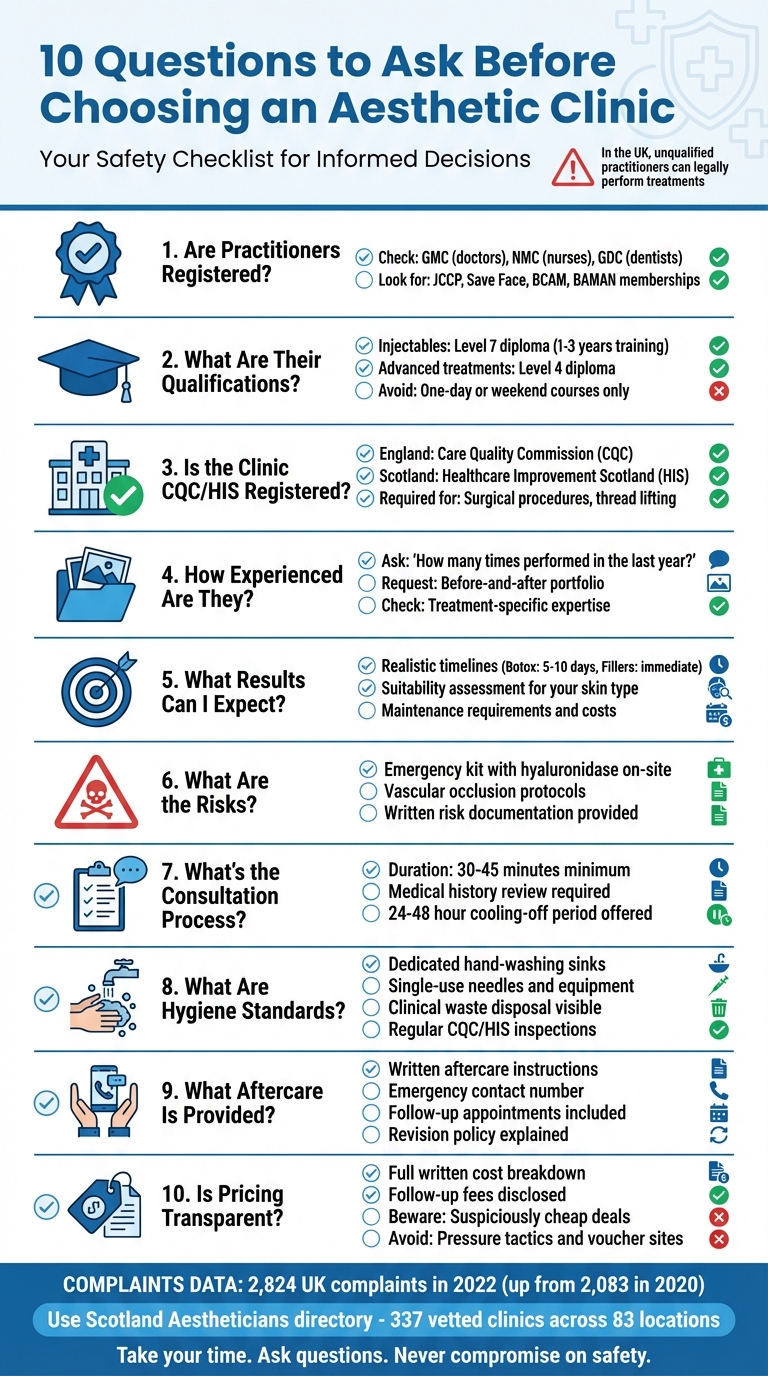 {10 Essential Questions to Ask Before Choosing an Aesthetic Clinic in the UK}
Episode 1: How to choose the right aesthetic practitioner
1. Are the Practitioners Registered with Professional Bodies?
Before committing to any treatment, it's crucial to confirm that your practitioner is registered with a recognised professional body. Organisations like the GMC (for doctors), NMC (for nurses), GDC (for dentists), or GPhC (for pharmacists) ensure that the practitioner has the appropriate medical qualifications. Skipping this step could leave you vulnerable to unsafe procedures or unqualified providers.
Being registered not only confirms their expertise but also provides you with a formal avenue to raise concerns if something goes wrong. Beyond these mandatory registrations, you can also look for voluntary registers such as JCCP or Save Face, which are accredited by the PSA. Specialist associations like BCAM (for aesthetic doctors) or BAMAN (for aesthetic nurses) further demonstrate a commitment to maintaining high professional standards.
Checking these registrations is straightforward. Tools provided by organisations like the GMC, NMC, or GDC allow you to verify a practitioner's credentials online. For treatments requiring prescriptions, such as Botox, always ensure the prescriber is a qualified healthcare professional who has conducted an in-person assessment. Be cautious of practitioners who rely heavily on social media promotions without offering clear evidence of their professional qualifications.
Here's a quick guide to help you verify credentials:
| Professional Body | Practitioner Type | Verification Method |
|---|---|---|
| GMC | Doctors & Surgeons | Online Medical Register search |
| NMC | Nurses & Midwives | Search the Register tool |
| GDC | Dentists & Dental Nurses | Online GDC Register search |
| BCAM | Aesthetic Doctors | Member search on BCAM website |
| BAMAN | Aesthetic Nurses | Member search on BAMAN website |
| JCCP / Save Face | Various (Medical & Non-Medical) | PSA-accredited register search |
2. What Qualifications and Training Do the Practitioners Have?
After verifying a practitioner's professional registration, it’s essential to dig deeper into their specific training in aesthetic treatments. Not all registered healthcare professionals are equally skilled in cosmetic procedures, so understanding their training background is key to ensuring they meet the high standards expected in this field.
For injectable treatments like Botox and dermal fillers, the benchmark qualification is a Level 7 post-graduate diploma in Aesthetic Medicine or Injectables, which is equivalent to a Master’s degree. This type of training typically spans 1–3 years and often includes at least 40 observed and supervised procedures. Be cautious of practitioners who have only attended one-day or weekend courses, as these are insufficient to prepare for potential complications like vascular occlusion or nerve damage.
When it comes to advanced non-medical treatments - such as chemical peels, laser therapy, or microneedling - practitioners should hold a Level 4 diploma in Advanced Aesthetics. This qualification ensures they have a solid understanding of skin anatomy, treatment protocols, and safety precautions. To assess their expertise, ask how many times they’ve performed the procedure and request a portfolio showcasing their work. This will help you gauge both their technical skills and aesthetic approach.
Another important factor to consider is continuing professional development (CPD). The aesthetic industry is constantly evolving, with new techniques and technologies emerging all the time. Practitioners should be able to demonstrate ongoing learning through recent training certificates, particularly for high-risk treatments. In Scotland, new regulatory proposals mean short CPD courses will no longer count as adequate qualifications for licensing. Seek out practitioners who not only have strong foundational qualifications but also regularly update their skills. Membership in specialist associations like BCAM (for doctors) or BAMAN (for nurses) is a good sign, as these organisations require members to uphold strict professional standards.
Finally, for prescription-only treatments like Botox, the practitioner must either be a qualified prescriber or work closely with one who conducts in-person consultations. This ensures the treatment is both safe and compliant with regulations.
3. Is the Clinic Registered with the Care Quality Commission (CQC)?
When choosing a clinic, it's crucial to confirm that it is registered with the appropriate regulator - this is the Care Quality Commission (CQC) in England or Healthcare Improvement Scotland (HIS) in Scotland. This ensures the clinic adheres to strict standards for quality, safety, and hygiene. Think of this as an extension of the diligence you exercised when verifying the practitioner's credentials.
In England, CQC registration is a legal requirement for clinics performing regulated activities. These include surgical procedures like breast augmentation and facelifts, all types of thread lifting (such as PDO or PLLA), and liposuction, including laser lipolysis. Operating without this registration is a criminal offence, carrying penalties that can include unlimited fines, legal prosecution, or even immediate closure. Some cases have seen fines surpassing £50,000. As the CQC clearly states: "If the hospital or clinic is not registered with us they may be practising illegally and their insurance may not cover them or you if anything goes wrong".
Non-surgical treatments - such as Botox, dermal fillers, chemical peels, and laser hair removal - don’t require CQC registration in England. However, many clinics voluntarily register to showcase their commitment to patient safety and professional standards. Registered clinics must meet 13 Fundamental Standards and are subject to regular inspections focusing on important areas like safety, effectiveness, and leadership.
To check if a clinic is registered, you can use the CQC's online search tool, call their helpline at 03000 616161, or directly ask the clinic for their registration certificate. Legitimate clinics often display their CQC rating prominently in their reception area and on their website. For clinics in Scotland, you can verify their status through the HIS website. HIS registration involves a rigorous process that typically takes about three months and requires strict adherence to clinical policies and facility standards.
These checks are not just formalities - they’re essential for ensuring your safety and peace of mind.
4. How Experienced Are the Practitioners with Specific Treatments?
Once you've verified the clinic's registration, it's time to dig into the practitioner's actual experience with the treatment you're considering. Did you know that someone can earn a basic injector qualification in just a single day? This makes it crucial to ask direct questions like, "How many times have you performed this specific procedure in the last year?" This isn't just small talk - it's your way of gauging whether they have real expertise or if you're essentially part of their practice sessions. It's the difference between theoretical training and hands-on proficiency.
Experience is a key factor in ensuring your safety. The NHS highlights this, warning: "Avoid practitioners who've only completed a short training course in your chosen procedure. This is because complications of dermal fillers can be serious, including infection, nerve damage and blindness." Dr. Andrew Kane, Founder of Dr. Kane Aesthetics Co., reinforces this point: "Experience matters, especially when it comes to consistency and achieving natural-looking results."
To back up their claims, ask to see a portfolio of authentic before-and-after photos. Ideally, these should feature patients with similar features or concerns to yours, giving you a clearer idea of what to expect.
It's also smart to ask about potential complications and how they've been handled in the past. A thorough consultation should include a detailed static and dynamic facial assessment - this kind of attention to detail is a strong indicator of expertise.
Finally, make sure the practitioner specialises in the treatment you're seeking. For example, someone highly skilled in laser therapy might not have the same level of experience with injectables. Be cautious of clinics that delegate treatments like Botox or fillers to less experienced staff. Once you've confirmed the practitioner's expertise, ensure your consultation is with the person who will actually perform the procedure. Trustworthy practitioners are also more likely to turn you away if they believe the treatment isn't right for you or if your expectations are unrealistic. This level of honesty reflects a true commitment to safety and professionalism.
5. What Results Can I Expect, and Am I a Suitable Candidate?
When considering any treatment, it’s crucial to have a clear understanding of the results you can realistically achieve. Avoid being swayed by overly polished marketing claims and instead ask your practitioner directly: "What outcomes can I realistically expect from this treatment?". Results will vary depending on factors like your skin type, age, medical history, and overall health. For instance, while dermal fillers often deliver noticeable changes almost immediately, Botox typically takes 5–10 days to show its effects. Skin resurfacing treatments, on the other hand, might require several sessions to reach the desired result. Having this clarity upfront ensures you can properly evaluate whether the treatment aligns with your goals.
A skilled practitioner will focus on enhancing your natural features rather than creating an exaggerated look. Good skin is often the result of consistent care paired with targeted treatments over time. Reviewing before-and-after photos, especially of patients with similar concerns, can give you a better sense of the practitioner’s aesthetic approach and whether it matches your preferences.
Your suitability for a particular treatment is just as important as the practitioner’s expertise. A comprehensive consultation should explore any potential contraindications, including pregnancy, breastfeeding, or specific medical conditions. Beyond your aesthetic goals, your general health significantly impacts the results. Lifestyle habits, such as smoking, heavy drinking, poor diet, or excessive sun exposure, can reduce the quality and longevity of your results. Making healthier lifestyle choices before undergoing treatment can often improve the outcome.
If a practitioner advises against treatment, take it as a sign of their professionalism and commitment to safety. A responsible expert will decline to proceed if your expectations are unrealistic or if the treatment isn’t medically suitable for you.
It’s also essential to understand the timeline and upkeep involved. For example, Botox results typically last 3–5 months, while dermal fillers can last up to 18 months, depending on the product and treatment area. A personalised maintenance plan will be necessary to sustain your desired look, so it’s wise to consider both the financial and time commitments before making your decision.
6. What Are the Risks, Side Effects, and Emergency Protocols?
When considering aesthetic treatments, understanding the potential risks and emergency procedures is just as important as verifying the practitioner's qualifications and experience.
Every treatment comes with some level of risk, and a trustworthy clinic will openly discuss potential complications. Before proceeding, ensure the practitioner explains all risks, possible complications, pain levels, and recovery details in full. They should also provide a clear overview of the procedure, how long results last, and what steps are in place to handle complications if they arise. Treatments such as dermal fillers carry risks like infection, nerve damage, or even blindness. In regulated clinics, practitioners should supply written materials - like manufacturer leaflets - to give you time to make an informed choice.
The statistics are telling. In 2022, Save Face received 2,824 complaints in the UK related to dermal fillers and Botox treatments. This marked an increase from 2,436 complaints in 2021 and 2,083 in 2020. Alarmingly, dermal fillers accounted for nearly 90% of all reported issues in aesthetic procedures, with non-medical practitioners responsible for approximately 66% of these complications. BCAM doctors alone handled over 3,000 complication cases in a single year.
"Regulation is no longer optional, it is urgent."
– Dr Sophie Shotter, President of BCAM
These figures highlight why understanding risks and ensuring proper regulation is so critical.
Equally important is confirming that the clinic has robust emergency protocols in place. Clinics should maintain a monthly-checked emergency kit stocked with essentials like adrenaline and hyaluronidase. For serious complications, such as vascular occlusion, protocols should include immediate measures like massage and heat application, or repeated hyaluronidase injections every 15–20 minutes until the issue is resolved. It’s perfectly reasonable to ask, “What is your protocol if a vascular occlusion occurs?” and “Do you have hyaluronidase on-site?” A credible clinic will have clear, well-documented answers.
Scotland has taken a proactive approach by introducing a three-tier regulatory system based on the invasiveness of procedures. For higher-risk treatments like dermal fillers, fat-dissolving injections, and thread lifts, a qualified healthcare professional must be physically present on-site to manage emergencies or complications. This ensures immediate action can be taken if something goes wrong. During your consultation, ask how often the practitioner has personally dealt with complications and what their specific emergency protocols are. Avoid clinics that gloss over these discussions or operate in non-clinical settings like private homes, hotels, or "Botox parties", where emergency equipment is unlikely to be available.
A responsible practitioner will also offer a "cooling-off" period after your consultation, allowing you time to consider the risks before committing to treatment. If a clinic pressures you into making an immediate decision or seems reluctant to discuss complications, take it as a red flag and look for another provider. This level of diligence ensures your safety and peace of mind.
sbb-itb-349970b
7. What Does the Consultation Process Involve?
A proper consultation lays the groundwork for safe and effective aesthetic treatments. It’s not about sales pressure - it’s about understanding your needs and ensuring the treatment is right for you. These appointments generally last 30 to 45 minutes, offering enough time to delve into your goals, medical history, and treatment suitability.
The process kicks off with a discussion about your goals and managing expectations. Whether it’s concerns about skin texture, volume loss, or facial balance, the practitioner will want to understand your priorities. If possible, bring reference images or provide detailed descriptions to help clarify your vision. As Doctor Brad explains:
"A thoughtful consultation should include an analysis of your skin, a discussion of what you want to achieve, a review of any medical history, and even potential alternative solutions".
Next comes a detailed medical review. According to CQC Regulation 12, practitioners are required to assess your medical history, including any conditions, medications, allergies, past surgeries, and lifestyle habits. Preparing a list of your current medications can speed up this step. They may also ask about future plans, like upcoming flights or dental work, which can affect treatment timing and recovery. Reputable clinics prioritise safety and will decline treatment if you’re not a suitable candidate.
The consultation then moves to a clinical assessment of your skin or facial structure. At this stage, the practitioner will outline treatment options, timelines, potential risks, and emergency protocols. You should also receive a detailed written quotation covering all costs. Ideally, the consultation is conducted by the same healthcare professional who will perform the procedure.
You’re never obligated to make an immediate decision. Many clinics enforce a 24–48 hour cooling-off period, and for surgical treatments, the CQC advises taking at least two weeks to reflect. If a practitioner brushes off your questions or pressures you to commit on the spot, consider it a serious warning sign. A thorough consultation ensures you’re equipped to make safe, informed choices about your treatment.
8. What Are the Clinic's Hygiene and Sterilisation Standards?
After confirming the expertise of practitioners and the quality of consultations, it’s equally important to assess a clinic's hygiene standards to ensure your safety during treatments.
Hygiene is critical when it comes to aesthetic procedures. Poor sterilisation practices can lead to infections, cross-contamination, and even severe complications. Before committing to a clinic, take the time to understand their approach to cleanliness - not just in treatment rooms, but throughout the entire facility.
During your consultation, pay close attention to the environment. Treatment rooms should feature dedicated hand-washing sinks, clean and well-maintained floors, and clearly visible clinical waste bins for disposing of sharps and contaminated materials. Ask about their sterilisation protocols. Trustworthy clinics adhere to strict infection control measures, including rigorous hand hygiene and proper sterilisation of reusable tools. Single-use, disposable items like needles should be standard practice to eliminate the risk of cross-contamination. If the clinic cannot provide clear answers regarding their hygiene practices, it’s a red flag. Your observations can often confirm whether they meet these standards.
Regulated clinics are inspected by organisations such as the Care Quality Commission (CQC) in England or Healthcare Improvement Scotland (HIS) in Scotland. These bodies enforce strict regulations like CQC Regulation 12 (Safe Care and Treatment) and Regulation 15 (Premises and Equipment). Clinics under such oversight demonstrate a commitment to high standards of patient safety. Voluntary accreditation schemes, such as Save Face, offer an additional layer of reassurance. Dr Manav Bawa from Time Clinic highlights this by saying:
"A Save Face nurse assessor inspects every part of the clinic to ensure that we are treating our patients with the utmost care".
Save Face's 116-point assessment includes a detailed inspection of the premises, making it a reliable indicator of hygiene and safety.
You can also request documentation to verify their standards. Ask for equipment maintenance logs or safety certificates to confirm that tools are regularly calibrated and serviced. Additionally, check how they store medicines like Botox and dermal fillers - these must be kept at the correct temperatures, with active monitoring logs to ensure safety. Clinics that provide this documentation demonstrate transparency and professionalism. Be cautious of mobile services or treatments offered in non-clinical settings like hotels or private homes. As of August 2025, new UK licensing measures require clinics administering Botox and fillers to meet strict standards. Regulatory bodies increasingly flag mobile services as unsuitable due to their inability to meet professional sterilisation requirements.
A clean and well-maintained clinic not only reflects professionalism but also ensures your health and safety. If a clinic fails to meet basic hygiene standards, it’s best to seek treatment elsewhere.
9. What Aftercare Support and Follow-Up Services Are Provided?
Once hygiene standards are verified, it's essential to discuss the aftercare and follow-up services offered by the clinic. Proper aftercare plays a key role in ensuring safe recovery and achieving the best possible results. It also helps in managing any unexpected issues that may arise during the healing process.
Trustworthy clinics usually provide customised, written aftercare instructions tailored to the specific treatment you've undergone - whether it's dermal fillers or anti-wrinkle injections. These instructions often include practical advice on immediate recovery, such as how to handle swelling, redness, or bruising. They also outline what to avoid during the first 24–48 hours, like intense physical activity, alcohol, or excessive sun exposure. As Doctor Brad highlights:
"Proper aftercare contributes just as much to the final results as the procedure itself, and an excellent practitioner will guide you through it and be available if you have any questions as you heal".
It’s worth asking whether the clinic offers easy access to your practitioner in case something doesn’t feel right. A reliable clinic should provide an emergency contact number - especially for after-hours concerns like severe swelling or vascular occlusion. One clinic explains:
"Feeling safe isn't just about the treatment itself, it's about knowing you're not on your own once you walk out the door".
Follow-up appointments are another critical aspect of aftercare. For instance, procedures like Botox often include a review session about two weeks after treatment. This allows the practitioner to assess the results and make any necessary adjustments. Make sure to check whether these follow-up visits are part of the initial cost or if they incur additional fees. Some clinics even offer extended aftercare packages that cover follow-up appointments, dressing clinics, and complication management for up to a year.
Lastly, during your consultation, it's wise to discuss the clinic’s revision policy. This is particularly important if the treatment results don’t meet your expectations. Knowing these details upfront can provide peace of mind as you embark on your treatment journey.
10. Can You Provide Transparent Pricing and a Cost Breakdown?
After discussing aftercare support, it's equally important to focus on transparent pricing. Just as verifying practitioner qualifications and clinic hygiene is essential, understanding the full cost of your treatment is a must. Reputable clinics should provide a detailed written quotation that includes all costs, such as any follow-up treatments needed to address complications or improve results. According to the Care Quality Commission, hospitals and clinics offering surgical cosmetic procedures are legally required to provide a complete cost breakdown in writing.
Always ask whether the quoted price is all-inclusive or if there are additional expenses, such as follow-up appointments or aftercare products. Consultation fees generally range from £50 to £100, depending on the practitioner's expertise, and many clinics allow this fee to be deducted from the final treatment cost. It's also worth confirming whether maintenance costs are included, as many non-surgical treatments require ongoing sessions to maintain their effects.
Suspiciously low prices can be a warning sign of unbranded or unregulated products, which carry greater risks. Dr. Brad, an aesthetic specialist, cautions:
"Non-branded options, though cheaper, are far less regulated and can come with severe risks".
Similarly, ConsultingRoom.com advises:
"Cheap is not always the best option... If it doesn't feel right, or you don't fully understand what you have been told, then don't do it!".
Be wary of treatment vouchers from group discount or voucher websites, as these often signal compromised safety and quality. The Private Healthcare Information Network (PHIN) also warns:
"You should also be wary of any clinic that offers unrealistic results, discounts or deals that seem too good to be true".
A cautionary tale involves SK:N, once the UK's largest high-street plastic surgery chain, which went bankrupt in August 2024. One patient lost £10,870 paid upfront for procedures that were never performed. This underscores the financial risk of paying large sums in advance without verifying a clinic's financial stability or refund policies.
Be cautious of "special offers" with tight deadlines that pressure you into making quick decisions. Cosmetic procedures require thoughtful consideration, and trustworthy clinics will offer a cooling-off period - ideally two weeks - before you commit. It's best to hold off on payment until a full consultation confirms the treatment is right for you.
Using Scotland Aestheticians to Find Trusted Clinics
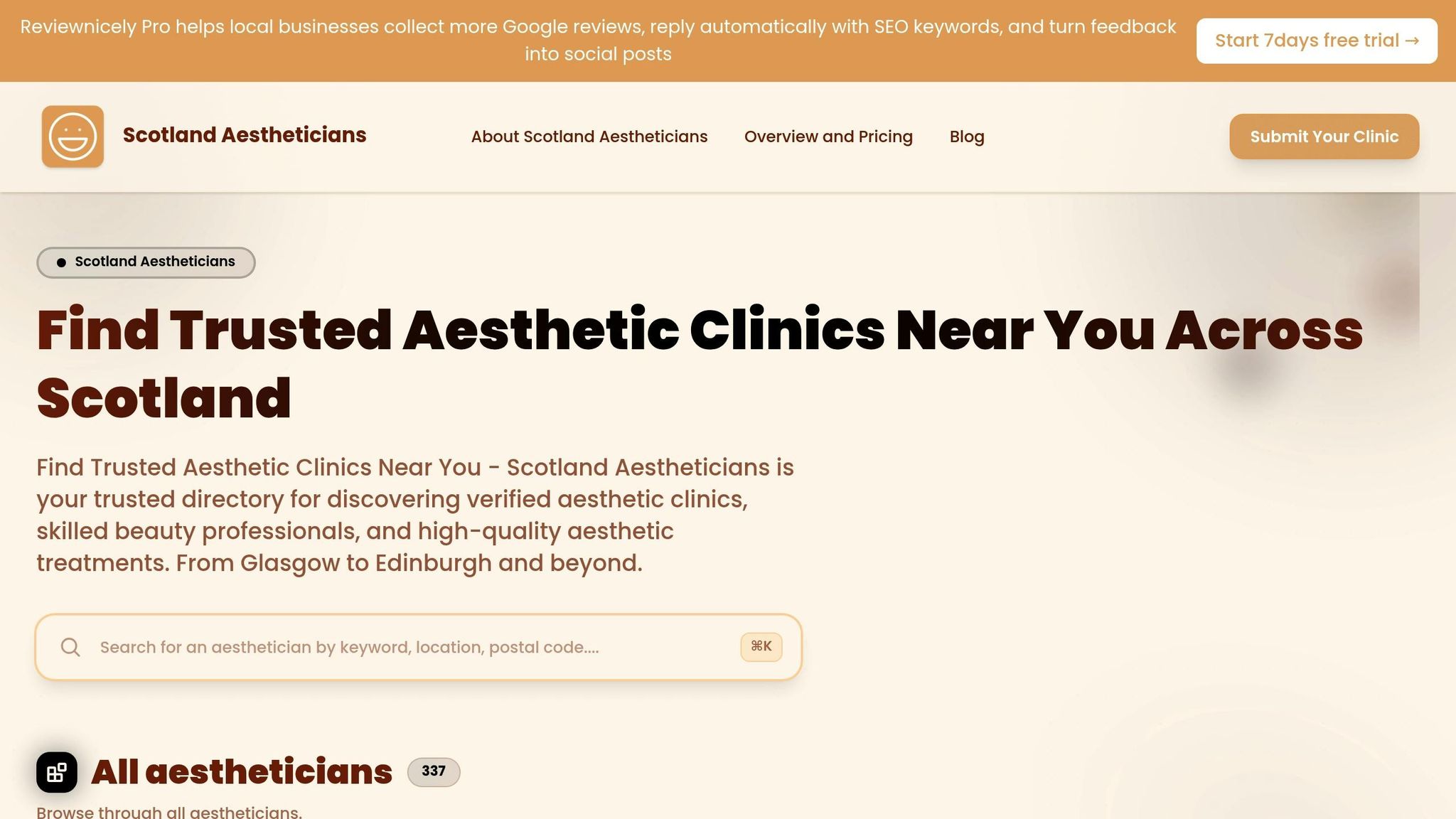
Finding a trusted clinic becomes much easier when you know what to look for and where to search. Scotland Aestheticians is a verified directory that connects you with reputable aesthetic professionals across Scotland. Whether you're in bustling cities like Glasgow and Edinburgh or smaller towns like Aviemore and Inverurie, this platform has you covered. With 337 aestheticians listed across 83 locations, it’s a go-to resource for those prioritising safety and quality.
What sets Scotland Aestheticians apart is its rigorous vetting process. Every clinic listed undergoes thorough checks to ensure authenticity and safety. Those that meet the high standards earn a "Vetted Clinic" badge, giving you instant confidence in their credentials.
As Scotland Aestheticians puts it:
"We're more than just a directory - we're a trusted network connecting verified clinics with real clients searching for safe, professional aesthetic services across Scotland."
You can easily refine your search using 49 treatment tags, including options like skin care clinics, medical spas, and beauty salons. Each listing features star ratings and client reviews, helping you gauge the clinic’s reputation. For example, The Goddess Clinic in Edinburgh has earned glowing reviews from over 223 satisfied clients, showcasing its expertise and reliability.
For clinic owners, the platform offers more than just visibility. Scotland Aestheticians provides tools like local SEO optimisation and an AI-powered review management system called Reviewnicely Pro, which comes with a 7-day free trial. These features ensure clinics can maintain up-to-date and accessible client feedback.
Plan Comparison Table
| Plan | Price | Key Features | Best For |
|---|---|---|---|
| Basic Listing | Free | Verified clinic listing; searchable by location and tags | Clinics just starting out or testing the platform |
| Premium Listing | Not specified | Featured listing; local SEO optimisation; priority in search results | Established clinics seeking enhanced visibility |
| Enterprise Plan | Not specified | All premium features; custom marketing strategies; analytics support | Large practices requiring comprehensive support |
Conclusion: Making Informed Choices for Aesthetic Clinics
Choosing an aesthetic clinic is not something to rush into. The 10 questions highlighted in this guide act as a crucial safety net, especially in the UK, where, surprisingly, anyone can legally inject products into the face and body without medical training. By checking practitioner qualifications through organisations like the GMC, NMC, or GDC, ensuring registration with the Care Quality Commission or Healthcare Improvement Scotland, and confirming emergency protocols, you can safeguard yourself in an industry that sees a rising number of complaints about procedures.
This checklist isn’t just about safety - it’s about identifying clinics that uphold high ethical standards. A reputable clinic will discuss realistic expectations, offer clear pricing, and refuse treatment if it’s not suitable for you. They’ll also provide thorough consultations without pressuring you and ensure robust aftercare plans. As Dr. Andrew Kane, Founder of Dr. Kane Aesthetics Co., explains:
"A great clinic prioritises your well-being over profit, offering the transparency and care you deserve at every step of your journey".
With millions of people undergoing aesthetic treatments and the industry valued at billions, finding a trustworthy clinic is more vital than ever. Regulated clinics with transparent practices are a far safer choice than unverified providers.
To make this process easier, Scotland Aestheticians connects clients with thoroughly vetted clinics across 83 locations in Scotland. Their "Vetted Clinic" badges and rigorous checks ensure you can search with confidence, knowing that each practitioner listed has met strict standards. Paired with the questions from this guide, you have the tools to make informed, safe decisions.
Take your time, ask the right questions, and never compromise on safety. By relying on trusted directories and focusing on qualified professionals, you can ensure your aesthetic journey is guided by trust, expertise, and transparency - not by fleeting trends or tempting low prices.
FAQs
You can check a practitioner's registration number through official regulatory bodies. For instance, the Health and Care Professions Council (HCPC) and the Professional Standards Authority (PSA) provide online registers where you can search for qualified practitioners. Usually, you’ll need either their surname or their unique registration number to carry out the search. These registers are designed to ensure that practitioners meet the necessary training and professional standards, giving you confidence that they’re qualified to perform aesthetic procedures in accordance with UK regulations.
If you think you’re experiencing a filler emergency, it’s important to act fast. Head to A&E or get in touch with a medically qualified aesthetics practitioner straight away. Prompt action can help manage complications and prioritise your safety.
To identify authentic before-and-after photos, look closely at the lighting and camera angles - they should remain consistent, as changes in these can significantly alter how results appear. Genuine photos are typically unedited and free from filters, offering a true representation of outcomes. Be wary of images that seem overly dramatic or too perfect to be real. Trustworthy clinics often back up their photos with proof of authenticity or testimonials from real clients. If anything feels off, don’t hesitate to ask for clarification or verification.